

 English
 Español
Content
- 1 From Basic Canopy to Urban Asset: The Evolution of the Bus Shelter
- 2 Four Design Principles Every Bus Shelter Must Satisfy
- 3 Materials That Define Durability: Steel, Aluminum, Glass, and Polycarbonate
- 4 Types of Bus Shelters: Matching Structure to Location
- 5 Smart Technology in Modern Bus Shelters
- 6 Sustainable Design: Green Materials and Carbon-Neutral Ambitions
- 7 Procurement Considerations for Transit Authorities and City Planners
From Basic Canopy to Urban Asset: The Evolution of the Bus Shelter
For most of the twentieth century, a bus shelter meant little more than a roof on posts — a minimal structure whose only ambition was to keep waiting passengers dry. Functionality was the sole criterion; aesthetics, technology, and sustainability were afterthoughts at best. That era is decisively over. Today, the bus shelter has been reimagined as a multifunctional piece of urban infrastructure that simultaneously serves passengers, expresses civic identity, generates advertising revenue, and contributes to a city's environmental commitments.
The transformation has been driven by converging forces: rising public expectations for transit quality, advances in materials and digital technology, mounting pressure on cities to decarbonize their infrastructure, and a growing body of evidence that well-designed transit stops meaningfully increase ridership. When passengers feel comfortable, safe, and informed while waiting, they are more likely to choose public transport over private vehicles — making the bus shelter a lever for broader urban mobility goals, not merely a convenience accessory.
The result is that investment in bus shelter design and specification has moved from the margins of municipal budgeting to the center of transit planning strategy. Understanding what constitutes a well-designed shelter — and how to procure one — has become essential knowledge for city planners, transportation authorities, and the communities they serve.
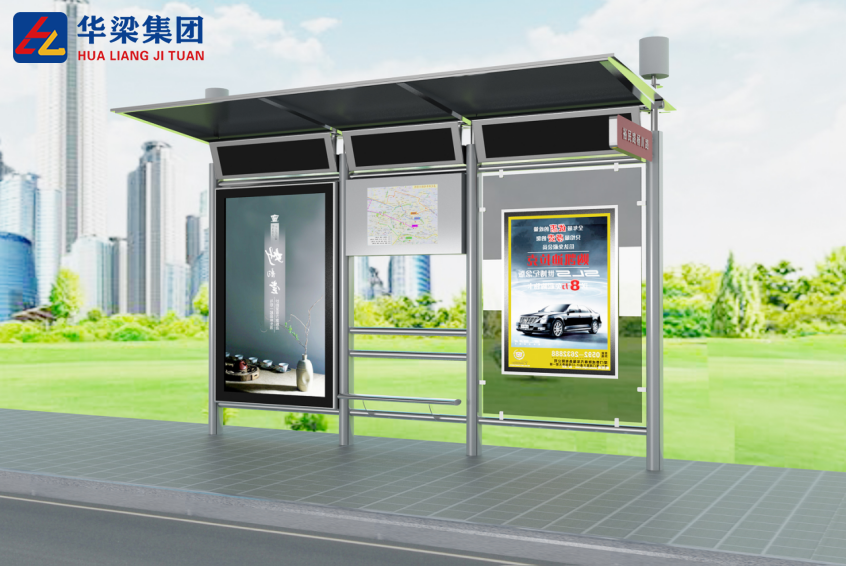
Four Design Principles Every Bus Shelter Must Satisfy
Regardless of budget, location, or aesthetic ambition, any bus shelter that fails on the following four dimensions will ultimately fail its users — and generate unnecessary maintenance costs as a consequence.
Visibility is the most fundamental requirement, and the one most easily compromised by poor design. Passengers must be able to see the approaching bus from inside the shelter without having to step out onto the curb. A shelter whose walls or roof structure obstruct sightlines to the road forces riders to abandon the protection it offers precisely when the bus arrives — defeating its primary purpose. Equally important is the shelter's own visibility from the street: drivers must be able to identify the stop and its waiting passengers clearly in order to position the vehicle correctly for boarding.
Accessibility demands that the shelter can be entered, used, and exited by all passengers, including those with wheelchairs, walkers, prams, or other mobility aids. This requires a clear, level approach path, adequate internal clear floor space — typically a minimum of 1,500 mm by 1,500 mm for wheelchair turning — and shelter walls positioned so that they do not obstruct the boarding zone along the kerb. Tactile paving, handrails at appropriate heights, and adequate illumination for visually impaired users are increasingly specified as standard rather than optional features.
Comfort and convenience encompass the physical experience of waiting. Seating that accommodates both seated and leaning postures, weather protection on at least three sides in exposed locations, and adequate depth to shelter passengers from wind-driven rain all contribute to a waiting experience that encourages continued use of the transit system. In climates with extreme cold, heated shelters — whether through electric elements or passive solar orientation — further extend the effective comfort range. Leaning rails and external overhangs allow shelters to accommodate peak-hour crowding without requiring oversized structures at every location.
Information closes the loop between passenger anxiety and transit confidence. Clear, legible route and schedule information — whether static timetables or dynamic real-time displays — reduces the perceived wait time and reassures passengers that they are in the right place. Research consistently shows that passengers are more tolerant of actual wait times when they have reliable information about when the next service will arrive. The information environment of the shelter is therefore not a luxury but a functional component of the overall transit experience.
Materials That Define Durability: Steel, Aluminum, Glass, and Polycarbonate
The material specification of a bus shelter determines its service life, maintenance burden, resistance to vandalism, and visual character. Each of the dominant materials brings a distinct set of trade-offs that procurement teams must weigh against local conditions and budget constraints.
Steel remains the preferred structural material for bus shelter frames where maximum strength and long service life are required. Hot-dip galvanized steel with powder coating provides excellent corrosion resistance and can be specified in virtually any color to match urban furniture standards. Steel structures tolerate high wind loads, resist physical impact, and — critically — are repairable: individual members can be replaced without dismantling the entire structure. The main disadvantages are weight (which affects installation logistics) and the need for periodic inspection of coating integrity to prevent corrosion at joints and cut edges.
Aluminum offers a strong alternative where weight reduction is a priority, particularly in modular systems that are frequently relocated or in locations where foundation loading is constrained. Anodized aluminum is inherently corrosion-resistant without additional coating, handles temperature cycling well, and can be extruded into complex profiles that combine structural and aesthetic functions in a single component. Its lower density — roughly one-third that of steel — also simplifies installation in congested urban environments where large equipment access is restricted.
Tempered safety glass is the standard glazing material for shelter walls and roofs in high-specification applications. It provides excellent transparency — maintaining the sightline visibility that good shelter design requires — and shatters into small, relatively harmless fragments rather than dangerous shards when broken. Anti-graffiti coatings applied to the outer surface allow cleaning without abrasive methods that would damage the glass itself. In particularly high-vandalism locations, laminated glass adds a further layer of security by holding fragments in place after breakage.
Polycarbonate panels offer a lightweight, impact-resistant alternative to glass that is significantly more difficult to break through mechanical force. This makes polycarbonate the material of choice in locations with elevated vandalism risk or where glass replacement logistics are challenging. Its main drawback is susceptibility to surface scratching and UV-induced yellowing over time, which reduces clarity and visual appeal — a consideration that makes material quality and UV stabilizer specification important purchasing criteria.
Across all material choices, the design philosophy that has proven most effective for public infrastructure is modular construction with bolted rather than welded or cast connections. Modular systems allow damaged sections to be replaced individually, spare parts to be stocked efficiently, and shelter configurations to be adapted as stop demand changes — all without the cost and disruption of full structure replacement.
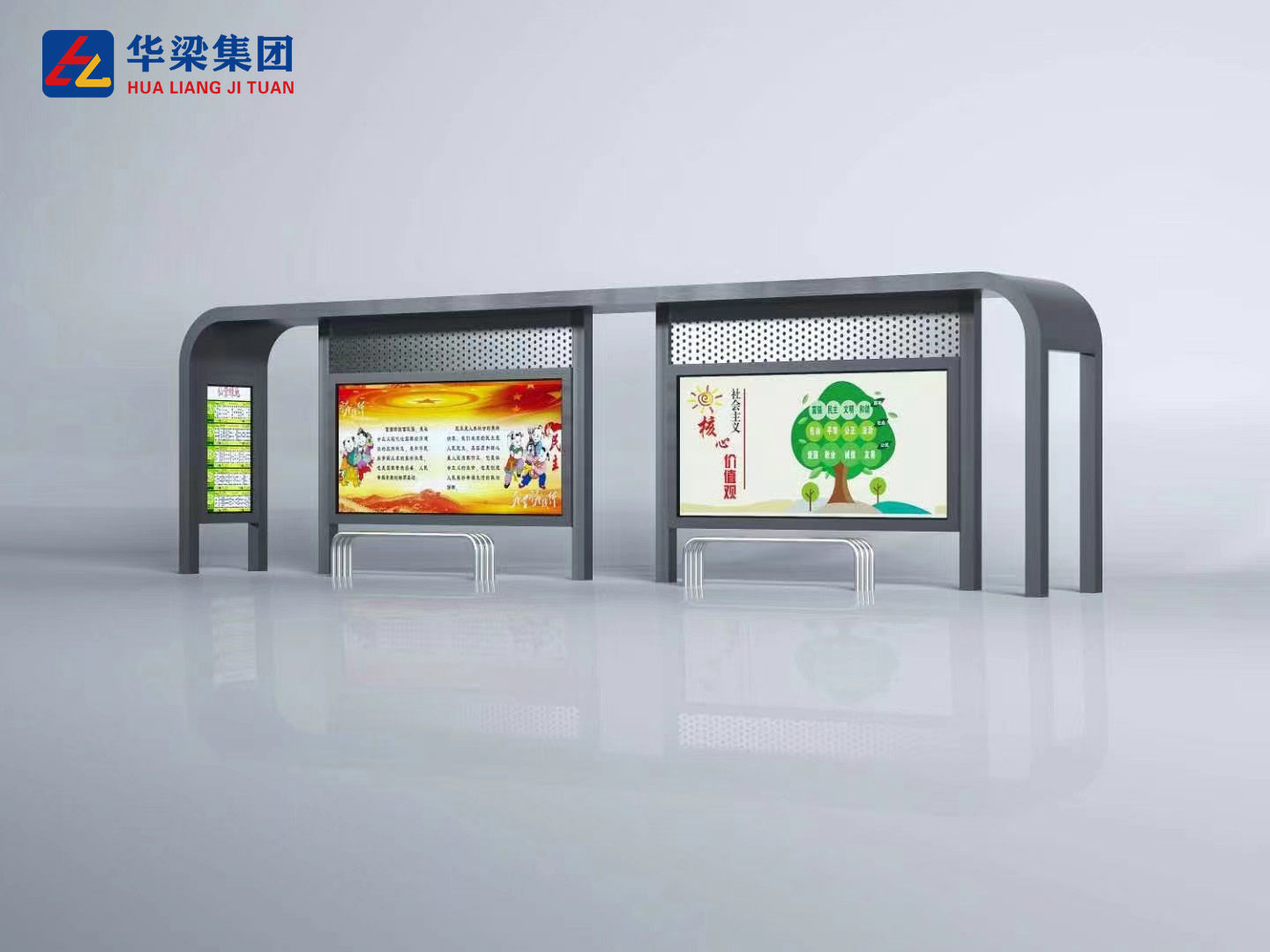
Types of Bus Shelters: Matching Structure to Location
No single shelter configuration suits every location. Transit agencies and city planners increasingly specify a tiered range of shelter types, deploying each according to passenger volumes, available footprint, and local climate conditions.
Standard open shelters — a roof with one or two side panels — are the most widely deployed type. They are cost-effective, require minimal foundation work, and suit the majority of stops where passenger volumes are moderate and the primary weather challenge is rain rather than sustained cold or extreme wind. Their open configuration maintains natural ventilation and avoids the enclosed-space safety concerns that can arise at isolated stops.
Fully enclosed shelters provide protection on all sides, with a glazed or paneled enclosure that significantly reduces the impact of wind, driving rain, and cold temperatures on waiting passengers. They are appropriate for high-volume stops, major interchange points, and climates where thermal comfort is a genuine barrier to public transport use. Enclosed shelters may incorporate heating elements — either electric or passive solar — and are typically larger structures that require more substantial foundation and utility connections.
Modular shelters have gained substantial market share as transit networks have grown more dynamic. Built from standardized bay units that can be assembled in varying configurations, modular systems allow a single procurement contract to cover stops ranging from a single-bay installation at a quiet suburban stop to a multi-bay covered waiting area at a busy urban interchange. Visual consistency across the network is maintained while functional sizing is adapted to local demand — a combination that simplifies both specification and maintenance.
Solar-powered shelters represent the fastest-growing category in new municipal procurement. Integrated photovoltaic panels — typically mounted on the shelter roof — generate sufficient power to operate LED lighting, digital information displays, USB charging points, and environmental sensors without grid connection. This energy independence significantly reduces installation costs at locations where electrical connection would otherwise require expensive trenching, while simultaneously supporting the municipality's renewable energy commitments.
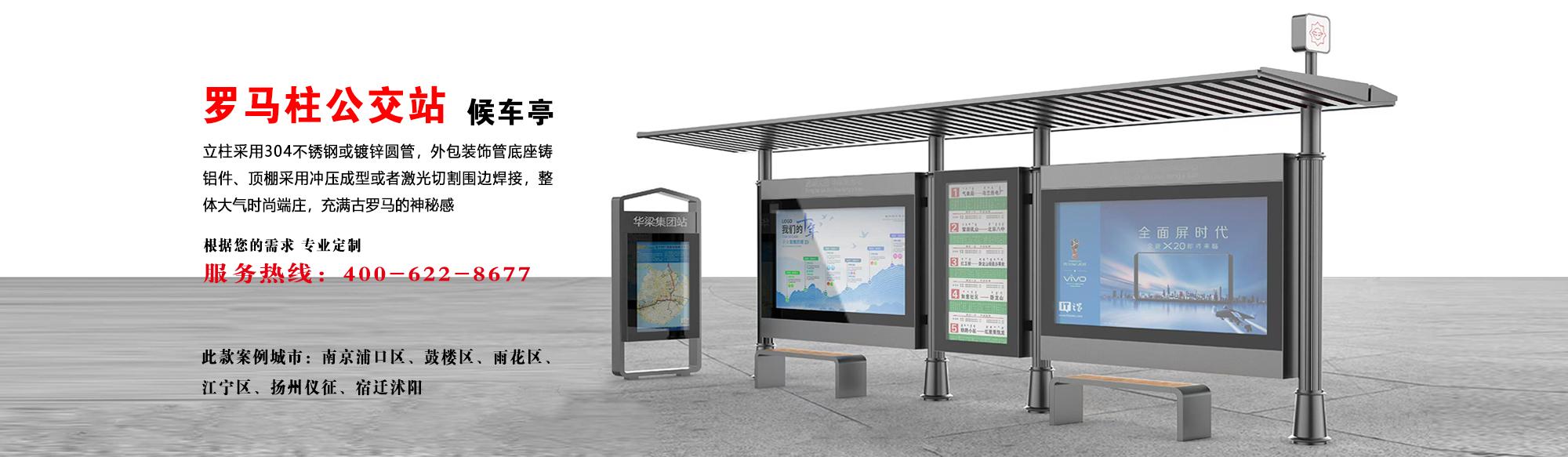
Smart Technology in Modern Bus Shelters
The integration of digital and connected technology into bus shelter infrastructure has accelerated considerably over the past decade, driven by falling hardware costs, expanding municipal connectivity initiatives, and passenger expectations shaped by smartphone-era information access.
Real-time passenger information displays are now considered standard equipment at high-volume stops in most major transit networks. LED or LCD screens connected to the transit operator's data feed display live arrival times, service disruption alerts, and route information — reducing passenger anxiety, improving schedule adherence perception, and, in some networks, allowing dynamic messaging for emergency communications or public health information.
Beyond passenger information, IoT sensor networks embedded in shelter structures are enabling a new generation of transit management capabilities. Passenger counters using infrared or camera-based detection provide real-time occupancy data that transit operators use to adjust service frequency dynamically. Environmental sensors measuring temperature, air quality, and noise levels feed into urban analytics platforms. Structural health monitoring sensors detect impacts or unusual vibration patterns, triggering maintenance alerts before damage becomes severe enough to require full replacement.
E-mobility integration reflects the reality that most urban journeys now combine multiple transport modes. Bus shelters equipped with docking points for shared e-bikes and e-scooters, along with USB and inductive charging stations for personal devices, serve as genuine multimodal hubs rather than single-mode waiting areas. This expanded function increases the dwell time utility of the shelter, attracts more users to the stop, and reinforces the shelter's role as active urban infrastructure rather than passive street furniture.
Wi-Fi provision — once a differentiating premium feature — is now commonly specified in urban shelter contracts, providing both a passenger amenity and a connectivity node for the IoT devices embedded in the structure itself. Taken together, these technologies transform the bus shelter from a passive weather barrier into an active, data-generating component of the smart city ecosystem.
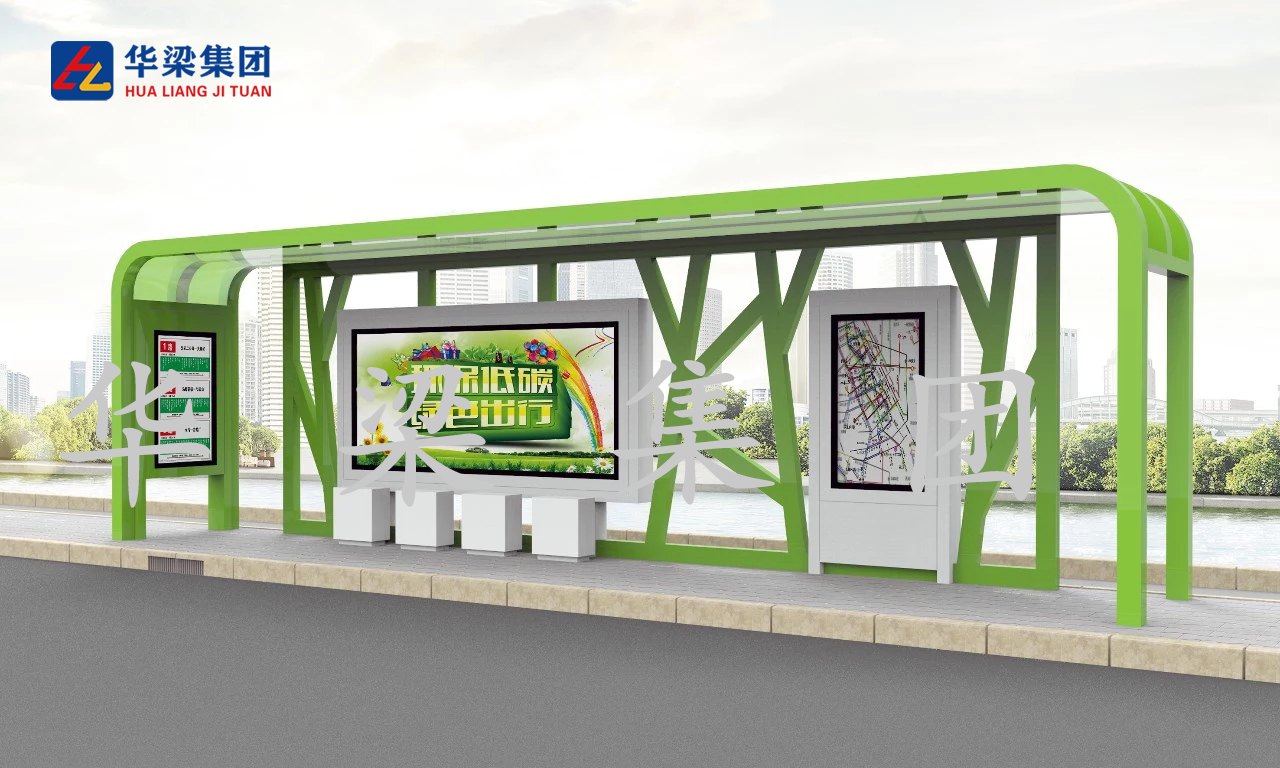
Sustainable Design: Green Materials and Carbon-Neutral Ambitions
Sustainability has moved from a desirable attribute to a procurement requirement in a growing number of municipal markets. Transit authorities in Europe, Australia, and North America are now routinely including lifecycle carbon assessment, recycled content requirements, and end-of-life disassembly provisions in bus shelter tender specifications.
On the materials side, leading manufacturers have shifted toward structural components using recycled aluminum — with some suppliers achieving recycled content above 85% in frame components without compromising structural performance. Post-consumer plastics are increasingly used for seating and non-structural panels. Cross-laminated timber (CLT) roofs have emerged as a technically viable and visually distinctive alternative to steel or aluminum canopies, offering significantly lower embodied carbon while achieving the structural spans required for shelter roofs.
At the system level, shelters designed for disassembly — using bolted rather than welded connections and standardized fasteners — enable end-of-life material recovery that reduces landfill waste and lowers the net carbon cost of the shelter over its full lifecycle. Lifecycle assessment data from circular economy analyses consistently shows that design-for-disassembly approaches meaningfully reduce both environmental impact and total replacement cost compared to structures that must be demolished rather than dismantled at the end of their service life.
Biophilic design elements — living green walls planted with native species, permeable paving that manages stormwater runoff, and shading structures that reduce the urban heat island effect around the stop — are appearing in premium shelter specifications in progressive cities. These features reduce the ambient temperature around the shelter, improve air quality, support local biodiversity, and create a more welcoming waiting environment that encourages transit use.
The benchmark for municipal ambition in this space is set by transit networks that have achieved carbon-neutral status across their entire shelter fleets through a combination of solar-powered operation, recycled material procurement, and carbon offset programs — demonstrating that sustainability targets and operational performance are complementary rather than competing objectives.
Procurement Considerations for Transit Authorities and City Planners
For procurement teams responsible for specifying and purchasing bus shelter infrastructure, several practical considerations govern the total cost of ownership and long-term performance of the investment.
Modular versus bespoke specification is the fundamental procurement choice. Bespoke shelters designed to a specific architectural brief offer maximum differentiation and can be powerful expressions of civic identity — but they carry higher unit costs, longer lead times, and supply chain dependencies for spare parts that can complicate long-term maintenance. Modular systems from established manufacturers offer faster deployment, predictable costs, interchangeable components, and proven performance data — advantages that typically outweigh the aesthetic limitations of standardized designs for most network-scale procurement contracts.
Vandal resistance and maintenance requirements deserve careful attention in location-specific specification. Shelters in high-risk locations should be specified with anti-graffiti coatings on all accessible surfaces, impact-resistant glazing, tamper-proof fasteners on all external fixtures, and robust lighting designs that leave no dark corners. The incremental cost of vandal-resistant specification is consistently recovered through reduced repair frequency and lower replacement costs over the structure's service life.
Advertising concession integration offers transit authorities a mechanism to offset shelter procurement and maintenance costs through commercial revenue. Shelter designs that incorporate advertising panels — whether static backlit displays or programmable digital screens — can generate sufficient revenue under standard outdoor advertising concession arrangements to fund the shelter network's ongoing maintenance and periodic renewal. Effective integration requires that advertising panels are positioned and sized so that they do not compromise the shelter's primary passenger service functions — particularly information display visibility and internal sightlines.
Foundation and utility planning is frequently underestimated in shelter project budgets. Ground conditions, underground utility conflicts, kerb geometry, and accessibility grading requirements all affect installation cost and timeline. For solar-powered shelters, the elimination of electrical connection requirements simplifies installation considerably — a factor that often justifies the higher unit cost of solar-equipped structures at remote or electrically constrained locations. Early engagement between shelter manufacturers, civil engineers, and utility providers reduces the risk of costly design revisions during installation.
Ultimately, the bus shelter specification decision is an investment in public confidence in the transit system. A well-chosen, well-installed, and well-maintained shelter communicates that the transit authority values its passengers' time and comfort — a message that supports ridership growth, reduces car dependency, and contributes to the livable, connected cities that communities across the world are working to build.


