

 English
 Español
Content
What Is a Hand Dolly?
A hand dolly — also widely known as a hand truck, two-wheeler, or sack truck — is an L-shaped material handling tool designed to transport heavy or stacked items with minimal physical effort. It consists of a vertical metal frame, an upright handle at the top, two large wheels at the rear base, and a small horizontal ledge at the bottom that slides beneath the load. Once the ledge is positioned under the item, the user tilts the frame backward so the load rests against the frame and balances on the two wheels, then pushes or pulls it to the destination.
The term "hand dolly" is often used interchangeably with "hand truck" in North America and many other markets, which can create confusion when people also encounter the term "dolly" used to describe a flat, four-wheeled platform. In professional material handling contexts, the distinction matters: a hand dolly refers specifically to the upright, two-wheeled L-frame design, while a moving dolly refers to the flat, four-wheeled platform type. Understanding this terminology is the first step toward selecting the right equipment for your moving or logistics task.
Hand trucks were first developed in the 18th century to ease the unloading of heavy cargo from ships, and their fundamental design has changed remarkably little since then. Modern versions are typically constructed from steel or aluminum alloy tubing, with load capacities ranging from 100 lbs for compact household models to over 1,000 lbs for heavy-duty industrial versions. The combination of a low center of gravity when tilted and a wide rear wheel base gives the hand dolly excellent stability when navigating narrow corridors, doorways, and stairwells.
What Is a Moving Dolly?
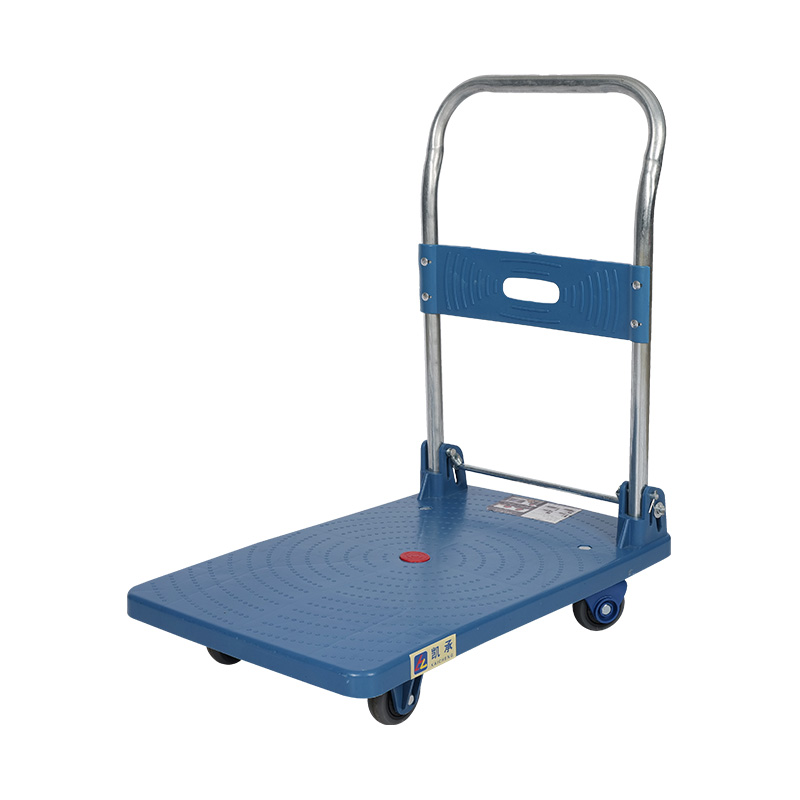
A moving dolly — sometimes called a furniture dolly, platform dolly, or simply a dolly — is a flat, low-profile platform mounted on four wheels and two axles. Unlike a hand truck, it has no vertical frame and no handle: the user pushes the load directly, or pushes the items stacked on the platform. The four-wheeled design distributes the weight evenly across a broad base, making dollies exceptionally stable and capable of supporting very large, irregularly shaped, or extremely heavy loads that a two-wheeled hand truck could not safely carry.
Moving dollies are typically made from hardwood, plywood, or steel, with a carpet or rubber surface on the top platform to protect the items being transported. Most models feature swivel casters with ball bearings, allowing the dolly to rotate and change direction smoothly in any direction — a significant maneuverability advantage over a hand truck when navigating open warehouse floors or exhibition spaces. Load capacities for moving dollies commonly range from 500 lbs for light household models up to 1,500 lbs or more for industrial-grade steel versions.
Because the platform sits raised off the ground rather than sliding beneath items at floor level, items must be lifted onto a moving dolly rather than simply tilted onto it. This is the key practical difference between the two tool types: the hand dolly comes to the load, while the load must come to the moving dolly.
Hand Truck vs Dolly: Key Structural Differences
Despite serving the same broad purpose — reducing the physical effort required to move heavy items — hand trucks and moving dollies differ substantially in design, capability, and optimal use case. The table below summarizes the most important structural and performance differences.
| Feature | Hand Truck (Hand Dolly) | Moving Dolly |
|---|---|---|
| Design shape | L-shaped vertical frame | Flat horizontal platform |
| Number of wheels | 2 (large rear wheels) | 4 (swivel casters) |
| Handle | Yes — upright handle at top | No — user pushes the load directly |
| Loading method | Slide ledge under item; tilt back | Lift item onto platform manually |
| Typical load capacity | 100–1,000+ lbs | 500–1,500+ lbs |
| Direction of travel | Forward/backward (limited turning) | Omnidirectional |
| Best surface type | Most surfaces including rough terrain and stairs | Smooth, flat floors |
| Typical frame material | Steel or aluminum alloy | Wood, plywood, or steel |
| Storage footprint | Compact — leans against wall | Larger — requires floor space |
The most consequential difference in daily use is the loading method. A hand truck's ledge can be slid under a box, barrel, or appliance that is resting on the floor, requiring no lifting at all before transport begins. This dramatically reduces injury risk and physical strain, particularly for a single operator moving tall, heavy items like refrigerators, water dispensers, or stacked boxes. A moving dolly, by contrast, requires the item to be raised onto the platform — typically a two-person task for heavy loads — before it can be moved.
The four-wheel design of a moving dolly provides inherently better stability for large, flat-bottomed items such as sofas, workbenches, machinery bases, and appliance crates. Because the load sits centered on a broad platform with four contact points rather than balanced on a tilted frame, there is less risk of tipping during transport, and less operator skill is required to maintain balance.
Types of Hand Trucks (Hand Dollies)
Hand trucks come in several specialized configurations, each optimized for a different category of load or operating environment. Knowing the subtypes helps buyers select not just the right tool category but the right variant within it.
Upright (standard) hand trucks are the classic two-wheel, fixed-frame design. They are best suited for moving stacked boxes, cylindrical containers, kegs, and similarly shaped loads over short distances. The rigid frame provides a solid back support for the load, and the simple design keeps weight and cost low. The main limitation is the fixed vertical orientation, which makes storage bulkier than folding alternatives.
Appliance hand trucks are reinforced versions designed to carry washing machines, refrigerators, vending machines, and other large, heavy appliances. They typically feature heavy-duty straps or side rails to secure the appliance against the frame, a wider base ledge, and stair-climbing wheels or tracks. Load capacities of 600 to 1,200 lbs are common in this category.
Convertible hand trucks switch between two-wheel upright mode and four-wheel platform mode by folding the frame flat. In upright mode they function as a standard hand truck; folded flat they function like a compact platform dolly. This flexibility makes them popular in warehouses and retail environments where both load types are encountered regularly.
Foldable hand trucks and carts represent one of the fastest-growing segments, particularly for e-commerce logistics, home delivery, and space-constrained retail environments. When not in use, they collapse to a fraction of their operational footprint, simplifying storage in vans, storerooms, and apartments. Our one-click folding hand cart exemplifies this category — a sturdy metal construction with a simple one-click mechanism that allows fast deployment and collapse without tools. For buyers seeking a comprehensive range of foldable transport solutions, the full metal foldable trolley product line covers everything from compact hand carts to multi-function fence-panel trolleys.
Types of Moving Dollies
Moving dollies are equally varied in their specialized forms, with different designs optimized for specific load types and environments.
Furniture dollies are the most common type — low, flat platforms with carpet or rubber surfaces to protect the items being transported. They are used for sofas, wardrobes, bookshelves, and similar large household or office furniture that would be awkward or impossible to tilt onto a hand truck frame. Standard furniture dollies typically handle 600 to 1,000 lbs.
Appliance dollies in the moving dolly family are wider, heavier-duty platforms with reinforced corners and sometimes side rails, designed for washing machines, dryers, and commercial kitchen equipment. They bridge the gap between a standard furniture dolly and the appliance hand truck, providing a stable platform for top-heavy equipment that could not balance reliably on a tilted two-wheeled frame.
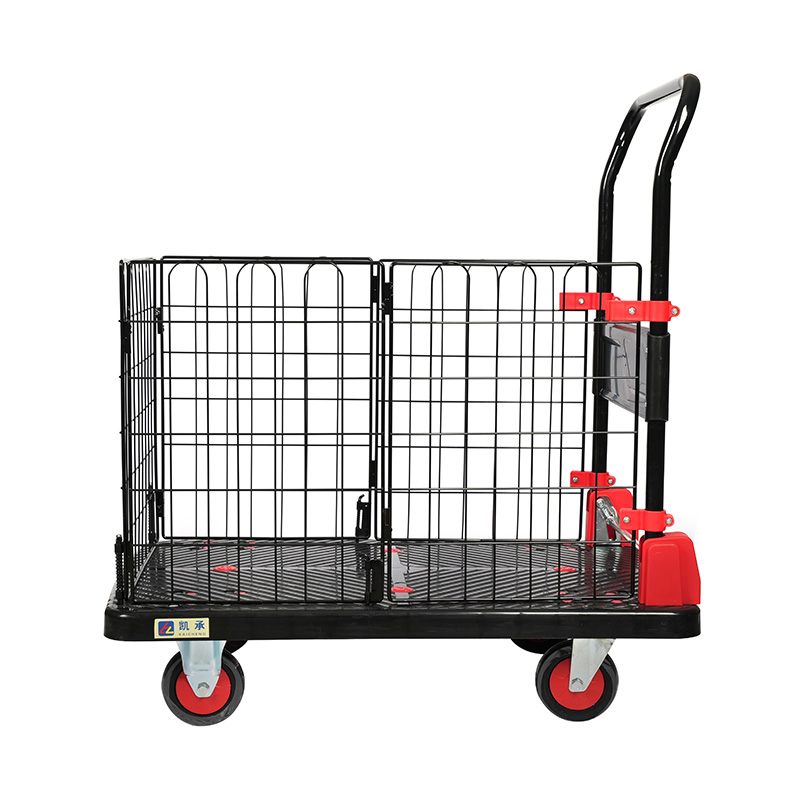
Multi-layer folding carts combine the flat-platform concept with vertical shelving, creating a dolly that can carry multiple levels of goods in a single trip. These are particularly valuable in retail, market vending, and food service settings where many small items need to be transported simultaneously. The stall multi-layer folding cart is a well-suited example for vendors and hospitality operators who need to move stock efficiently between storage and display areas.
Platform trolleys with handles represent a hybrid category — a flat dolly platform with an added push handle, combining some of the ergonomics of a hand truck with the broad, stable base of a dolly. These are widely used in warehouses, supermarkets, and hospitals for transporting medium-weight loads across long flat distances. The mobile trolley shelf design takes this concept further by integrating shelving tiers directly into the trolley frame, eliminating the need for separate storage and transport steps.
Which One Should You Choose?
The decision between a hand truck and a moving dolly comes down to four practical variables: the type of load, the operating space, the floor surface, and how frequently the equipment will be used. The following framework covers the most common scenarios.
| Scenario | Recommended Tool | Reason |
|---|---|---|
| Moving stacked boxes or crates | Hand truck | Slides under stacked items without lifting; vertical stacking maximizes load per trip |
| Moving large appliances (fridge, washer) | Appliance hand truck | Straps secure the unit; stair-climbing wheels handle uneven surfaces |
| Moving sofas, wardrobes, pianos | Furniture dolly | Broad platform distributes weight; four-wheel stability prevents tipping |
| Warehouse floor transport (open area) | Moving dolly or platform trolley | Omnidirectional casters allow effortless navigation of large, open spaces |
| Narrow corridors or elevators | Hand truck | Compact footprint; easier to maneuver in tight spaces |
| Stair climbing | Hand truck (stair-climbing model) | Two-wheel design with stair treads is the only practical option for steps |
| Market vending / multi-item retail transport | Multi-layer folding cart | Multiple shelves carry more goods per trip; foldable design saves van space |
| Occasional use / limited storage space | Foldable hand cart or convertible hand truck | Collapses for compact storage; versatile enough for multiple load types |
One factor that is frequently overlooked is floor surface type. Hand trucks with large pneumatic or solid rubber rear wheels perform well on rough concrete, gravel, and uneven surfaces — environments where small swivel casters on a dolly would bind or wobble. Moving dollies, particularly those with ball-bearing swivel casters, perform best on smooth warehouse floors, tiled surfaces, and hardwood — where their omnidirectional movement is a genuine advantage. On carpet, both types lose some efficiency, but hand trucks generally perform better due to their larger wheel diameter.
For buyers who need a single tool that covers the widest range of tasks, a convertible hand truck or a foldable hand cart offers the best value. For businesses with high-volume, repetitive transport needs — such as warehouses, retail distribution centers, or event rental companies — investing in dedicated hand trucks for vertical loads and dedicated platform dollies for horizontal loads is the more efficient long-term approach.
Conclusion
A hand dolly and a hand truck are the same tool — an L-shaped, two-wheeled frame that tilts heavy loads for transport without requiring manual lifting. A moving dolly is a distinct product: a flat, four-wheeled platform that offers greater load capacity and stability for large, bulky items at the cost of requiring the load to be lifted onto the platform before transport can begin. Understanding this distinction prevents the most common purchasing mistake in material handling equipment selection.
For most households and small businesses, a foldable or convertible hand truck will cover the majority of transport needs while minimizing storage space. For warehouses, logistics operations, and commercial environments moving large furniture, machinery, or multi-item stock, combining both a hand truck and a purpose-matched dolly or platform trolley is the most efficient approach. Both tools are most effective when built from high-quality steel or aluminum alloy frames that maintain their geometry under repeated heavy loads — a factor that separates long-lasting professional equipment from cheaper alternatives that warp or loosen after moderate use.


