
 English
 Español
Content
- 1 Introduction to Electric Handcarts
- 2 Design and Features of Modern Electric Handcarts
- 3 Enhancing Efficiency in Warehouse Operations
- 4 Integration with Smart Warehouse Systems
- 5 Safety Benefits of Electric Handcarts
- 6 Environmental and Cost Advantages
- 7 Conclusion: Shaping the Future of Smart Warehouses
Introduction to Electric Handcarts
Electric handcarts have emerged as transformative tools in warehouse and logistics management. Designed to reduce manual labor and improve operational efficiency, these motorized carts allow workers to transport heavy loads safely and quickly. By integrating electric propulsion and ergonomic designs, electric handcarts have become a key element in modern warehouse automation strategies.
As warehouses face increasing demands for speed, accuracy, and sustainability, electric handcarts offer a practical solution. Their ability to handle repetitive tasks reduces physical strain on employees, improves productivity, and complements other automated systems, making them a vital component of smart warehouse operations.
Design and Features of Modern Electric Handcarts
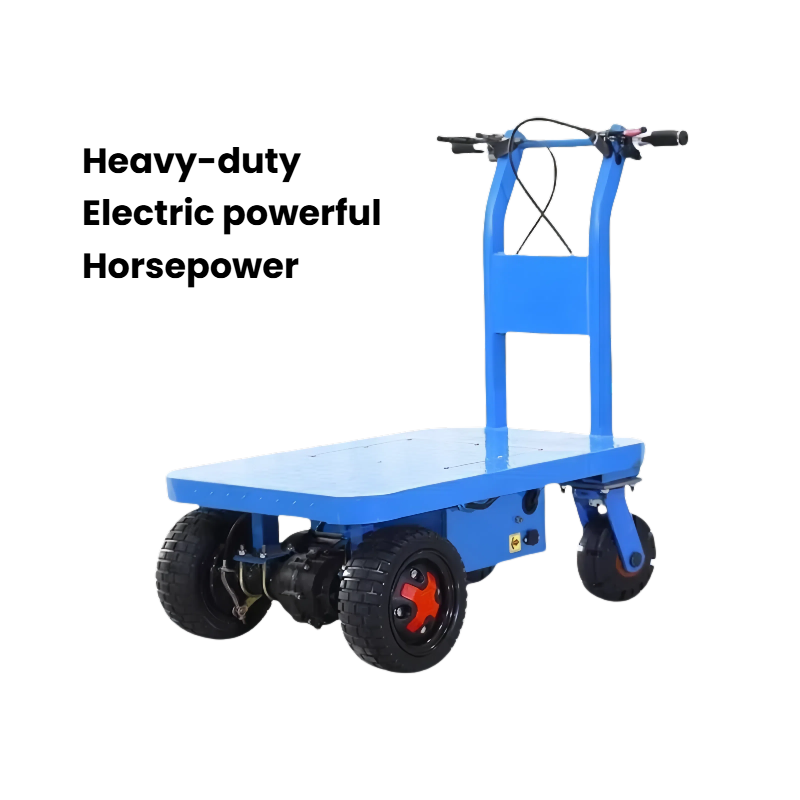
Modern electric handcarts are equipped with features designed to maximize efficiency and safety. They typically include rechargeable batteries, robust motors, ergonomic handles, and advanced braking systems. Many models also feature adjustable platforms, foldable designs, and integration with warehouse management software for real-time tracking and monitoring.
The ergonomic and compact designs allow operators to maneuver carts through narrow aisles and congested storage areas without compromising stability. Additionally, intelligent motor controllers regulate speed and torque, optimizing energy usage while maintaining smooth handling.
Key Features
- Electric propulsion for effortless material movement
- Ergonomic handles and adjustable platforms to reduce operator fatigue
- Compact and foldable designs for flexible storage
- Integration with smart warehouse software for tracking and efficiency
Enhancing Efficiency in Warehouse Operations
Electric handcarts significantly improve warehouse efficiency by allowing multiple trips in less time and reducing the physical effort required for transporting goods. They can be used for stock replenishment, order picking, and intra-warehouse transfers, ensuring smooth flow of materials across all areas of operation.
Compared to manual trolleys, electric handcarts increase throughput by handling heavier loads and enabling faster movement. This efficiency translates to cost savings, higher productivity, and reduced labor strain, all critical in high-demand warehouse environments.
Operational Advantages
- Faster material transport between storage and shipping areas
- Reduced employee fatigue and risk of injury
- Enhanced workflow efficiency with less downtime
- Ability to handle heavier loads than manual carts
Integration with Smart Warehouse Systems
Electric handcarts are increasingly integrated with warehouse management systems (WMS) and IoT-enabled devices. These integrations allow real-time monitoring of cart usage, load tracking, and predictive maintenance, creating a fully connected logistics environment.
Smart electric handcarts can communicate with automated storage and retrieval systems, optimizing routes and reducing bottlenecks. This connectivity supports data-driven decisions, ensuring material handling processes are precise, timely, and energy-efficient.
Technological Enhancements
- IoT sensors for load monitoring and battery status
- Integration with warehouse routing software
- Predictive maintenance alerts to minimize downtime
- Data analytics for improving material handling strategies
Safety Benefits of Electric Handcarts
Safety is a paramount concern in warehouse operations, and electric handcarts provide several advantages. Their motorized propulsion reduces the risk of strain injuries from lifting or pushing heavy loads. Additionally, modern carts include braking systems, stability features, and ergonomic designs to prevent accidents.
By minimizing manual handling and integrating safety mechanisms, electric handcarts protect employees while maintaining high-speed operations. This safety-conscious design reduces workplace injuries and ensures compliance with occupational safety standards.
Environmental and Cost Advantages
Electric handcarts are also environmentally friendly, relying on rechargeable batteries rather than fossil fuels. This reduces carbon emissions and energy costs, aligning warehouse operations with sustainability goals. Lower maintenance requirements further enhance cost efficiency, making them a long-term investment for smart facilities.
Over time, the combination of labor savings, energy efficiency, and reduced injury-related costs contributes to significant operational savings, positioning electric handcarts as a strategic choice for forward-looking warehouses.
Conclusion: Shaping the Future of Smart Warehouses
Electric handcarts represent a critical evolution in material handling technology. By combining efficiency, safety, and smart system integration, they are redefining warehouse operations and enabling smarter, more sustainable workflows.
As businesses continue to adopt automation and IoT technologies, electric handcarts will play a central role in improving productivity, reducing costs, and supporting the future of smart warehouse operations.