

 English
 Español
A ten-inch air-filled wheel moves a loaded cart across gravel with noticeably less effort than a solid rubber wheel, and it does it without passing every stone up through the frame. Two weeks later, that same wheel is half flat, the load has shifted to one side, and nobody on site can remember buying a pump.
Here is the short answer before the detail: specify pneumatic tires when the cart works on mixed surfaces such as gravel, grass, soil, sand or cracked concrete, and when the people using it will accept a monthly pressure check. Choose flat-free, foam-filled or solid wheels when the cart lives on smooth concrete, when hygiene rules make rubber debris a problem, or when maintenance simply will not happen. Most buying mistakes come from choosing the wheel on a showroom floor and then using the cart in a yard.
Content
- 1 What Air-Filled Tires Change in Practice
- 2 Pneumatic, Flat-Free and Solid: A Practical Comparison
- 3 Tire Size, Ply Rating and Load Math
- 4 Where Air-Filled Wheels Earn Their Place, and Where They Do Not
- 5 Frame, Axle and Corrosion Details That Decide Tire Life
- 6 Sourcing Metal Carts With Air-Filled Wheels
- 7 Total Cost of Ownership and Delivery Checks
What Air-Filled Tires Change in Practice
A pneumatic tire carries load on compressed air, so the casing deforms around small obstacles instead of climbing over them. On a ten-inch wheel, the contact patch lengthens under load, which spreads ground pressure and lowers rolling resistance on loose surfaces. In daily use that means a loaded cart breaks away with less push, door thresholds and kerbs are absorbed rather than transmitted into the load, and stacked or fragile goods ride with less vibration.
The same flexibility produces the familiar failure modes. Air escapes slowly through valve cores and bead seats; a loss of one to two psi a month is normal, and much faster on cheap tubes. An underinflated tire has a larger footprint and higher rolling resistance, and under a heavy load the tube can be pinched between the rim and the ground edge. Sidewall flex also reduces lateral stiffness, which is why tall stacks on air-filled carts should be strapped rather than balanced.
Pneumatic, Flat-Free and Solid: A Practical Comparison
| Tire type | Ride on gravel and grass | Puncture and maintenance | Where it fits |
|---|---|---|---|
| Pneumatic (air-filled) | Best cushioning and lowest rolling resistance | Monthly pressure checks, tube repairs, pinch flats under overload | Landscaping, rental fleets, mixed surfaces, long pushes |
| Foam-filled flat-free | Close to pneumatic, slightly firmer | No pressure checks, no punctures, heavier and stiffer | Hire fleets, sites with no maintenance routine, thorny ground |
| Semi-pneumatic | Moderate; better than solid on loose gravel | Hollow and unpressurised, so small punctures do not deflate | Light delivery carts, garden centres, mixed indoor and outdoor use |
| Solid rubber | Poor; transmits shock into the frame and load | Effectively maintenance-free | Smooth warehouse floors, cold stores, clean areas |
Foam-filled wheels reuse the casing of a pneumatic tire, filled with polyurethane instead of air. They take the pressure gauge off the maintenance list and keep most of the footprint advantage, but they add weight and transfer more shock into the cart. Solid rubber remains the sensible default on smooth concrete, where it rolls just as easily and never goes flat; semi-pneumatic sits between the two, with a hollow section that cushions a little and cannot deflate.
Tire Size, Ply Rating and Load Math
Wheel diameter decides how easily the cart clears gravel, kerbs and thresholds. Eight-inch wheels suit light indoor carts, ten-inch is the usual compromise for delivery and yard work, and thirteen-inch or larger is worth the extra deck height when the ground is rough all day.
Capacity is set by the tire, the wheel and the frame together. A common ten-inch four-ply wheel is rated in the region of 100 to 140 kg per wheel at maximum pressure. Multiply that by the number of wheels, then apply a realistic derating: on uneven ground, under dynamic loads from kerb drops, and given that carts are frequently tipped onto two wheels, working to roughly 60 to 70 percent of the nominal figure avoids most sidewall failures. Ply rating matters at the same size, because a four-ply casing carries more at a given pressure than a two-ply and resists pinch flats better.
Check the axle as carefully as the tire. Air-filled wheels are heavier than solid equivalents, so a 12 mm axle on plain bushes is fine for a light folding cart but marginal on a loaded flatbed; 16 mm or 20 mm axles with sealed ball bearings last considerably longer. Confirm hub width, bore diameter and the fixing method — nut, split pin or quick-release collar — because mismatched hardware is the most common reason a replacement wheel will not fit.
Where Air-Filled Wheels Earn Their Place, and Where They Do Not
- Landscaping and nurseries: gravel paths, soil and wet grass reward the larger footprint, and a slow leak is annoying rather than catastrophic.
- Rental and event fleets: mixed surfaces and overloading by users make foam-filled a safer compromise than pure air.
- Construction and yard work: offcuts and rubble are handled better by a four-ply casing run at rated pressure than by a hard wheel that jams on debris.
- Garden centres and parks: long pushes over loose gravel favour low rolling resistance, especially with a partly loaded cart.
- Sand and soft ground: dropping pressure enlarges the contact patch, at the cost of higher sidewall stress and a shorter tube life.
They lose on smooth warehouse floors, where solid wheels roll just as well and never go flat; in food handling and clean rooms, where rubber dust and tube repairs are unwelcome; in cold stores, where pressure falls with temperature; and on any site where a flat cart stops a line. It also pays to check how much a metal trolley can actually carry, because many carts are frame-limited long before the tires are.
Frame, Axle and Corrosion Details That Decide Tire Life
Tires rarely fail on their own. The usual sequence is a seized bearing, a bent axle bracket or a rusted rim, and the tire is simply the part that gets noticed. Fork thickness, weld quality at the axle bracket, wheel offset and clearance to the frame all decide whether a ten-inch wheel turns freely when the cart is fully loaded.
Corrosion is the quiet killer on outdoor carts. A painted frame that chips at the axle bracket rusts from the inside, and a rusty axle seizes a bearing long before the tread wears out. Hot-dip galvanised frames and sealed bearings repay their small extra cost on anything that stays outside; there is a fuller explanation in this guide to corrosion resistance in metal foldable trolleys.
Valve access is the detail buyers forget. If the stem sits behind a fork or under a load plate, nobody will check pressure, and the maintenance plan collapses within the first month.
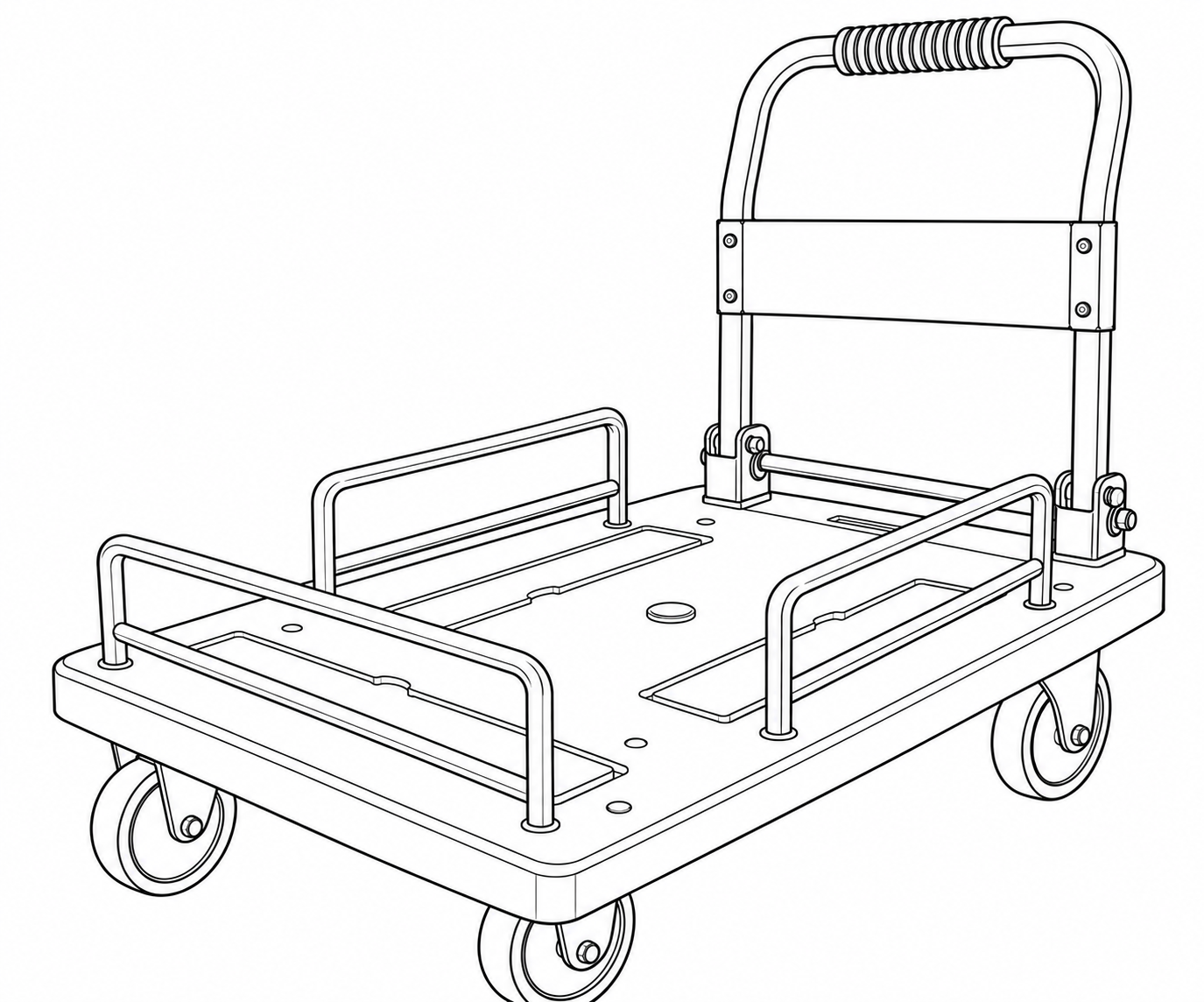 Metal Trolley and Cart Product RangeCompare manual and electric trolleys, flatbeds, cages and wheelbarrows here before checking wheel and valve details on individual listings.View Product →
Frames with open axle brackets and a flat load plate, such as this one-click folding hand cart, are easier to re-wheel later, which matters when a fleet starts on solid wheels and moves to air-filled ones after the first season.
Sourcing Metal Carts With Air-Filled Wheels
Bintai Machinery (Jiangsu) Co., Ltd. manufactures metal carts and public furniture in SuSu Industrial Park, Suqian, Jiangsu, from a 26,000 square metre plant, and its export record includes trolleys shipped to European customers. Buyers comparing wheel options can review the company's metal trolley and cart range as a starting point, then confirm the wheel specification line by line rather than assuming it from a photograph.
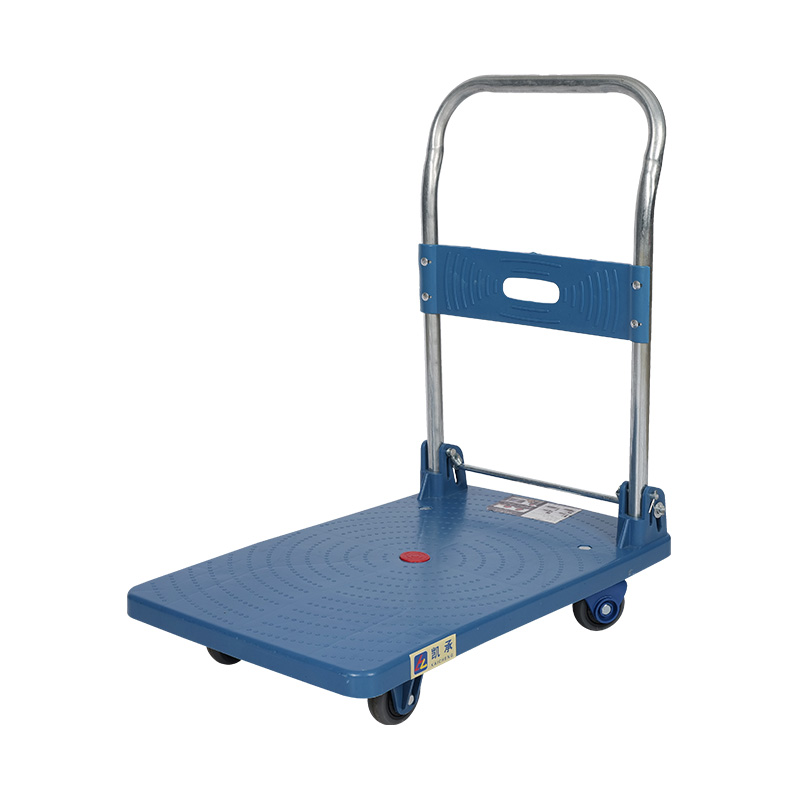 BT Flatbed Trolley with Steel DeckA heavy-duty flatbed platform trolley with spacious steel deck, swivel casters and powder-coated finish for warehouses, factories and construction sites.View Product →
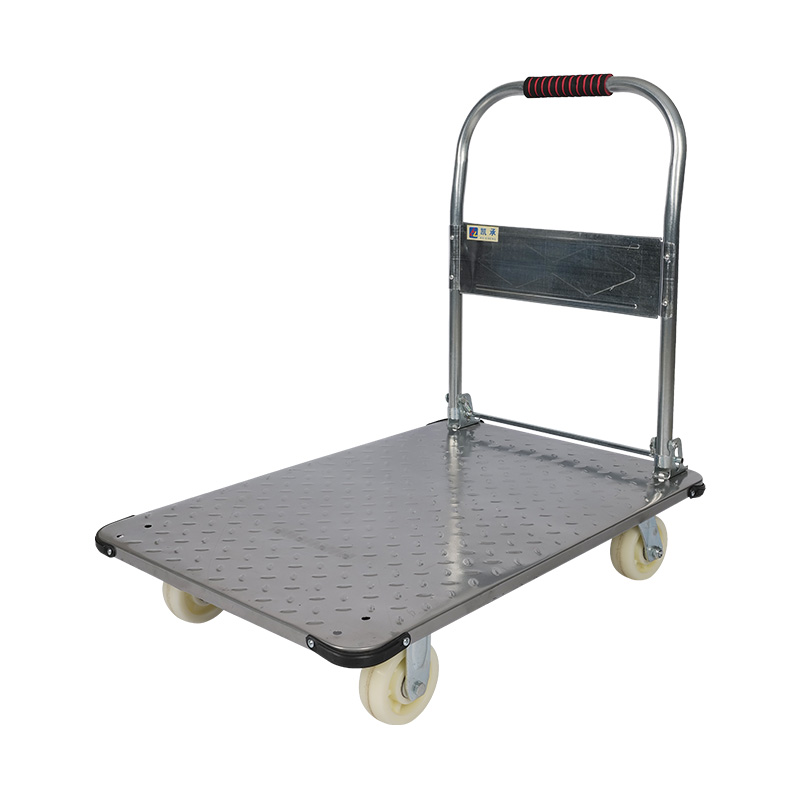
A flatbed platform cart such as the BT flatbed trolley is the format where wheel choice matters most, because on a turn a single wheel can carry a large share of the total load.
 BT-Foldable Silent Flatbed60*90 (300kg load-bearing)/47*73 (150kg load-bearing)View Product →
Folding flatbeds such as the BT foldable silent flatbed suit van-based delivery work, where the cart is lifted in and out repeatedly and a spare wheel is easy to keep on board.
What belongs in the purchase specification
- Tire type and nominal size, written as a casing reference rather than "10 inch wheel".
- Ply rating, maximum pressure and the recommended working pressure for the intended surface.
- Bearing type, axle diameter, hub width and fixing method.
- Load rating on the intended surface, not only on level concrete.
- Spare wheels and tubes per batch, plus valve core tooling.
- Shipping state: inflated, partly deflated or deflated with tubes packed separately.
- Inspection criteria on arrival, including pressure, bearing noise and casing deformation.
One ordering note: wheels shipped inflated consume container volume, while wheels shipped soft can develop flat spots after weeks in transit. Agree the shipping state in writing and add a few spare wheels and tubes to the first order — spares cost little compared with a cart standing idle.
Total Cost of Ownership and Delivery Checks
Compare the options over three years rather than one invoice. Pneumatic wheels bring tube replacements, a pump and a few minutes of pressure checking per cart each month; foam-filled wheels cost more upfront and add weight; solid wheels save the maintenance and give up the ride. The break-even point usually depends on how the cart is used, not on the price list.
When a delivery arrives, check pressure on every wheel, spin each one for bearing noise and look for casing deformation from stacking. Carts that arrive with soft tires and then sit in a warehouse for months often need tubes before their first job, which turns a small saving on wheels into a repair bill and a delayed start.
Treat the wheel as part of the cart's specification, not an accessory. Match tire type to the surface, size and ply rating to the load, and maintenance to the people who will actually own the cart, and a pneumatic tire remains the most comfortable and efficient choice for mixed ground.


