

 English
 Español
A 180 kg server rack has to travel 40 metres across a smooth warehouse floor, round two corners, and pass through a 900 mm door. A four-wheel platform dolly handles that trip in one clean push. The same dolly is the wrong tool when the job becomes twelve mixed boxes, three stops along a 120 metre picking route, and a loading ramp. That is the practical divide behind the "cart or dolly" question: the answer depends less on the label than on the load, the route, and how many trips you are trying to avoid.
Short version: choose a dolly for one dense, low-profile load on a flat, short route. Choose a cart when the job involves multiple items, repeated trips, longer distances, or a need to keep the load organised. The rest of this guide explains where each design earns its keep and which specifications actually change the buying decision.
Content
The Cart-or-Dolly Decision Starts With the Load
Terminology varies by region and trade. In many supplier catalogues, a dolly is a small platform with four wheels and two axles, designed to sit under a load. In others, "dolly" means a two-wheel hand truck with a vertical frame. Both are valid; the useful distinction is how the load is carried. A platform dolly keeps the load horizontal and low. A hand truck leans the load onto a frame and balances it over two wheels. A cart, in the sense used here, is a four-wheel flatbed or utility trolley with a handle and a larger deck.
| Type | Wheels and deck | Typical load | Best route | Indicative rating |
|---|---|---|---|---|
| Platform dolly | 4 casters, low deck | Single dense item, appliance, crate | Flat, short, tight corners | 150-500 kg |
| Two-wheel hand truck | 2 wheels, vertical frame | Stacked boxes, cylinders, van loading | Stairs, kerbs, thresholds | 100-300 kg |
| Flatbed cart | 4 casters, handle, larger deck | Mixed loads, order picking, long aisles | Smooth floors, ramps with brake | 200-600 kg |
| Folding trolley | 2-4 wheels, folding frame | Light deliveries, service calls, storage | Mixed floors, car boots | 60-150 kg |
When a Dolly Is the Smarter Choice
Dollies win on density and simplicity. A low deck means you lift the load once, not twice, and the centre of gravity stays close to the floor. That matters with a 200 kg crate: a platform dolly with 100 mm casters and a 120 mm deck height can be pushed under a pallet gap or a machine base, then strapped and rolled. The same load on a cart demands a higher lift and a wider turning circle. In tight plant rooms, service corridors, and container unloading, that difference decides whether the tool is used or left in the corner.
The trade-off is route quality. Small casters tolerate little. A 10-15 mm expansion joint is fine; a 25 mm lip at a dock edge will stop a 75 mm wheel and can tip a tall load. If the route includes gravel, cable ramps, or a steep ramp, a dolly is the wrong starting point unless you add a second person and a strap. Storage is the other advantage: a folding hand truck takes up little space in a van or service cupboard, which is why it survives in field-service work.
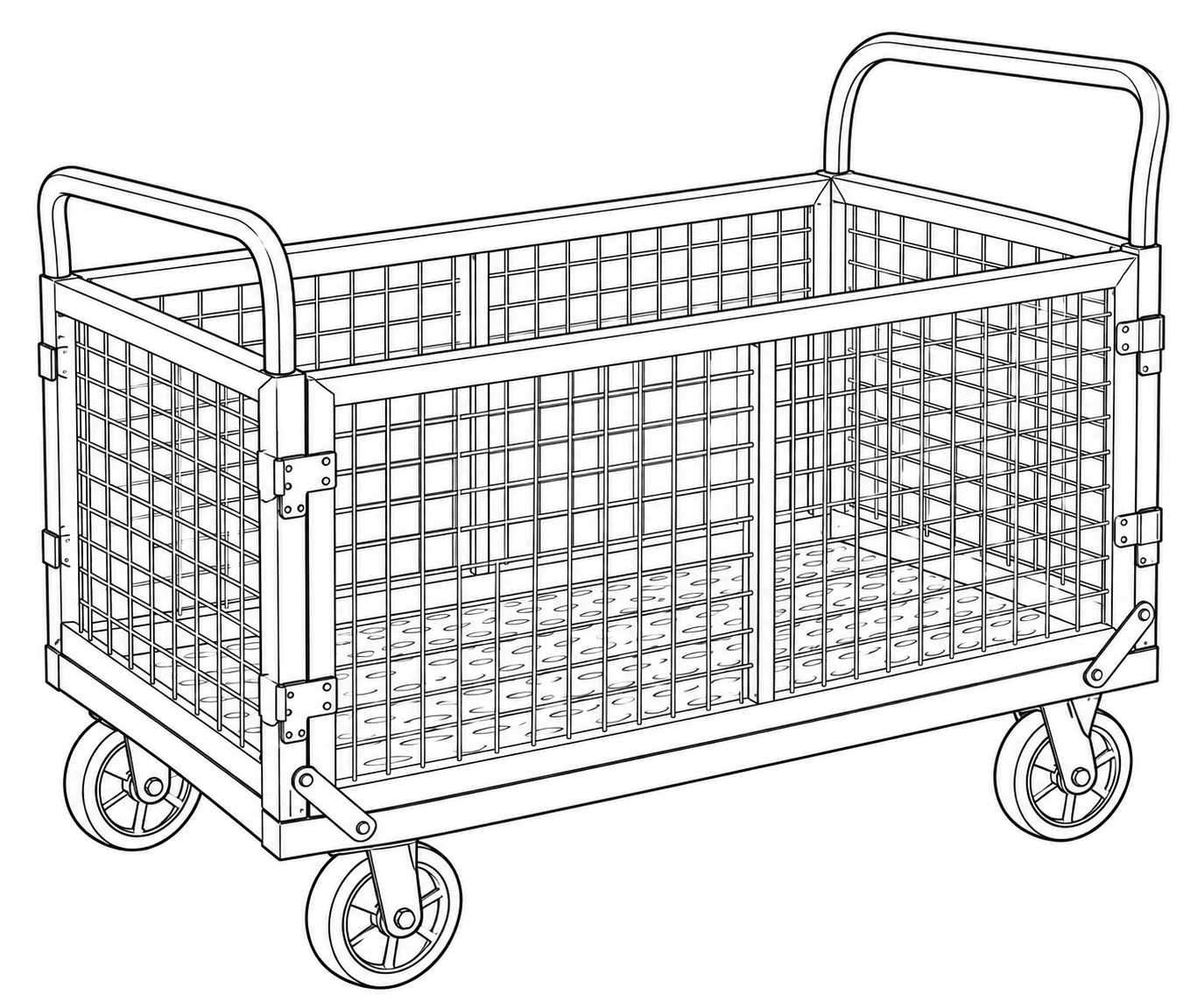
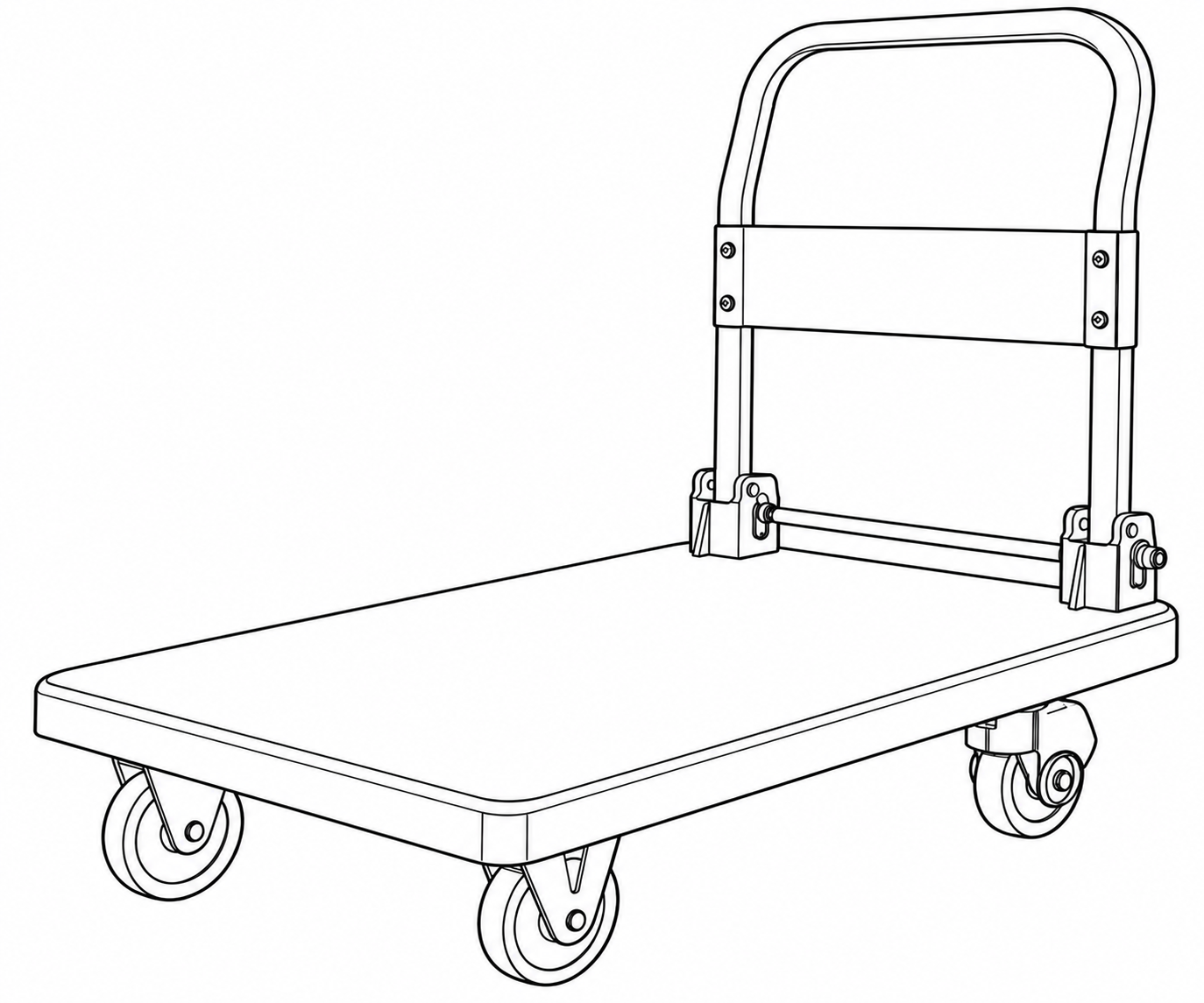
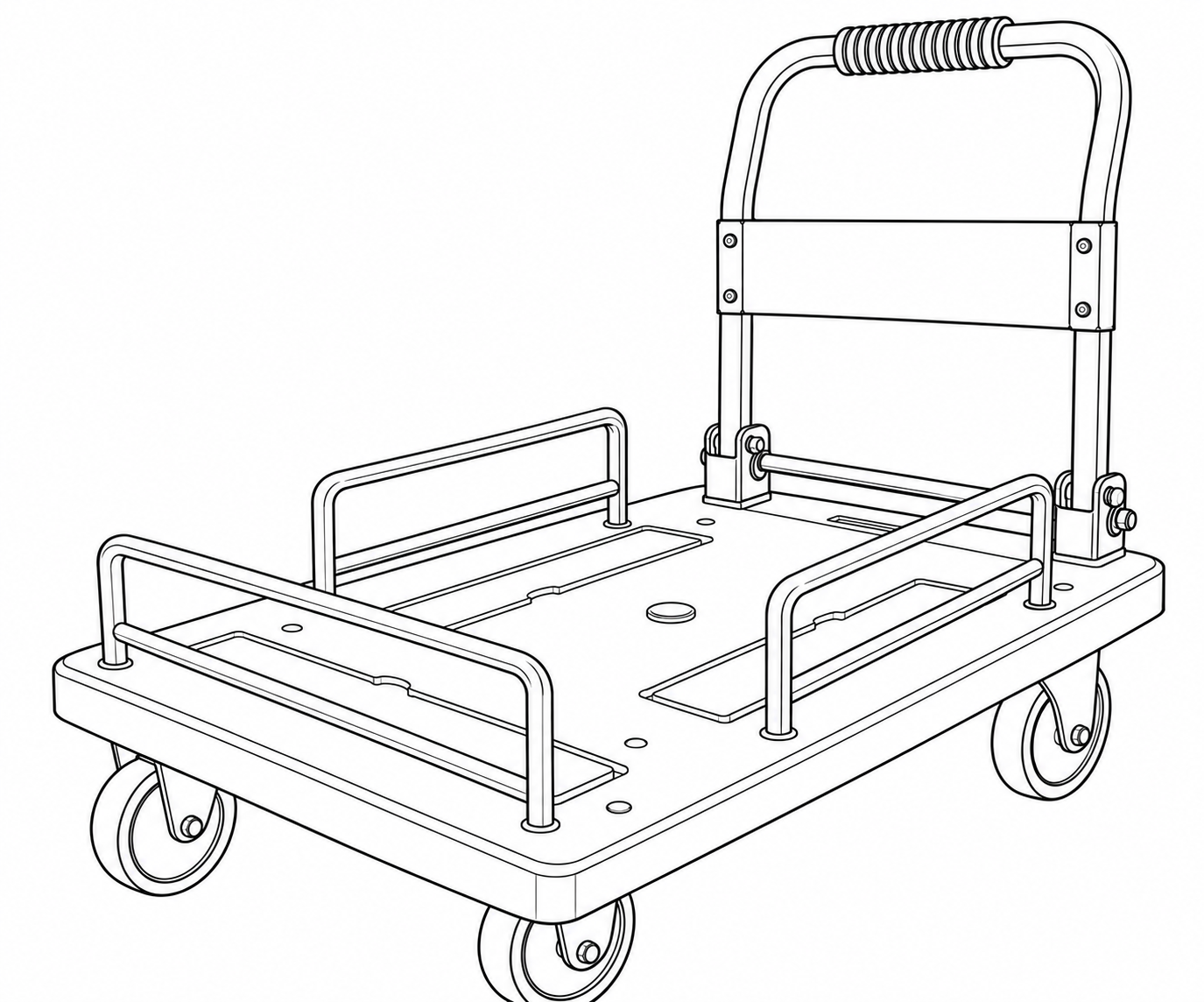 Metal Platform Trolleys, Cage Carts and Electric TrolleysBrowse metal platform trolleys, cage carts, electric trolleys and wheelbarrows, with options for size, load handling and folding features.View Product →
When a Cart Pays for Itself
A cart is a volume tool. If a picker moves 20 lines per route, the cost of a dolly is not the dolly; it is the nineteen extra trips. A flatbed cart with a 600 x 900 mm deck and a 250 kg rating can carry mixed cartons, a tool box, and a shrink-wrapped order in one pass. The handle also changes posture: a cart is pushed with both hands at hip height, which is easier on the shoulders over a 100 metre route than pulling a loaded hand truck backwards.
The penalty is footprint. A cart needs aisle width, a turning radius, and a place to park. As a rule of thumb, allow at least 150 mm clearance on each side of the widest deck, and check door widths against the loaded deck, not the empty cart. Ramps are another dividing line: a loaded cart on a slope needs a brake or a controlled descent; a dolly on the same slope is a manual balancing act. For warehouses with smooth concrete, long aisles, and repeat orders, the cart usually wins on labour hours even when its purchase price is higher.
If you are comparing designs for a specific route, this practical dolly and hand truck decision guide walks through similar trade-offs.
Wheels, Floors, and the Numbers That Actually Decide
Most buying mistakes sit in the wheel specification, not the frame. Caster diameter sets obstacle clearance. A 75 mm wheel suits smooth concrete and tiled floors; 100-125 mm wheels handle expansion joints, dock plates, and short outdoor aprons; 160 mm and above are for rough surfaces and mixed terrain. Wheel material changes noise and rolling resistance. Polyurethane rolls quietly and resists abrasion, nylon is harder and noisier, and rubber cushions vibration but takes more effort to push. In a hospital, a library, or a late-night retail floor, the noise difference is a real specification, not a detail.
Load rating is also misunderstood. A 300 kg cart with four casters does not place 75 kg on each wheel. On an uneven floor, two wheels can carry most of the load, so a 1.5x safety factor is a sensible minimum. Check the deck height too: a low deck reduces lifting, but it also reduces clearance over thresholds. For cold stores, confirm the wheel compound and the lubricant against the operating temperature. For washdown or coastal sites, zinc plating is a start, hot-dip galvanising is better, and stainless steel is the honest answer where chloride exposure is continuous.
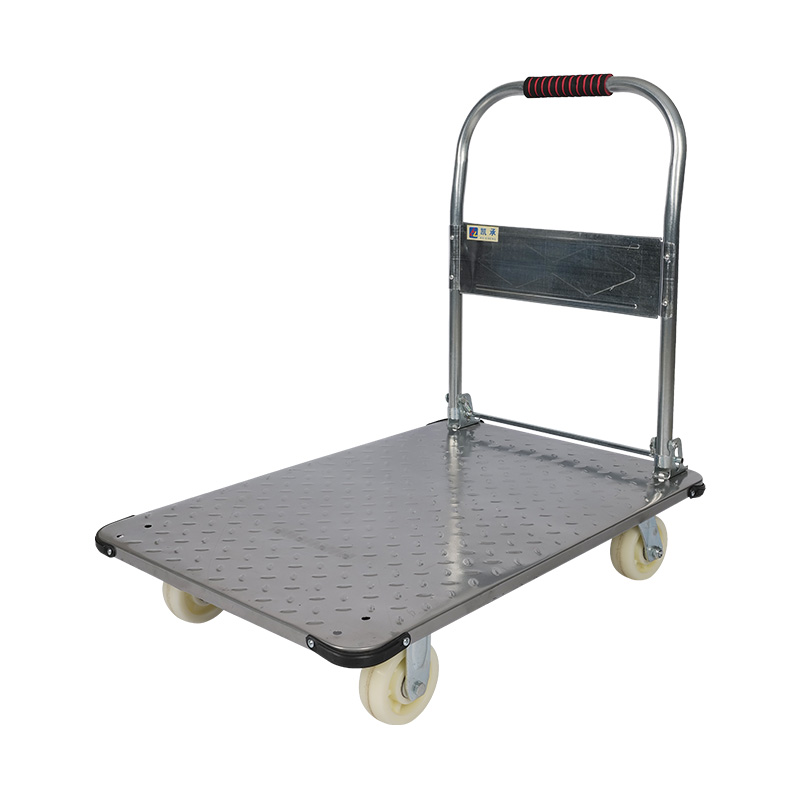 BT-Foldable Silent Flatbed Platform TrolleyFolding flatbed in 60×90 cm and 47×73 cm sizes, rated 300 kg and 150 kg, with compact storage for vans or small spaces.View Product →
The Middle Ground: Folding and Lift-Assist Designs
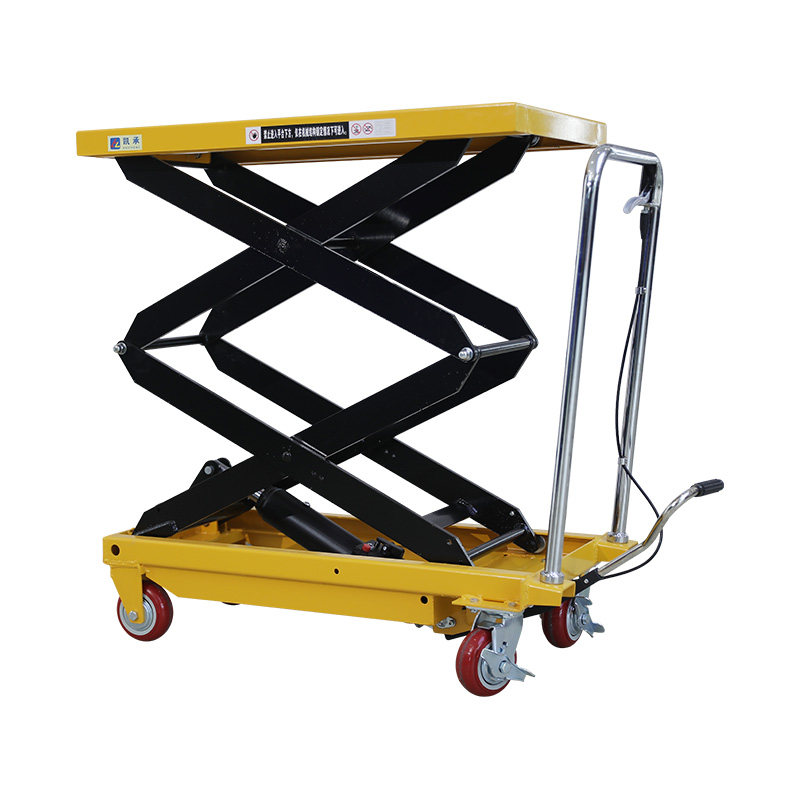
Not every job fits a plain dolly or cart. Folding trolleys convert a two-wheel hand truck into a four-wheel platform in one movement, which suits service engineers who need one tool in a van. Lift-assist carts add a hydraulic table so a 150 kg tool box can be raised to bench height without a separate hoist. These designs cost more per unit, but they remove a lift or a second trip, and that is usually where the payback sits. The question to ask is not "cart or dolly" but "how many times per shift does someone bend, lift, or walk back for a second load?"
 BT-Storage Hydraulic Mobile Tool CartMobile workshop cart with hydraulic lift, storage compartments and side work platforms, sized 815×500×900 mm for on-site tool organisation.View Product →
A Short Procurement Checklist
Before you compare quotations, put the following on one page and send it to every supplier. It keeps the comparison honest and exposes the units that only look cheaper.
- Rated load, stated per unit and per wheel, with the test condition.
- Deck size and deck height, measured with the wheels fitted.
- Folded dimensions and standing footprint for storage.
- Wheel diameter, tread material, bearing type, and brake option.
- Frame material, wall thickness, weld finish, and coating system.
- Handle height and grip; check it against the actual operator, not the average.
- Spare parts availability for wheels, casters, and pins.
- Packing dimensions and container quantity if the order is for export.
For buyers sourcing a mixed fleet, it also helps to look at the metal foldable trolley range as a family rather than as isolated SKUs. Shared wheels and handles reduce spare-parts stock and make training simpler across sites.
The cleanest decision rule is still the route and the load. If the load is one dense item and the route is short, flat, and clear, a dolly gets the job done with less width and less cost. If the load is mixed, the route is long, or the trip repeats twenty times a shift, a cart buys back time and reduces handling. Match the wheel to the floor, add a safety factor to the rated load, and check the folded footprint before you order a fleet. Those three checks prevent most of the returns, injuries, and "why is this thing stuck at the dock" conversations that follow a poorly specified purchase.


