

 English
 Español
At 6:15 a.m. a 26-foot beverage truck backs into the third stop of eight, and the driver still has roughly 450 cases on board. The truck itself does not decide whether that route finishes safely and on time. The hand truck, keg dolly, and flatbed cart that come off its bays do.
So here is the conclusion first: when you specify a beer delivery truck, treat the vehicle and the load-handling equipment as one system. The bay floor or liftgate deck sets the transfer height, and the cart or dolly you roll off it sets the effort per case, the injury exposure, and how many stops a driver can realistically finish. Fleets that buy the truck first and the carts later usually end up re-buying both.
Content
What Actually Comes Off a Beer Delivery Truck
A route is a sequence of weights, and it helps to write them down before comparing equipment:
- Half-barrel keg, 15.5 US gallons: about 160 pounds full, roughly 29 pounds empty.
- Sixth-barrel keg, 5.16 gallons: about 58 pounds full.
- Case of 24 twelve-ounce glass bottles: roughly 33 to 36 pounds.
- Case of 24 twelve-ounce cans: roughly 20 to 21 pounds.
- Thirty-pack of cans: roughly 26 to 28 pounds.
A 450-case day means the crew physically handles close to 15,000 pounds of product, one trip at a time, across pavement, through doorways, and over cooler thresholds. Any tool that removes two seconds and one awkward lift from each of 40 to 60 trips pays for itself inside a season.
Two vehicle details influence the tool choice more than any catalog rating. The first is transfer height: side-load beverage bodies and liftgate decks sit well above the pavement, so frame height and nose plate length matter more than a headline capacity figure. The second is the ground beyond the rear door: curbs, cracked asphalt, gravel yards, dock plates, and one- to two-inch cooler thresholds are the terrain your wheels actually meet.
Matching Handling Equipment to the Load
Three load types dominate a beverage route, and each one rewards a different tool.
Cases: hand trucks and folding carts
For stacked cases, a two-wheel hand truck with a welded frame, a 12- to 14-gauge nose plate, and 8- to 10-inch wheels covers the truck-to-door leg well. Where the load is already stacked inside a cooler or on a pallet, a four-wheel folding cart moves more per trip and collapses flat in the bay between stops. Routes that mix both often standardize on a convertible unit that switches between two-wheel and four-wheel position, so the driver carries one tool instead of two.
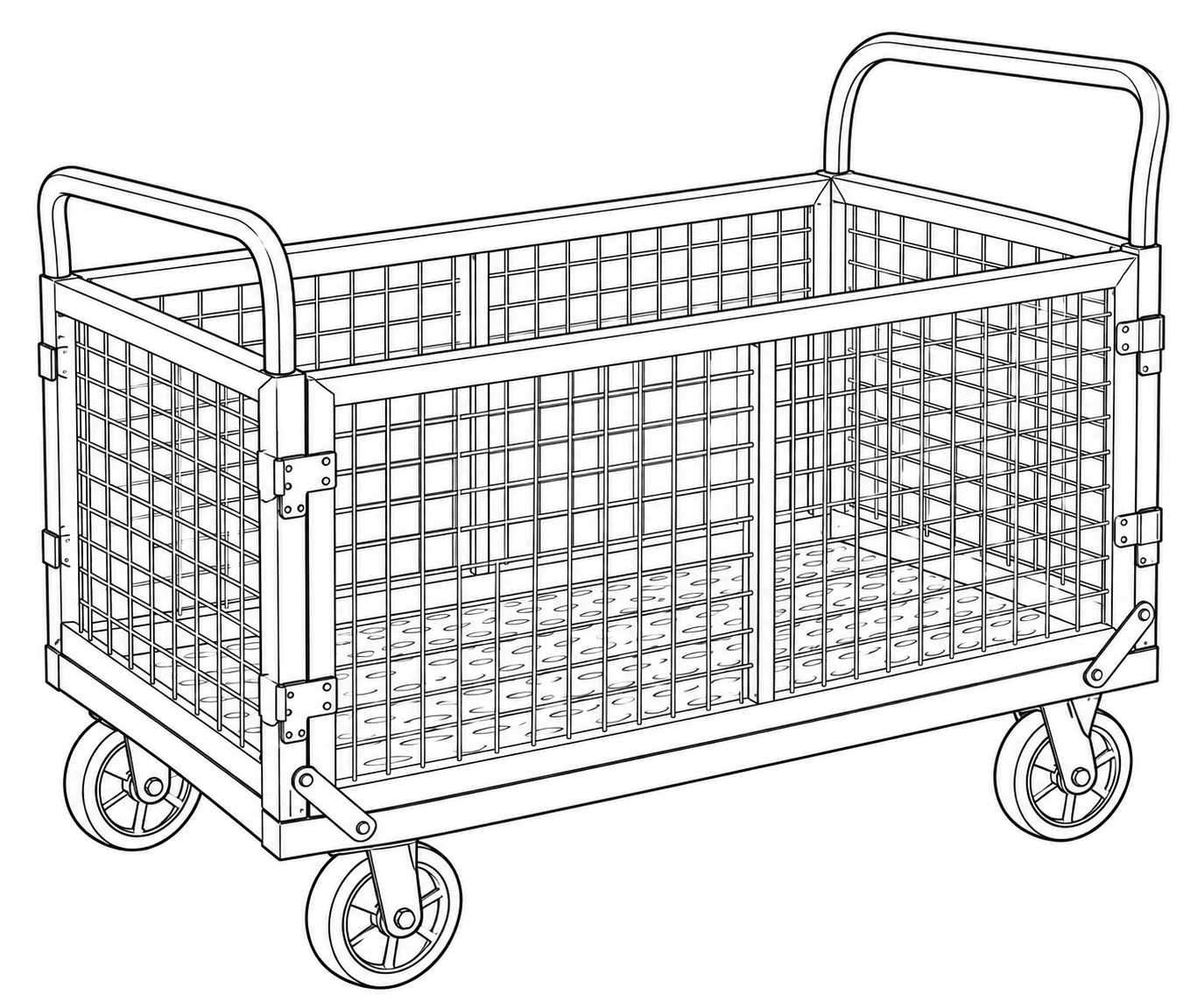
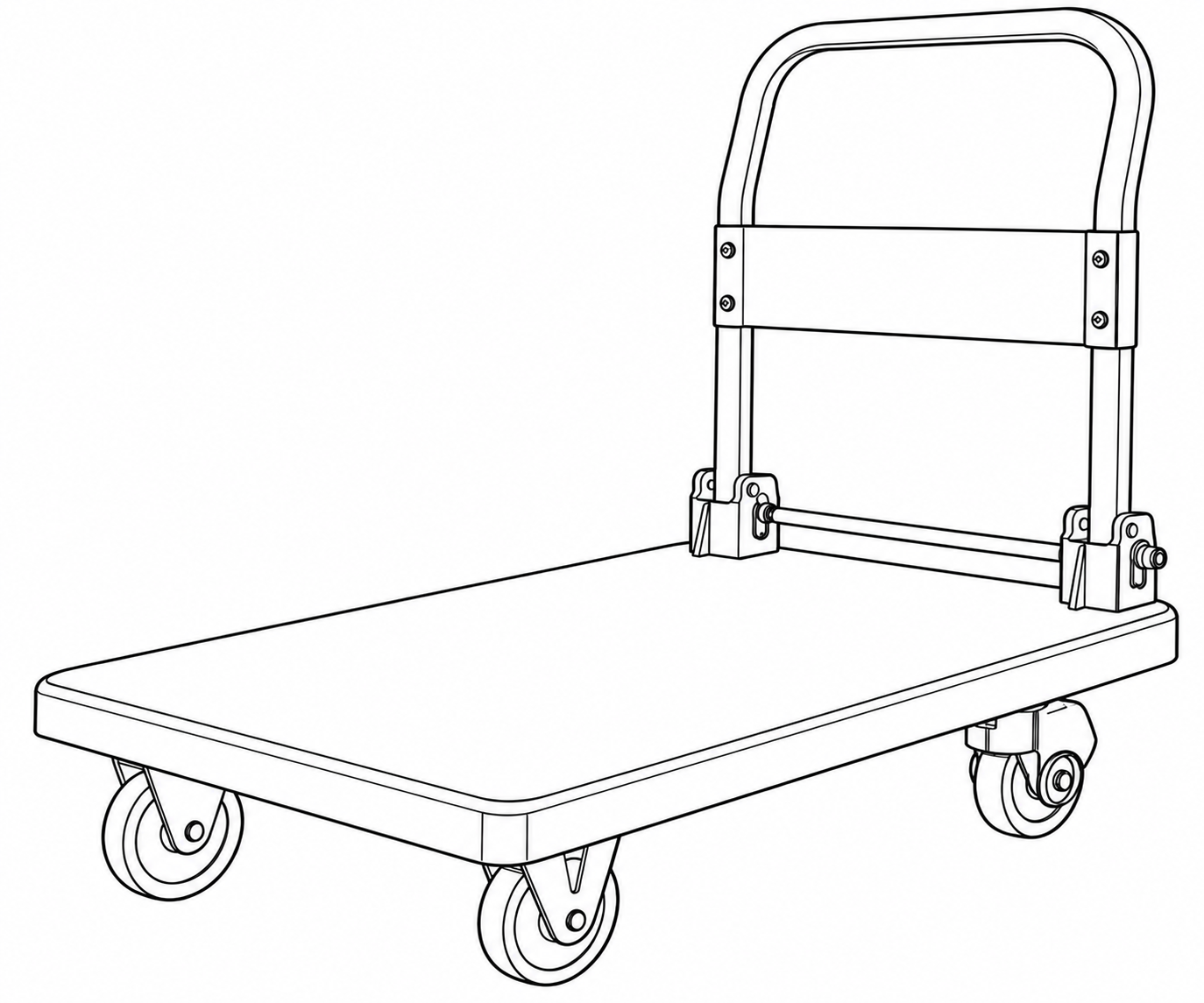
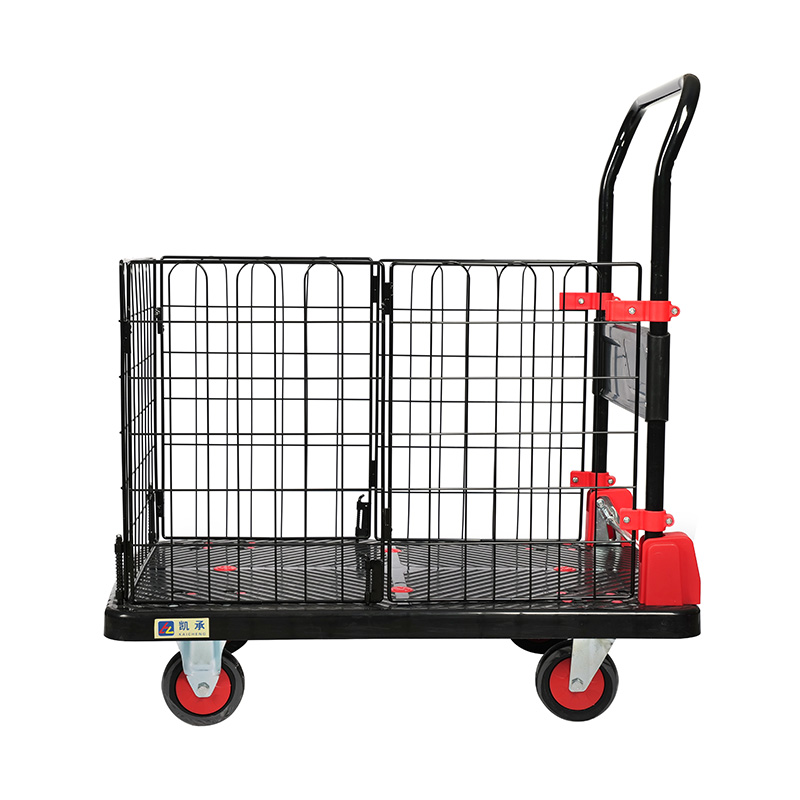
 Hand Carts, Trolleys, and Electric Transport EquipmentBrowse cage trolleys, platform trucks, electric trolleys, and wheelbarrows to compare options for stacked loads, folding storage, and mixed delivery routes.View Product →
A folding cart earns its place through the hinge. Check pivot pins, bushing play, and whether the deck locks positively in the open position; those three details decide whether the cart still tracks straight after a year of daily loading.
Kegs: dollies, keg trucks, and containment carts
A full half-barrel is the heaviest single item on the route and it rolls, so control beats capacity. Curved keg trucks with a retaining strap, low-profile platform dollies, and fence-style carts are the common answers. A four-wheel cart with a containment frame is the most flexible option when a driver has to move two to four kegs and a stack of cases in one trip across an uneven lot.
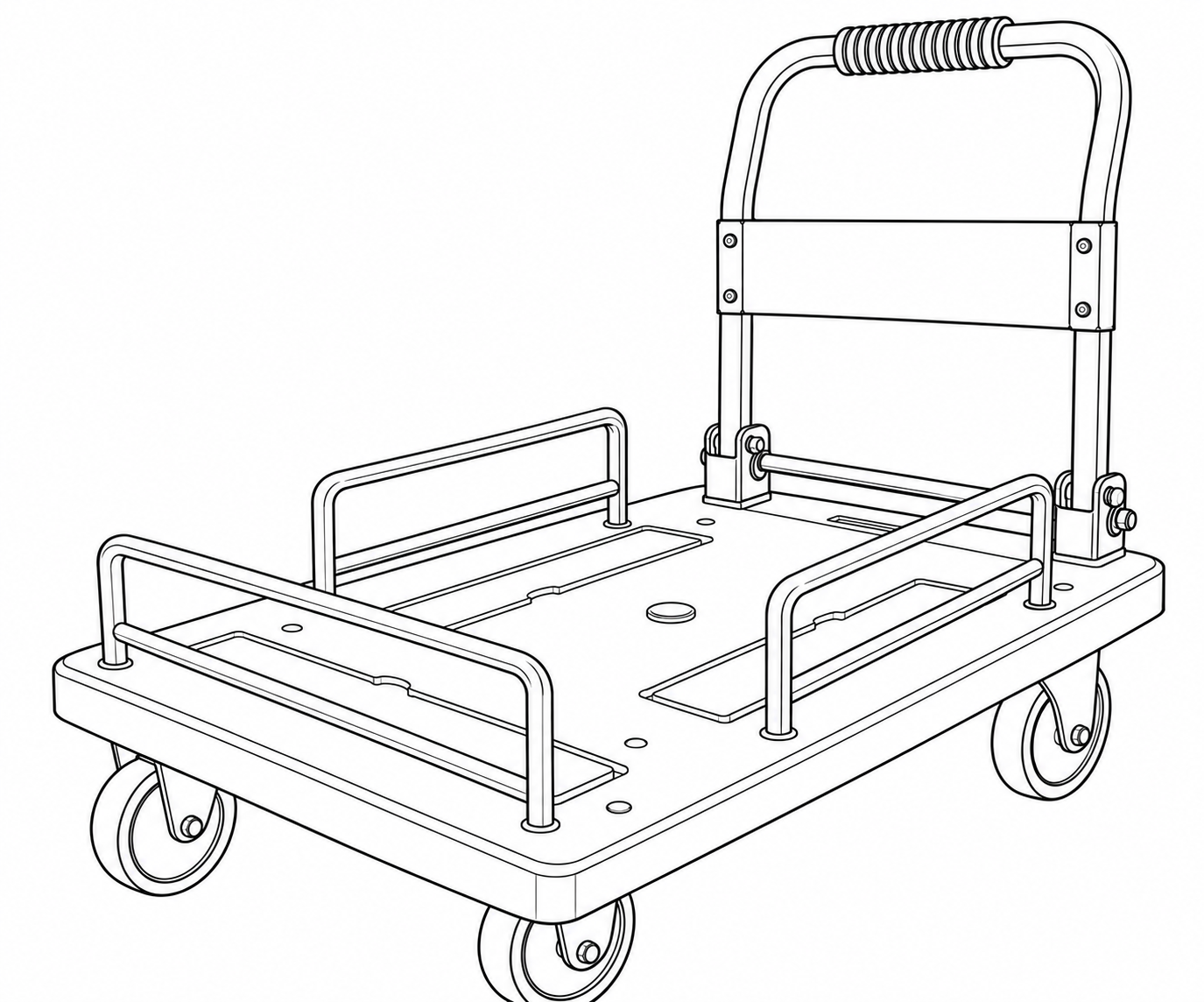
 Fence Flatbed Truck for Fencing Material TransportFor uneven lots where control matters, this fence-style flatbed truck has a reinforced non-slip bed, tie-down points, and hydraulic crane.View Product →
Keg handling also punishes wheels. Pneumatic tires absorb pavement cracks and thresholds but need air checks and can go flat mid-route; solid rubber or polyurethane wheels never go flat but transmit every jolt into the keg and the driver's shoulders. Many fleets split the difference by keeping pneumatic wheels on keg equipment and solid wheels on case equipment.
Long runs, ramps, and powered assistance
Warehouse-to-truck staging, stadium concourses, festival grounds, and any slope above roughly five percent change the math. Pushing 600 pounds up a ramp is a two-person job with manual equipment and a controlled stop with powered equipment. Battery-powered flatbed trucks remove the push, but they add a charging routine, so range and battery life must be specified against the worst day of the week rather than the average.
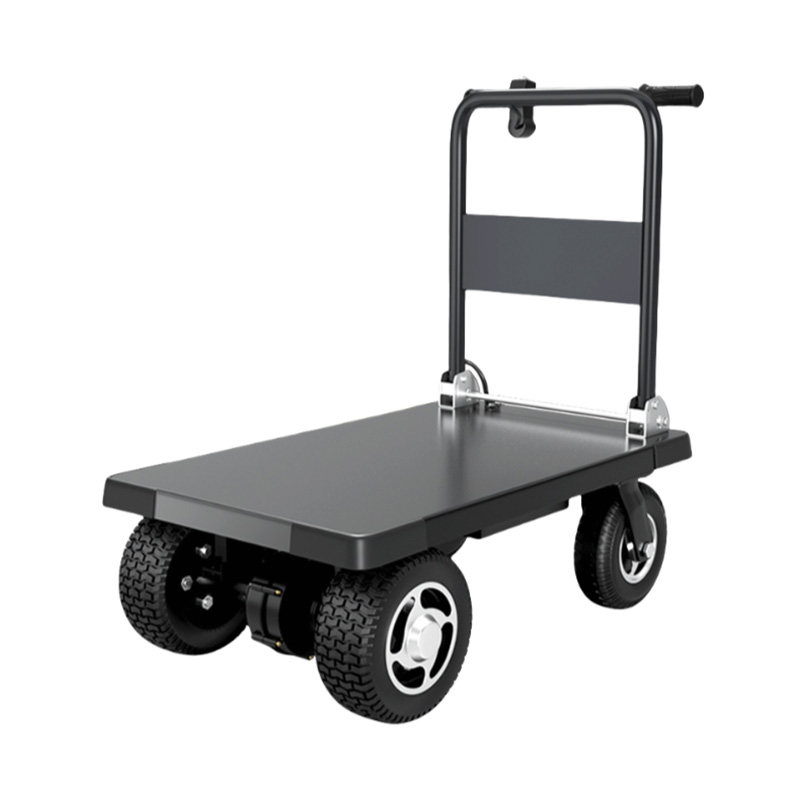 Long Battery Life Electric Flatbed TruckA 650W electric flatbed truck with 500 kg capacity and 30 km range, reducing manual pushing on ramps and long staging runs.View Product →
Materials, Wheels, and the Corrosion Problem
Beer is mildly acidic, and it ends up in places nobody plans for: inside the bay, on the deck of the cart, around the caster forks, and on the cooler floor at the end of the day. Add wash-down water and humid walk-ins, and mild steel without a proper finish starts rusting from the inside out. Equipment that lasts five years instead of eighteen months usually shares four traits:
- A powder-coated or hot-dip galvanized frame, with cut edges and weld seams treated, not just the visible surfaces.
- Zinc-plated or stainless fasteners, because rusted bolts are what make a good cart feel loose.
- Sealed or shielded caster bearings, so wash-down water does not flush out the grease.
- Replaceable wear parts, especially wheels, casters, nose plates, and straps.
If you are comparing a dolly against a hand truck for the same stop, the deciding factor is usually the doorway and the threshold rather than the load, so a short comparison of the two formats is worth reading before you standardize: dolly versus hand truck.
Comparing Beverage Handling Tools
| Tool | Common load range | Works best on | Common weak point |
|---|---|---|---|
| Two-wheel hand truck | 300 to 600 lb | Curbs, steps, tight doorways | Nose plate bending, tire flats |
| Four-wheel platform dolly | 500 to 1,000 lb | Docks, flat pavement, long aisles | Thresholds, gravel, caster wear |
| Fence or containment cart | 500 to 800 lb | Ramps, uneven lots, outdoor events | Higher empty weight |
| Folding cart | 150 to 350 lb | Store floors, tight back rooms | Hinge and pivot pin play |
| Electric flatbed trolley | 500 to 1,500 lb | Long staging runs and slopes | Battery range, charging routine |
Safety and the Real Cost of the Wrong Cart
Back, shoulder, and hand injuries on beverage routes almost always trace back to the same moment: a heavy item lifted and twisted at a cooler door while the driver is rushing. Equipment reduces that exposure in measurable ways. Keep the load height between knuckle and chest, push rather than pull on ramps, use two people above roughly 250 pounds, and specify a cart rated at least double the load it moves every day. Brakes on the casters are worth the small extra cost anywhere the truck parks on a slope.
Maintenance is the other half of the cost equation. Check wheel bearings weekly, axle bolts monthly, and inspect frames for cracks around the weld at the nose plate and the handle junction. A spare set of wheels on the truck costs less than one lost afternoon.
What to Put in the Purchase Specification
- Payload target set 25 to 30 percent above the heaviest routine load, not the average load.
- Wheel type and diameter matched to the real surface: pneumatic for cracked lots and thresholds, solid for smooth floors and wash-down areas.
- Frame material and finish named explicitly, including how cut edges and fasteners are protected.
- Folded dimensions and unit weight checked against the bay opening before ordering a fleet quantity.
- Replacement part availability for wheels, casters, nose plates, and straps.
- Fleet standardization on one or two formats so drivers, not carts, adapt to each stop.
- A single trial unit tested for two weeks on the hardest route before the full order.
Most beverage fleets end up buying the truck from one supplier and the carts from another, and the mismatch shows up in the bay: a cart that is two inches too tall, wheels that cannot cross a threshold, or a frame that rusts through its second winter. Sourcing handling equipment from a manufacturer that also builds logistics carts, trolleys, and industrial carts keeps the specifications in one place. Our own metal fabrication runs out of a 56-acre site with a 26,000-square-meter plant, an in-house development lab, and an export record that includes beverage-adjacent equipment shipped to European customers, so custom metal carts and trolleys can be dimensioned to your bay and your route rather than the other way around.
Start with the weights, the transfer height, and the ground outside the rear door. Those three facts will tell you which beer delivery truck equipment actually belongs on the route.


