

 English
 Español
An oak-and-iron hand truck pulled out of a barn usually sells for less than a brand-new steel model, even though it is eighty years older. That gap surprises first-time buyers who assume age equals value. Antique hand trucks live in two markets at once: a collector market that pays for original patina, maker marks, and period hardware, and a working market that cares only about load rating, wheel bearings, and whether the frame stays straight under a heavy crate.
The conclusion is worth stating before the details. Buy an antique hand truck because you want the object, not because you expect it to outperform modern equipment. If you move inventory eight hours a day, a current-production metal truck carries more weight safely and costs less per year of service. If you want a shop display, a restoration project, or a piece of local industrial history, the older truck is the better purchase.
Content
What Qualifies as an Antique Hand Truck
Dealers generally treat pre-1950 production as antique and the 1950s through the 1970s as vintage, though the boundary shifts with the maker. Four construction families turn up most often at estate sales, farm auctions, and plant closures.
- Wooden-frame trucks with iron strapping: common from the 1890s to the 1930s, typically two-wheeled, with hardwood rails, a steel nose plate, and hand-forged or riveted iron brackets.
- All-steel riveted trucks: the 1920s to the 1940s standard, built from angle iron with a curved back frame and either solid or cushioned rubber wheels.
- Convertible and folding trucks: designed for delivery work, with a hinged toe plate that let one person switch between two-wheel and four-wheel handling.
- Specialty forms: barrel trucks, appliance dollies with strap cleats, and narrow-aisle warehouse trucks with a low-profile nose.
Material alone does not date a truck. Wartime steel shortages pushed several manufacturers back to hardwood during the 1940s, and small workshops kept building wooden models long after larger factories had moved to welded steel frames.
Reading Age and Maker Marks
Hardware tells you more than the wood or paint does. Square nuts, visible hammer marks, and uneven rivet spacing point to small-shop production. Uniform rivets, welded corners, and stamped part numbers point to a factory catalog. The table below matches the most common features to the periods they usually indicate.
| Feature | Typical period | What it suggests |
|---|---|---|
| Hand-forged brackets with square nuts | 1890 to 1925 | Small-shop work, pre-standardization |
| Riveted angle-iron frame | 1920 to 1945 | Factory production, repairable but heavy |
| Visible welded beads | 1940s onward | Post-war fabrication, stronger joints |
| Solid cast-iron or wood wheels | Before 1930 | Early build, harsh on concrete floors |
| Cushioned rubber on steel hubs | 1930s to 1960s | Built for indoor and dock floors |
| Pneumatic tires | 1950s onward | Outdoor and rough-surface service |
Look for a name stamped into the nose plate, cast into the wheel hub, or hidden on a brass tag under layers of paint. A maker plate helps a specialist buyer confirm rarity, but it rarely changes the price by more than a modest margin unless the catalog is documented.
What Actually Drives Value
Collector forums and small auction results point to a narrower range than sellers hope for. A working, unrestored antique hand truck commonly changes hands for twenty to fifty dollars. A carefully cleaned example with original finish can reach one hundred dollars, and early cast-iron or unusually large examples occasionally clear two hundred. Condition matters more than age, but condition means the right kind of condition.
- Original finish and patina: factory paint, stenciled lettering, and honest oxidation are worth more than a fresh coat of enamel.
- Completeness: matching wheels, original axle pins, an intact nose plate, and any factory tag.
- Maker and rarity: regional builders with documented catalogs attract specialist buyers.
- Size and proportions: oversized and miniature trucks sell above the standard warehouse size.
- Provenance: a truck traced to a named factory, railway, or brewery carries local-history value.
Buyers should also weigh replacement cost against purchase price. A period-correct cast wheel can cost more than the truck itself, and a cracked back frame on a riveted model is expensive to repair without erasing its value.
Restoration Limits That Protect Value
Cleaning is where most owners destroy money. The safe approach is narrow and disciplined.
- Stop at dirt removal. Soap, water, and a soft brush are safe. Wire wheels and sandblasting are not.
- Keep the original finish unless the truck has already been repainted. A second restoration layer erases the first.
- Replace only what is missing or unsafe, such as a seized bearing, a cracked axle, or a nose plate worn to a knife edge.
- Photograph the truck before touching it, because documentation supports a higher asking price later.
Safety is the one place where restoration and daily use conflict. A restored wooden truck with original cast wheels may be perfectly sound at two hundred pounds and dangerous at six hundred, because the failure mode is a sudden frame split rather than a gradual bend you can feel.
Antique Design Versus Modern Load Ratings
Older trucks were built around smaller, lighter unit loads, and their ratings were informal. Modern carts are specified, tested, and labeled. The practical differences show up in four places.
- Load capacity: period wooden trucks handled roughly 200 to 400 pounds, while current steel and stainless trucks are commonly rated from 500 to 1,000 pounds.
- Wheel and bearing design: early trucks used plain bushings, while modern carts use sealed bearings that roll quietly on tile and epoxy floors.
- Frame geometry: current uprights keep the center of gravity over the axle, which reduces wrist load when tipping a heavy load back.
- Surface treatment: powder coating, zinc plating, and hot-dip galvanizing resist the corrosion that turns an outdoor antique into scrap.
If you are still deciding between a two-wheel truck and a four-wheel platform cart, a practical comparison of dollies and hand trucks walks through the trade-offs in floor type, aisle width, and load shape.
Sourcing a Working Truck Instead
For buyers who need equipment rather than a display piece, the answer is a current-production metal truck with a published rating. Bintai Machinery (Jiangsu) Co., Ltd., a metal products manufacturer based in Suqian, China, produces folding hand carts, warehouse logistics trucks, and hydraulic tool carts in steel and stainless steel, supported by its own research laboratory and a 26,000 square meter plant. The company ships regularly to European buyers, with cart and trolley loads leaving for Munich and other destinations.
For a direct replacement for the folding carts used in most warehouses, the one-click folding range collapses for storage and rolls quietly on indoor floors.
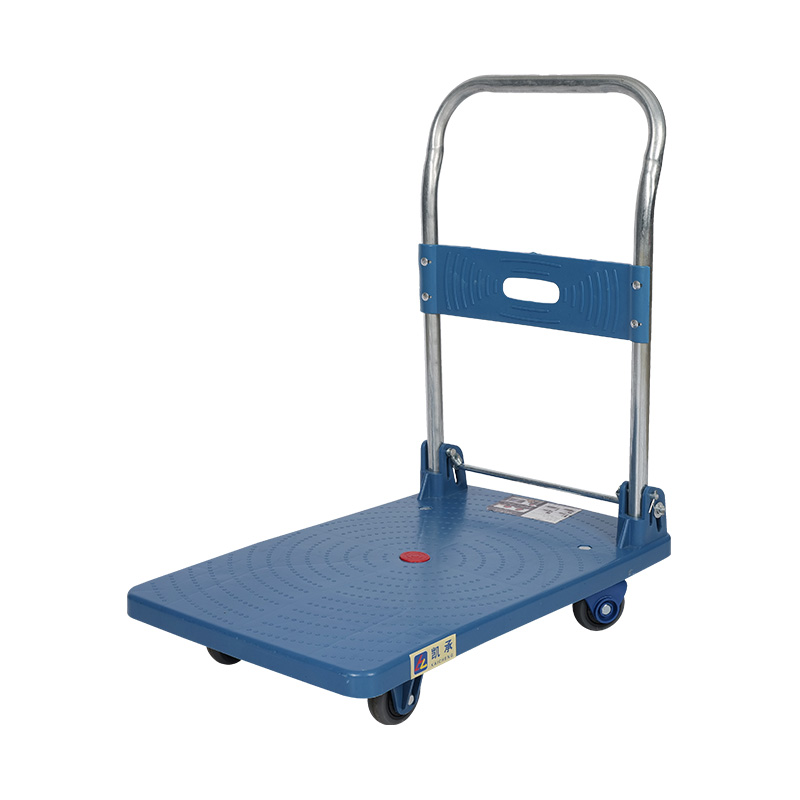 BT-Flatbed Trolley in One-Click Folding Hand Carts LineA robust steel flatbed trolley with swivel casters, anti-slip deck and raised edges, suited to warehouse material handling as a folding-cart replacement.View Product →
Where the workload is heavier and the route runs between racking aisles, a purpose-built warehouse truck with a higher rated platform is the safer choice.
 Material Handling and Metal Products Wholesale RangeExplore a wholesale index of cage trolleys, platform trucks, electric transport equipment, and metal product categories for varied material handling needs.View Product →
In maintenance and assembly areas, a hydraulic tool cart lifts parts to working height instead of forcing a lift at ground level.
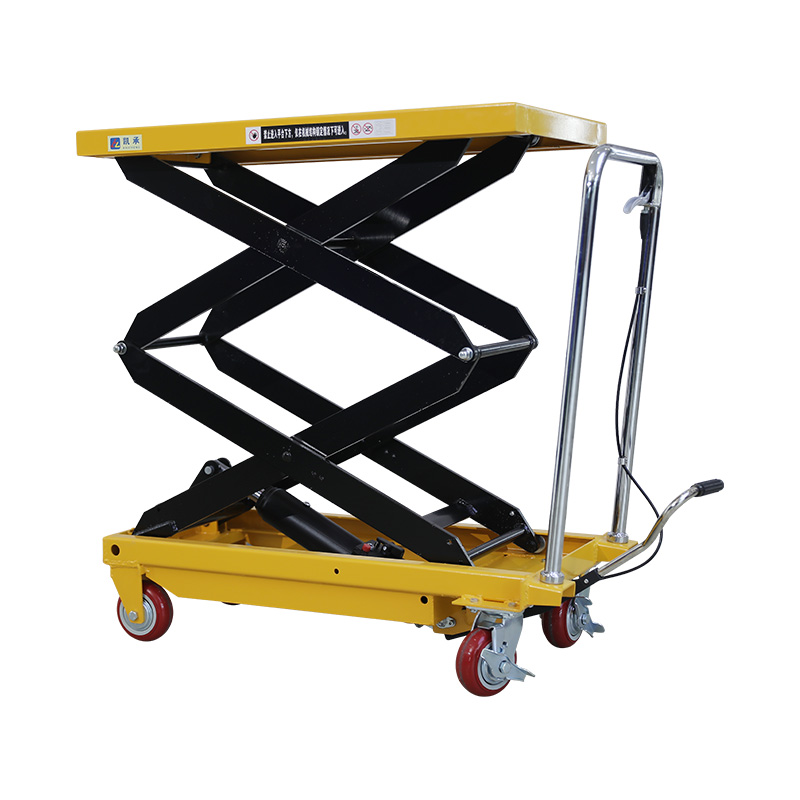 BT-Storage Hydraulic Tool Cart for Mobile WorkshopsA yellow hydraulic tool cart with customizable storage and lift assistance for contractors, mechanics, and technicians needing an organised mobile workshop.View Product →
Choosing Between Heritage and Duty
Ask one question before you spend money: will this truck ever carry a load that matters? If the honest answer is no, buy the antique, keep the patina, and treat it as furniture with a history. If the answer is yes, buy the truck built for the job and put the antique on the wall.
The two decisions rarely overlap, and mixing them is how people end up with a cracked 1930s frame and a repair bill larger than the value of the piece. Date the antique carefully, price it against real sales rather than asking prices, and when duty calls, choose steel with a rating plate on it.


