

 English
 Español
A custom trolley is usually bought to solve one stubborn handling problem: a load that does not fit a standard deck, a route that punishes ordinary casters, or a folding frame that must survive daily use. The useful conclusion is simple: specify the trolley from the load path backward, then verify the folding mechanism, finish, and packing before approving the first batch. Catalogue photos are a starting point, not a specification.
Content
- 1 Start With the Load Path, Not the Catalogue
- 2 The Custom Trolley Variables That Actually Change Cost and Risk
- 3 Match the Trolley to the Route and the Handler
- 4 Folding Mechanisms, Tolerances, and Daily Durability
- 5 Material and Finish Choices for Real Environments
- 6 Prototype, Inspection, and Export Packing
- 7 A Buying Checklist for Custom Trolley Projects
Start With the Load Path, Not the Catalogue
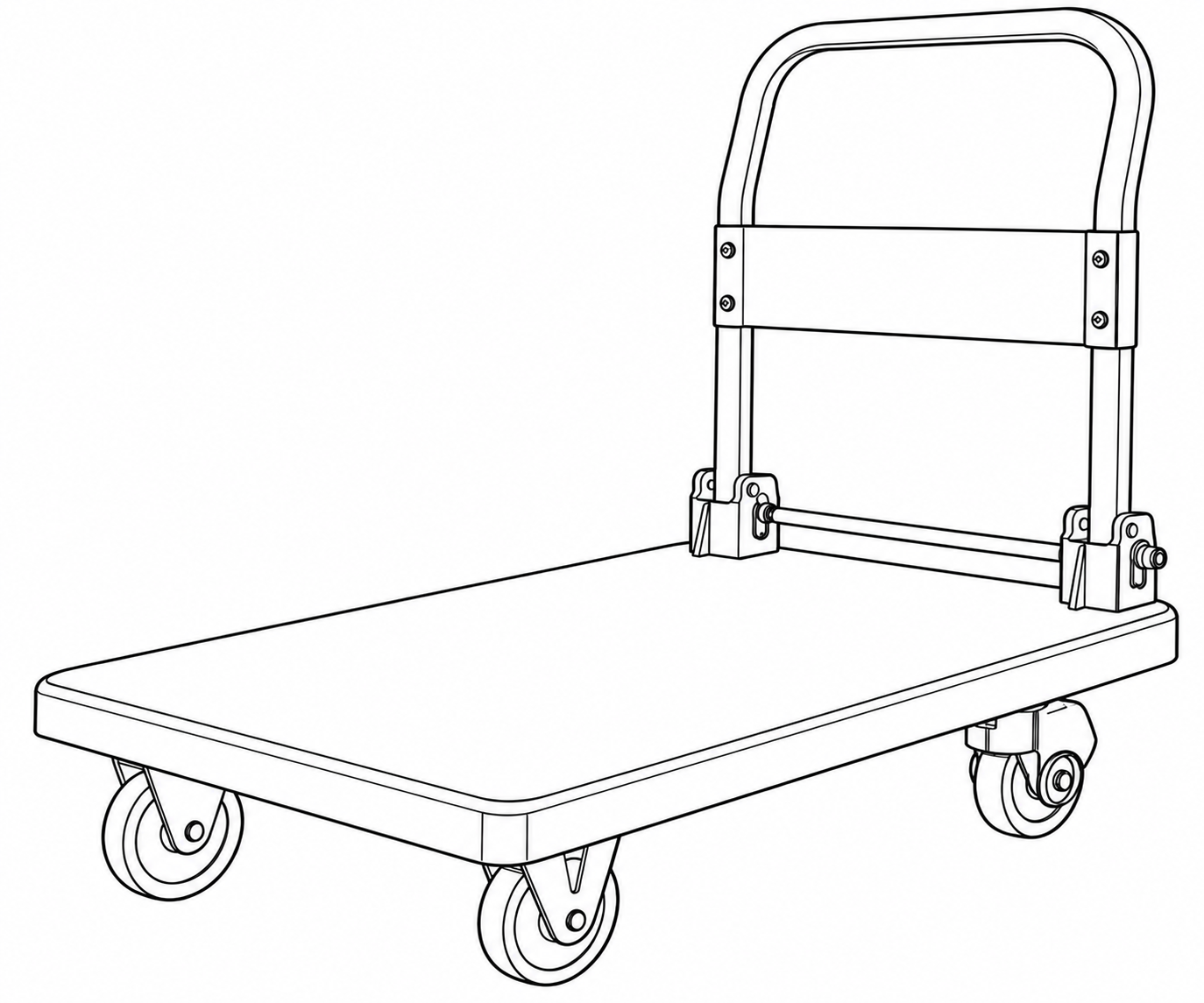
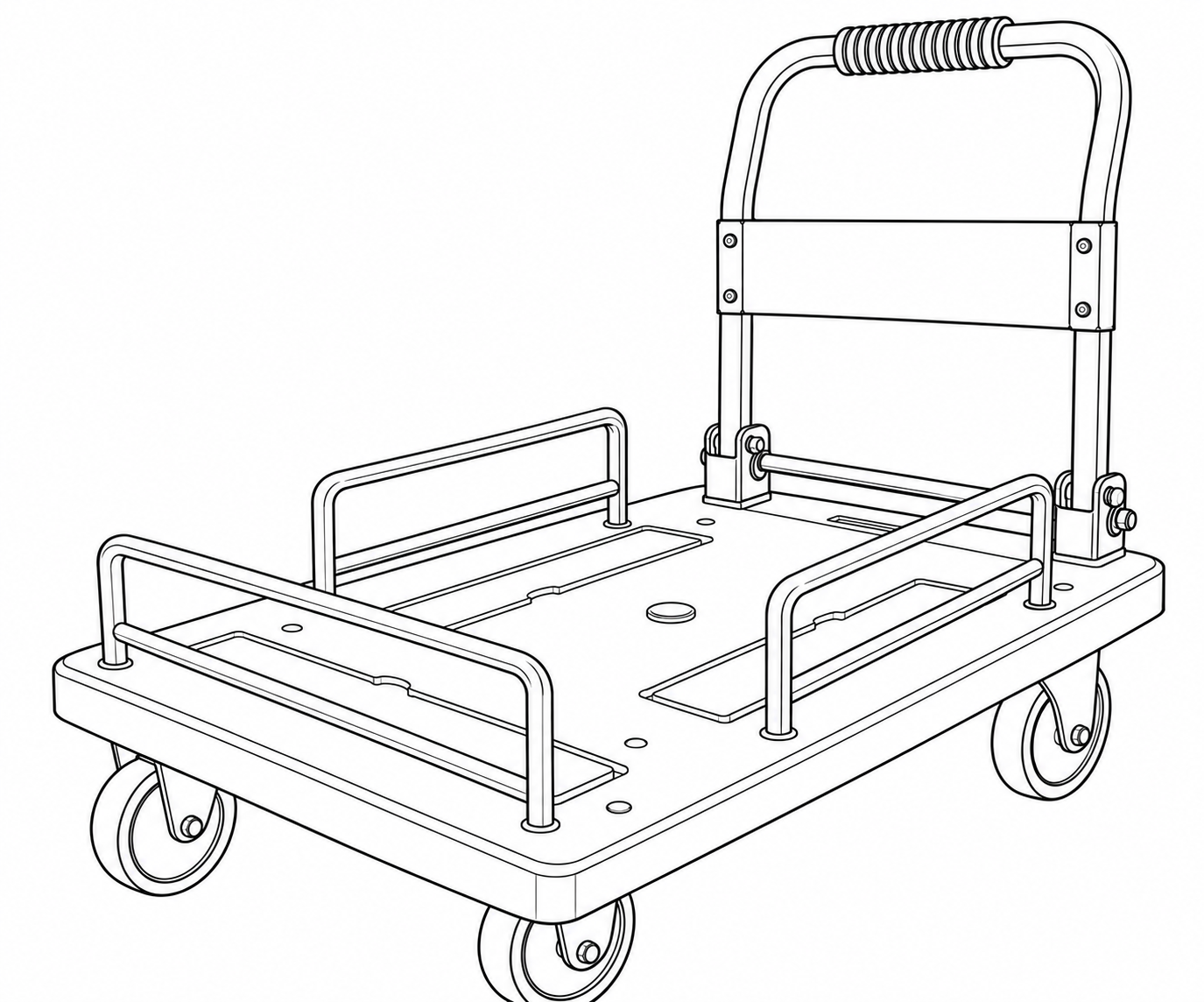
Start with the heaviest load, its centre of gravity, and how it is placed. A 500 kg rating means little if the load sits at the edge of the deck or is dropped onto one corner. For custom trolleys, ask for the rated load, the test method, the deck size, and the maximum load centre. Dynamic loads during pushing, braking, and turning are usually more demanding than a static stack. A trolley that is stable at 300 kg in a straight line can feel insecure at 200 kg on a ramp or a damaged floor joint. Check the wheel position relative to the deck edges, the thickness of the deck, and the reinforcement under the load. For heavy platform work, a reinforced folding platform trolley with a spare caster is a useful reference point:
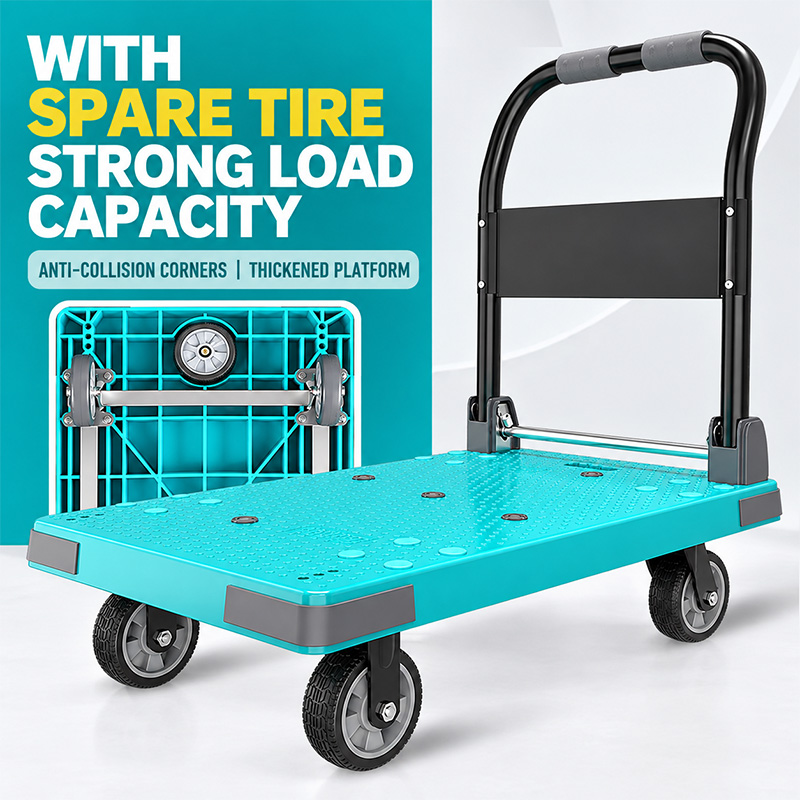 Heavy-Duty Foldable Platform Trolley with Spare CasterAluminum folding platform trolley rated 200–800 kg by size and wheels, with spare caster and anti-collision corners; useful for checking deck, wheel and load-system details.View Product →
The spare caster is not a decorative extra; it reduces downtime when a wheel is damaged in a busy warehouse. The more important point is that the frame, caster plate, and deck must be designed as one load system, not as parts chosen separately from a catalogue.
The Custom Trolley Variables That Actually Change Cost and Risk
Most custom trolley projects vary across a small number of decisions. The table below shows where buyers should ask for measured answers rather than general claims.
| Variable | Typical options | What to confirm |
|---|---|---|
| Load rating | 150 kg to 500 kg for general handling; heavier platform designs for industrial use | Rated load, load centre, dynamic test method, deck reinforcement, and caster mounting |
| Deck size | Common widths around 60 cm; lengths from 90 cm to 120 cm or custom | Overall dimensions, folded footprint, guard height, turning clearance, and container fit |
| Caster type | TPR, rubber, nylon, pneumatic, stainless, with or without brake | Floor surface, debris, temperature, rolling resistance, braking, and spare-part availability |
| Material and finish | Powder-coated steel, galvanized steel, stainless steel | Salt-spray requirement, weld preparation, scratch repair, drainage, and cleaning routine |
| Folding system | One-click fold, hinged handle, detachable sides, foldable cage | Locking method, hinge tolerance, cycle test, pinch points, and folded stability |
| Safety features | Brakes, side rails, guards, toe clearance, labels | Operator training, ramp use, load retention, and visible warning marks |
A custom trolley quote should separate the base platform, the caster upgrade, the finish, the folding hardware, and the packing. If a supplier quotes only from a photo, the buyer carries the risk of mismatched caster mounts, deck heights, and container dimensions. Ask for a dimensioned drawing before the first weld is made.
Match the Trolley to the Route and the Handler
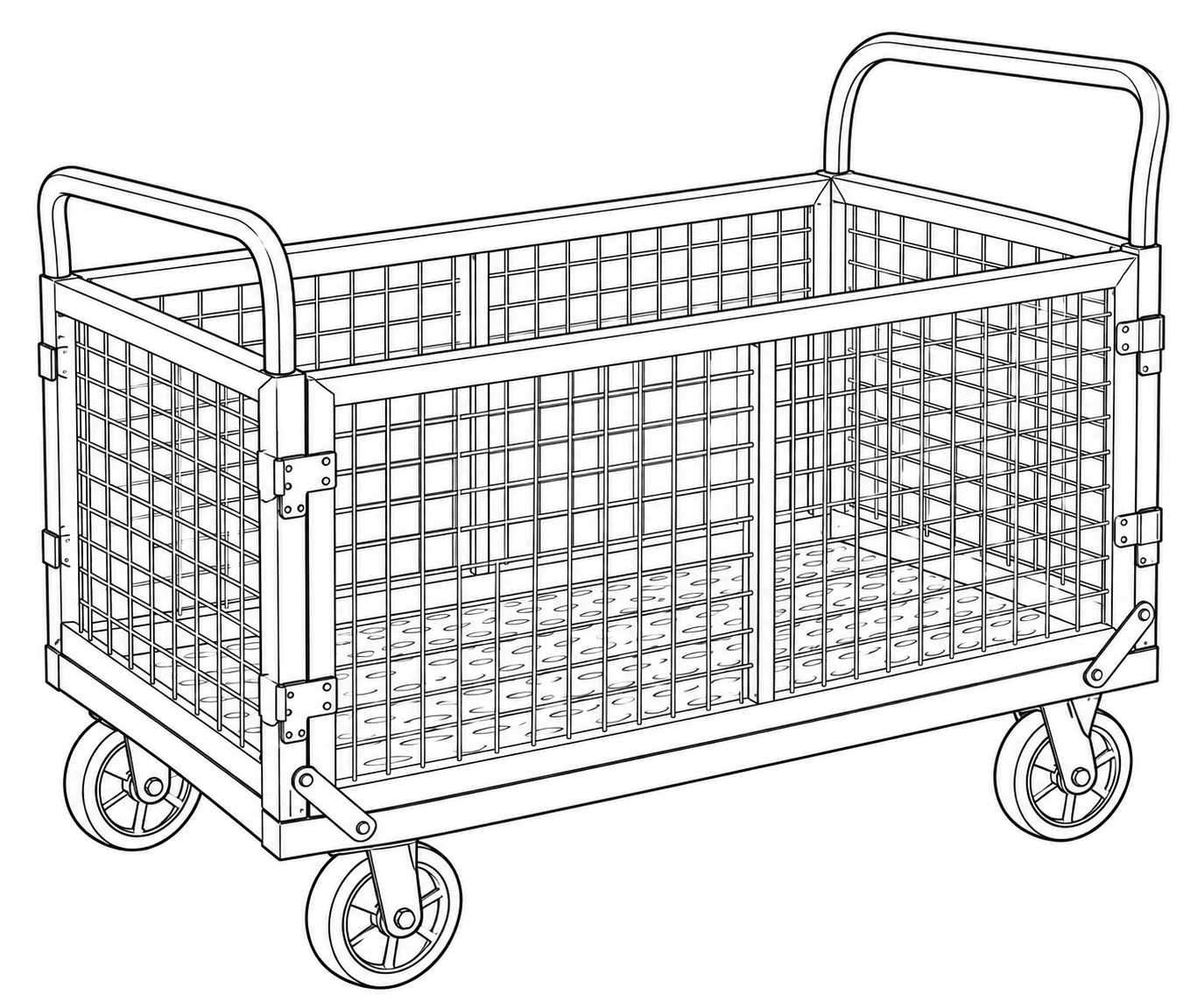
Route decides more than catalogue category. Smooth warehouse floors favour TPR or nylon casters; outdoor yards with grit and kerbs need larger wheels and better axle protection. Ramps require brakes and a low centre of gravity. Narrow aisles require a folding or detachable handle and a tight turning radius. For warehouse order picking, a fully foldable mesh cage trolley is practical when loose goods must stay contained:
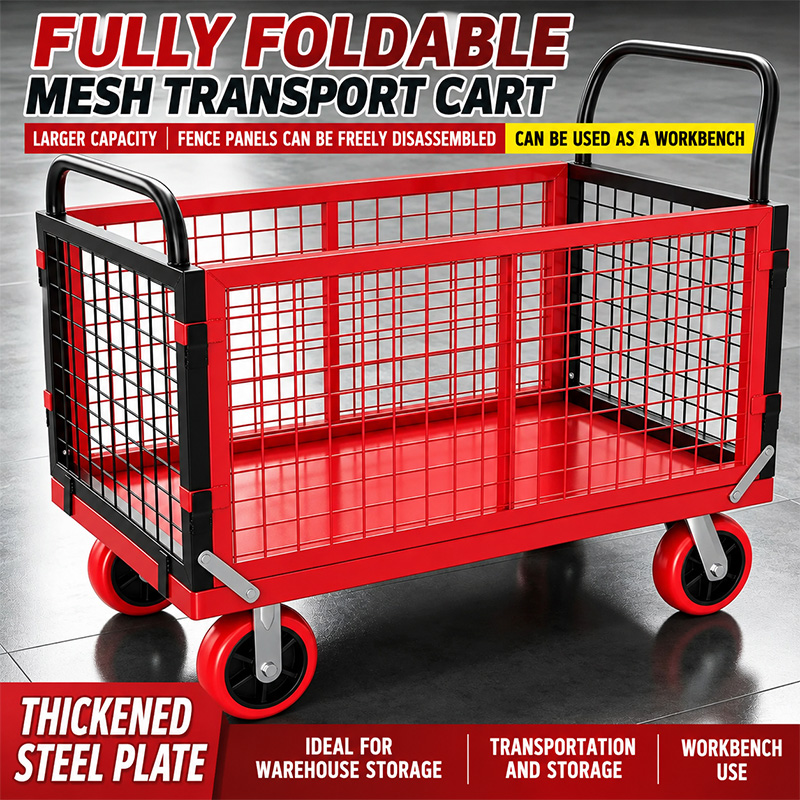 Fully Foldable Mesh Cage Transport TrolleyFoldable mesh cage trolley for warehouse and factory transport, with multiple size and wheel options and 250–600 kg capacity depending on dimensions and wheel choice.View Product →
For a paper mill or foundry, a flat-deck platform with a steel frame may be better than a cage because it allows forklift or crane lifting, provided the design includes lifting points. Powered movement is worth considering when operators push loads over long distances or up slight slopes. An electric trolley with an uncovered fence offers a different load-holding format for repetitive internal transport:
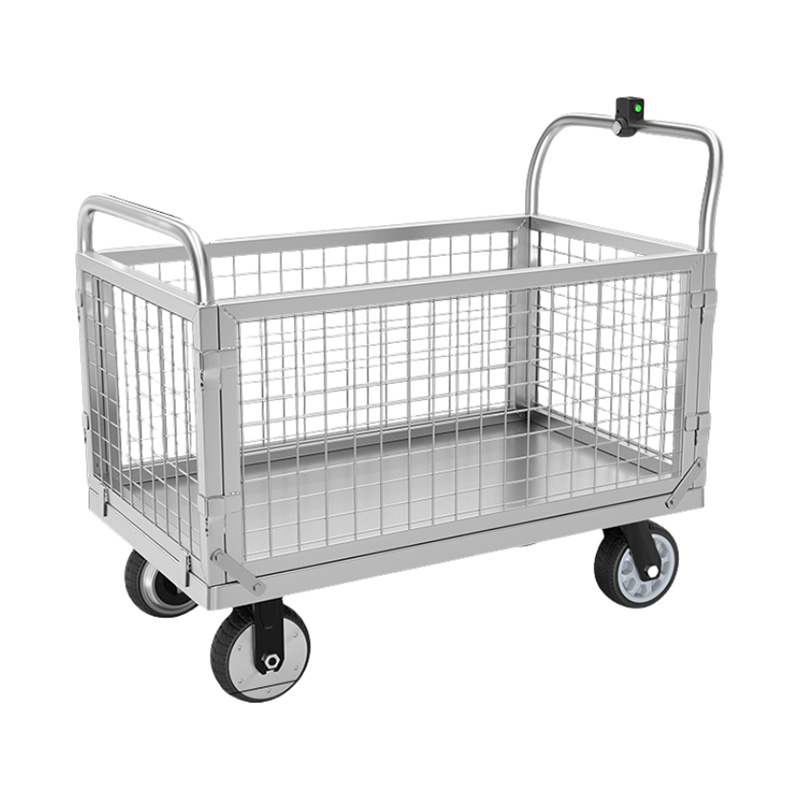 Electric Trolley with Uncovered FenceElectric trolley with open fence for bulky loads in short- to medium-distance transport, available in two deck sizes with 600 kg payload and 10 km range.View Product →
The handler matters as much as the floor. If the same trolley is used by cleaners, pickers, and maintenance staff, the controls and folding action must be obvious without training. A custom trolley that saves steel but adds a confusing brake or a sharp handle is a poor trade.
Folding Mechanisms, Tolerances, and Daily Durability
Folding is a wear item. The difference between a good and poor custom trolley often appears at the hinge, the locking pin, and the weld around the caster plate. Ask for the folded and unfolded dimensions, the number of moving joints, and the method that keeps the frame from collapsing under load. A positive lock, not friction alone, should hold the trolley open. Tolerance matters: a deck that is 3 mm out of square may still work, but a hinge that is 3 mm out of alignment can bind after a few hundred cycles. For export orders, request a cycle test. Two hundred to five hundred open-close cycles is a practical screening check, followed by inspection of pin wear, paint cracking, and fastener tightness. Avoid designs where the load is carried by a single small pin when a double plate or a folded steel section would spread the force. Also check that the folded trolley can stand upright without leaning on a wall, because storage stability affects daily use.
Material and Finish Choices for Real Environments
Finish selection should follow the actual environment, not a generic rustproof claim. Powder coating over properly prepared steel is suitable for indoor and covered use; galvanizing is better for outdoor storage and wet yards; stainless steel helps in food, pharmaceutical, or wash-down areas, but the grade and wall thickness still matter. For coastal or de-icing-salt exposure, specify the test duration and the acceptance criteria for salt spray, and ask how damaged coating will be touched up. A custom trolley with a 2 mm wall thickness and a good joint can outperform a thicker frame with poor welds. Check sharp edges, water traps in tubular sections, and drainage holes. If the trolley will be steam-cleaned, confirm that casters, bearings, and labels are compatible with that routine. These details are easier to settle at the drawing stage than after the first shipment arrives.
Prototype, Inspection, and Export Packing
Before mass production, approve a prototype against a written checklist: dimensions, load test, folding force, caster roll, brake function, surface finish, and label position. A practical load test is 1.25 to 1.5 times the rated load, evenly distributed, followed by a rolling trial over a 10 m route with a 20 mm obstruction. Record what changed after the test. Bintai Machinery's about page describes its manufacturing base, including a 26,000 m² workshop and a research laboratory; that background is relevant when a project needs custom jigs or a revised caster plate rather than a simple catalogue order. For export, confirm packing: corner protection, moisture barrier, caster protection, and container loading plan. An export shipment record for metal trolleys illustrates why the packing method should be agreed before the production slot, not after the trolleys are finished.
A Buying Checklist for Custom Trolley Projects
- State the rated load, load centre, and test method, not only the maximum weight.
- Confirm deck dimensions, folded footprint, guard height, and container fit.
- Choose caster type by floor, debris, temperature, brake needs, and spare-part plan.
- Specify frame material, wall thickness, finish, and salt-spray acceptance criteria.
- Approve the folding lock, hinge tolerance, and cycle-test record.
- Review safety features, labels, and operator instructions before shipment.
- Agree packaging, documents, sample approval, and inspection points in writing.
A custom trolley project becomes manageable when the buyer turns a photo into a measured brief. The lowest price is rarely the lowest cost if the caster mount cracks in the first month or the folded frame does not fit the export carton. Specify the load path, test the hinge, verify the finish, and agree the packing. That is the practical route to a trolley that fits the job rather than merely resembling one.


