

 English
 Español
Transit agencies and municipal project teams often shortlist bus shelter manufacturers on price and lead time. That approach works until a shelter starts rusting at bolted joints after two winters, or a panel gap lets rainwater run down the backrest. Experienced buyers look at three things first: how the shelter is engineered, what corrosion protection is applied, and whether the manufacturer can document real export and installation experience. A bus shelter is a long-term public asset, and the manufacturing decision determines most of its life-cycle cost.
Content
- 1 Structural engineering separates real bus shelter manufacturers from general metal workshops
- 2 Corrosion protection determines the real service life
- 3 Weather enclosure and passenger comfort decide daily performance
- 4 Customization and smart city compatibility are no longer optional
- 5 Manufacturing capability and quality control
- 6 Export logistics and delivery reliability
- 7 Practical evaluation checklist for comparing manufacturers
Structural engineering separates real bus shelter manufacturers from general metal workshops
Many fabricators can weld a frame and attach a roof panel. The measurable difference is how they treat load paths, material gauges, and joint design. A shelter on an exposed coastal boulevard faces wind forces that a campus shuttle stop never sees. If the roof is a flat panel with inadequate bracing, repeated storms progressively loosen the structure. Credible manufacturers specify materials by functional zone: hot-dip galvanized steel for structural posts, stainless steel for exposed fittings in corrosive environments, and powder-coated aluminum where weight and appearance dominate.
Ask for the calculation basis behind the design. A serious manufacturer should explain the expected wind load resistance, snow load limits, and why certain sections use thicker steel. Long production history shows up in practical details, such as drainage channels under the roof seam and drip edges above the passenger seat, which are rarely visible in a product rendering.
Corrosion protection determines the real service life
Nearly every shelter on the market is advertised as rust-resistant. The difference is in the process. Hot-dip galvanizing creates a metallurgically bonded zinc layer that protects cut edges and scratches through sacrificial action, which is why municipal specifications in Europe and North America commonly require it for structural steel. A shelter built with a hot-dip galvanized steel sheet frame, combined with a polyester powder topcoat, can reasonably serve fifteen years or more before major maintenance is needed. Stainless steel grades such as 304 are reserved for high-corrosion zones: coastal waiting areas, industrial districts, and locations where aggressive cleaning chemicals are used.
One concrete example is the hot-dip galvanized steel sheet bus shelter, which applies this protection strategy as its core specification. For buyers, the key question is not whether the manufacturer claims anti-corrosion performance, but where and how the coating is applied, and whether the galvanizing thickness follows an accepted standard such as ISO 1461.
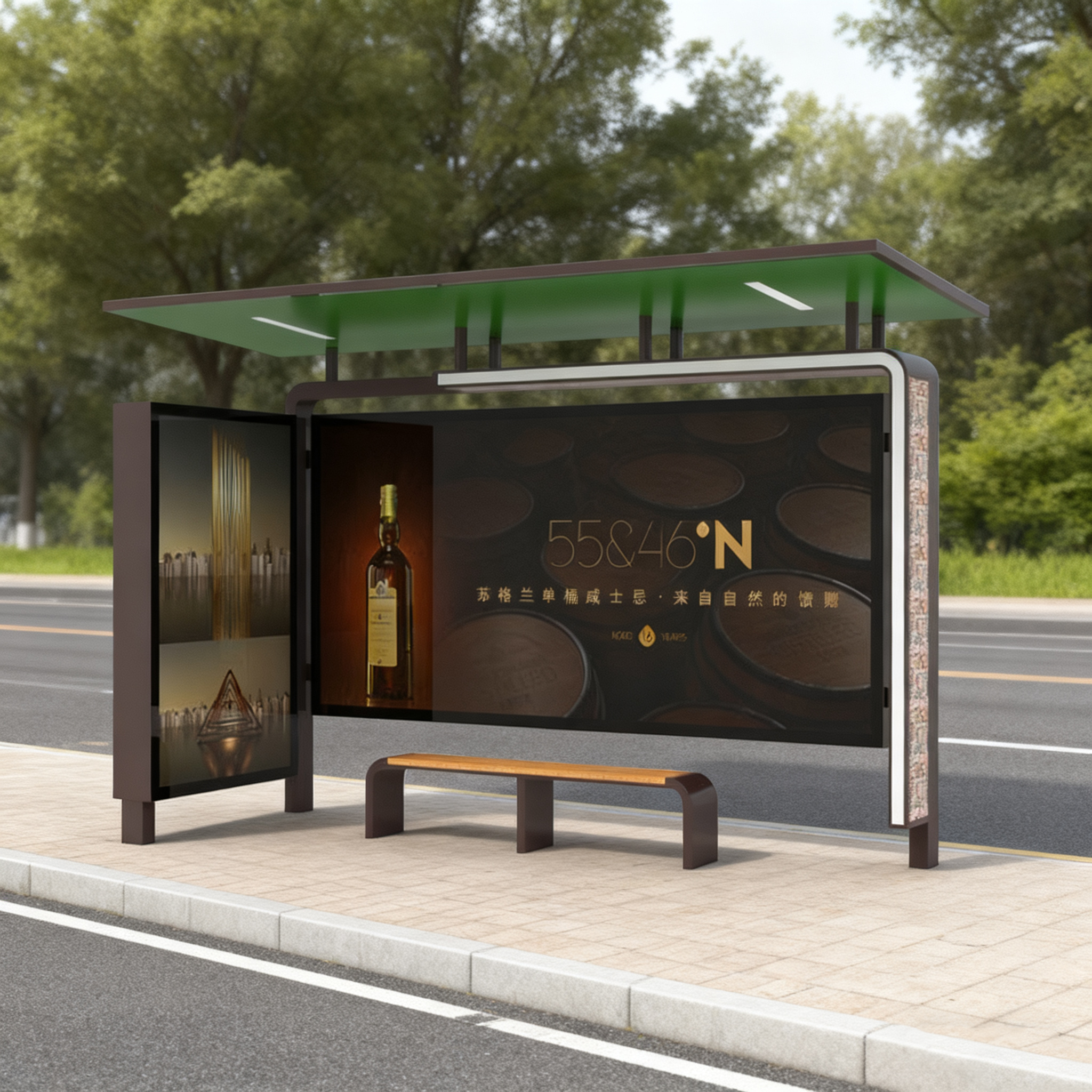 Hl-2023-0009 Hot-Dip Galvanized Steel Sheet Bus Shelter Suppliers, custom FactorBintai Machinery (Jiangsu) Co., Ltd is China Custom Hl-2023-0009 Hot-Dip Galvanized Steel Sheet Bus Shelter Suppliers and Hl-2023-0009 Ho...View Product →
Weather enclosure and passenger comfort decide daily performance
A shelter that looks good in a catalog can still fail functionally. Rain protection depends on roof overhang, internal gutter design, and the sealing of panel joints. Wind resistance depends on the structural section profile and the anchorage method specified for the concrete foundation. Some shelter series also include non-slip flooring, which matters in rainy and snowy regions where waiting passengers board on wet surfaces.
For areas with regular gusts, the strong wind resistance bus shelter is an example of a design developed around this specific load case. It pairs a reinforced frame with construction details that reduce wind uplift, and the same logic can be scaled to different site requirements, from open highways to narrow inner-city sidewalks.
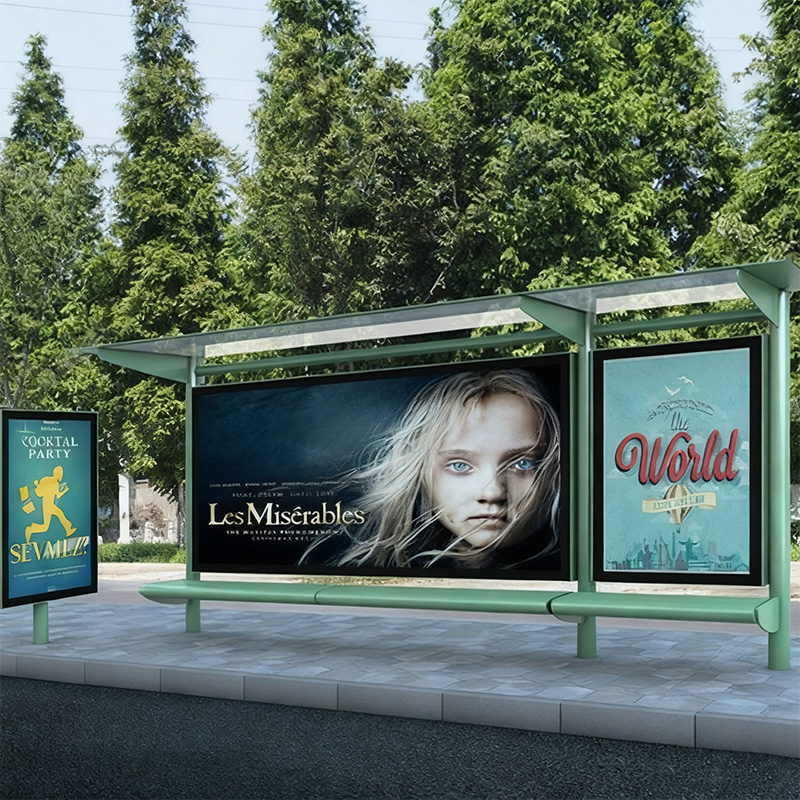 AH-2757 Strong wind resistance Bus Shelter Suppliers, custom FactoryBintai Machinery (Jiangsu) Co., Ltd is China Custom AH-2757 Strong wind resistance Bus Shelter Suppliers and AH-2757 Strong wind resistan...View Product →
Customization and smart city compatibility are no longer optional
Very few transit projects use a shelter without site-specific adjustments. Bus stop locations vary in platform width, prevailing wind direction, solar exposure, and the need to integrate lighting and signage. A manufacturer that only produces fixed designs forces the project team to adapt the site to the product, which wastes space or creates awkward placements. The better approach is modular design: standard structural modules, configurable roof and panel options, and defined integration points for cameras, lighting, passenger information displays, and solar equipment.
Urban projects increasingly combine shelters with solar panels and monitoring functions. Procurement teams routinely ask how a shelter integrates with solar-powered bus stop stations and other public facility systems. For this reason, a bus shelter with an optional intelligent system gives buyers the flexibility to start with a mechanical shelter and add electronic systems later without re-engineering the frame.
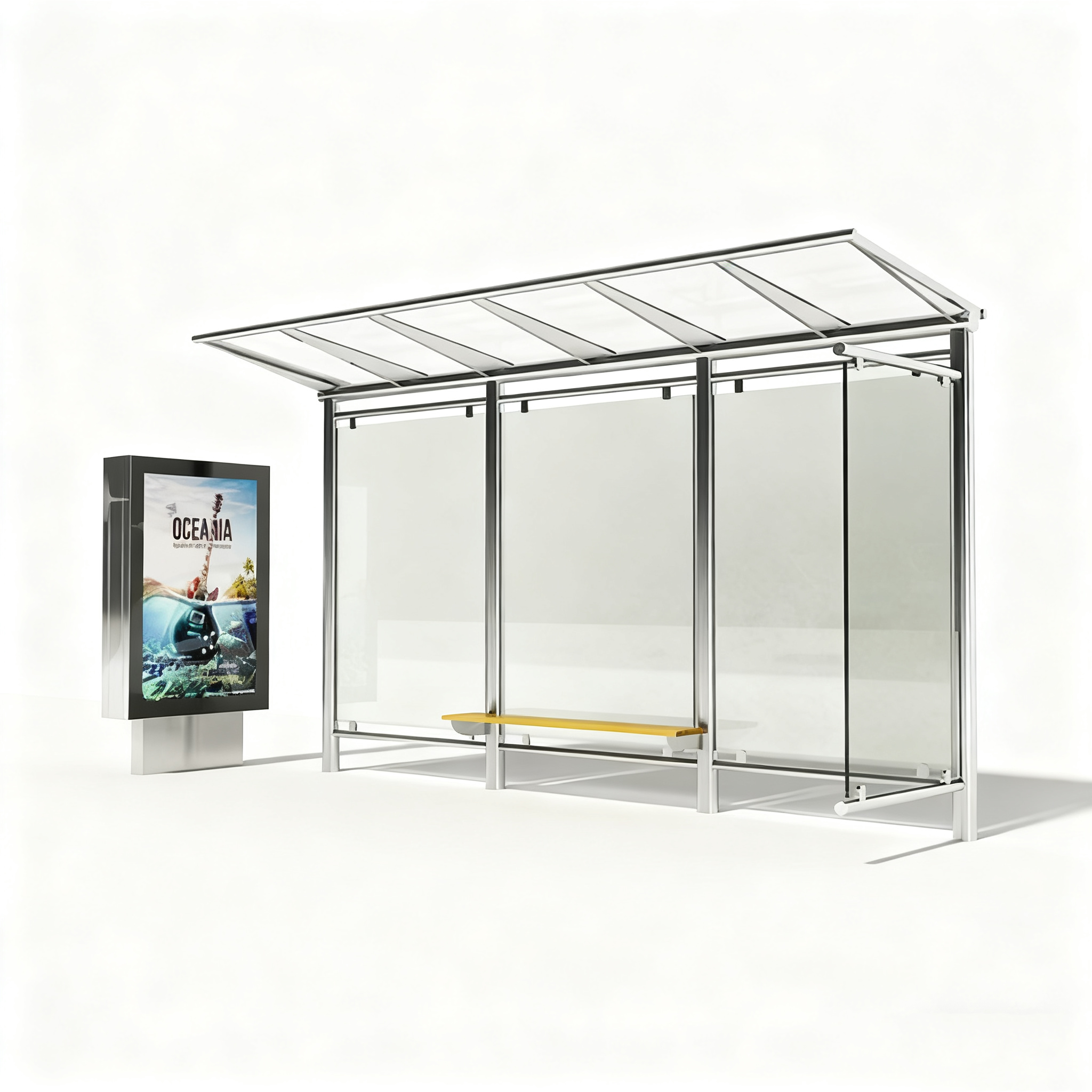 AH-3043 Optional intelligent system Bus Shelter Suppliers, custom FactoryBintai Machinery (Jiangsu) Co., Ltd is China Custom AH-3043 Optional intelligent system Bus Shelter Suppliers and AH-3043 Optional intell...View Product →
Manufacturing capability and quality control
The scale of the production facility matters as much as the catalog. A manufacturer with automated cutting, bending, and welding equipment controls tolerances more consistently than one relying on manual labor. Welding quality is a common hidden defect in bus shelters: poor welds fail in fatigue long before the coating does. An in-house laboratory allows the manufacturer to verify coating thickness and material properties instead of depending on a subcontractor's report.
Bintai Machinery operates a 26,000-square-meter plant on a 56-acre site, with a dedicated research laboratory and automated production lines. This vertical setup supports both standardized series and fully customized projects. Buyers should ask how many shelters the plant produces per month, how incoming steel is tested, and whether welding is performed by certified operators. The answers separate modern metal bus shelter structures production from occasional short-run fabrication.
Export logistics and delivery reliability
International buyers face a different set of risks than domestic ones. Broken glass, dented panels, and missing fasteners arrive when packing and container loading are not designed for the product. A bus shelter manufacturer that ships overseas regularly understands how to brace frames inside the container, protect glass and display surfaces, and organize components so installation crews find parts in sequence. Documentation also has to be right: packing lists, loading photos, and export certificates prevent customs delays.
Bintai's shipping history includes bus shelters exported to Europe and delivered to Munich, with documented container loading and overseas customer factory visits. That kind of experience removes surprises in both transit time and final product condition. For procurement teams, a simple request is effective: ask for loading photos and a packing list template before signing the contract.
Practical evaluation checklist for comparing manufacturers
To keep the comparison objective, use a checklist that covers the points above. The table below summarizes what to verify and why it matters.
| Evaluation point | What to verify | Why it affects the project |
|---|---|---|
| Structural engineering | Wind load calculation, section thickness, weld quality | Determines safety and long-term stability |
| Corrosion protection | Zinc coating standard, coating system, stainless steel grades | Defines maintenance cost and service life |
| Roof and drainage design | Overhang width, gutter sealing, panel joints | Controls rainwater performance during heavy weather |
| Passenger safety | Non-slip floor, accessibility width, boarding edge position | Affects compliance and daily usability |
| Modular and smart options | Frame integration, solar mounting, display wiring | Reduces the cost of future upgrades |
| Export packaging | Packing method, container layout, loading photos | Prevents transit damage and customs issues |
The most reliable bus shelter manufacturers do not win on promises. They win because their drawings show engineering logic, their factory proves production capability, and their export records demonstrate that shelters arrive complete and undamaged. When these three elements align, the public gets a structure that works for decades, and the buyer gets a defensible procurement decision.


