
 English
 Español
Content
Direct Answer: Existence and Viability of Solar Water Pumps
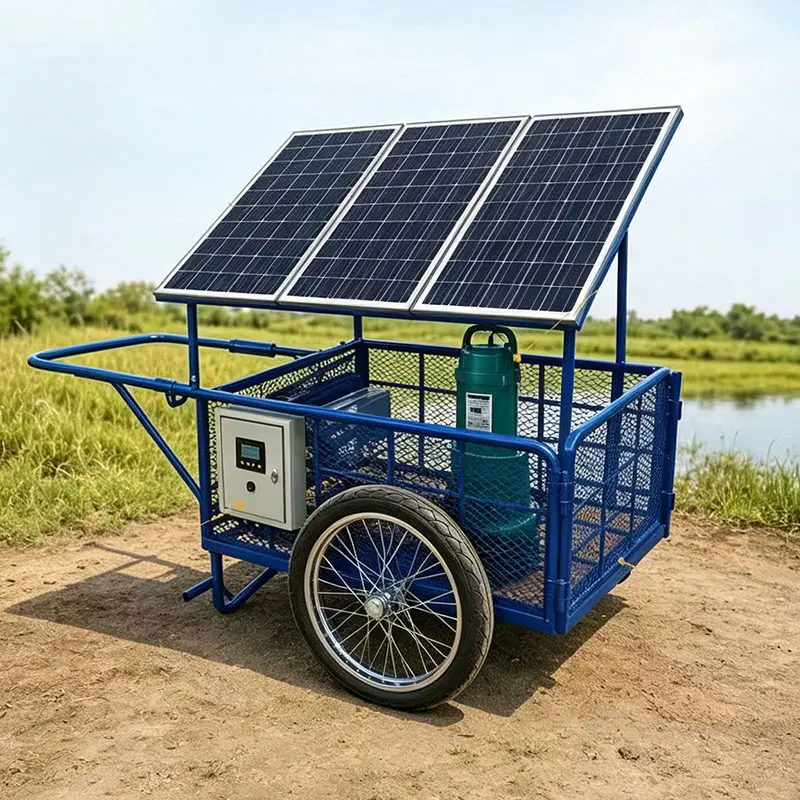
Yes, solar-powered water pumps are a well-established and commercially available technology used globally for irrigation, livestock watering, and residential supply. These systems utilize photovoltaic (PV) panels to convert sunlight directly into electricity that drives a pump motor, eliminating the need for grid connection or diesel fuel. A typical residential solar pumping system can deliver between 1,000 and 3,000 gallons per day depending on panel wattage and lift height, making them fully viable for off-grid living and remote agriculture. Modern brushless DC motors have significantly increased reliability, with many units rated for over 20,000 hours of continuous operation, effectively providing a maintenance-free lifespan of 10 to 15 years when properly sized.
Core System Components and Operating Principles
A functional solar water pumping system consists of four integrated components that must be matched correctly to ensure efficiency. Unlike standard household electrical systems, these setups often operate without batteries in agricultural applications, using water storage tanks as "energy batteries" instead.
- Solar Array: Typically ranges from 100W for small garden pumps to 2kW+ for deep well irrigation; monocrystalline panels are preferred for higher efficiency in limited space.
- Pump Motor: Available as submersible (for wells over 20ft) or surface-mounted (for ponds/shallow sources); brushless DC motors offer superior longevity compared to brushed alternatives.
- Controller/Inverter: Regulates voltage fluctuations from panels to protect the motor; MPPT controllers can increase pumping efficiency by up to 30% compared to PWM types.
- Storage Solution: Either an elevated tank for gravity-fed pressure or a battery bank for nighttime operation; tank storage is generally more cost-effective and durable than chemical batteries.
DC Versus AC Solar Pump Technologies
Selecting between Direct Current (DC) and Alternating Current (AC) pumps is the most critical technical decision in system design. Each type serves distinct operational profiles based on power requirements and existing infrastructure.
| Feature | DC Solar Pump | AC Solar Pump |
|---|---|---|
| Power Range | Low to Medium (50W – 750W) | Medium to High (750W – 5kW+) |
| Efficiency | Higher (No inverter loss) | Lower (10-15% inverter loss) |
| Best Application | Small farms, livestock, gardens | Large irrigation, community supply |
| Maintenance | Very Low (Brushless designs) | Moderate (Standard induction motors) |
| Initial Cost | Lower | Higher (Requires large inverter) |
When to Choose DC Systems
DC pumps are ideal for flows under 10 GPM (gallons per minute) and total dynamic heads under 200 feet. They connect directly to panels via a controller, minimizing conversion losses and reducing the required solar array size by approximately 20-30% compared to equivalent AC setups.
When to Choose AC Systems
AC pumps become necessary when flow demands exceed 15 GPM or when integrating with existing AC-powered infrastructure. While less efficient due to inverter conversion, they allow for easier future expansion and compatibility with backup generators during extended cloudy periods.
Sizing Calculations and Performance Factors
Proper sizing prevents both underperformance and unnecessary overspending. The two governing metrics are Total Dynamic Head (TDH) and Daily Water Requirement. TDH combines vertical lift, friction loss through pipes, and required discharge pressure. For every 100 feet of vertical lift, approximately 300W of solar capacity is needed for a basic DC pump system. Seasonal variation also critically impacts output; a system producing 2,000 gallons daily in summer may only yield 800-1,000 gallons in winter due to reduced peak sun hours. Professional installers typically use the lowest monthly average peak sun hours for sizing unless supplemental water storage or backup power is planned.
Cost Analysis and Return on Investment
While upfront costs for solar pumps exceed conventional electric pumps, operational savings create compelling long-term value. A complete ½ HP DC solar pumping system typically costs $1,500 to $2,500 installed, whereas extending grid power to a remote site can easily exceed $10,000 at $5-$15 per foot of line extension. Diesel-powered alternatives carry lower initial costs but incur ongoing fuel expenses averaging $800-$1,500 annually plus regular engine maintenance. Most solar pump installations achieve break-even within 3-7 years compared to diesel, and immediately versus grid extension. Federal tax credits and USDA REAP grants can further reduce net costs by 30-50% for qualifying agricultural operations in the United States.