

 English
 Español
Walk into any warehouse, moving truck depot, or film set and you'll find dolly carts doing the heavy lifting — quietly, efficiently, without complaint. Yet ask most people to define one and they'll describe a hand truck instead. The confusion is understandable, but the distinction matters when you're buying equipment or trying to move a 400-pound machine without throwing out your back. This guide covers what a dolly cart actually is, the types worth knowing, where each one belongs, and the numbers to check before you commit to a purchase.
Content
What a Dolly Cart Is (and What It Isn't)
A dolly cart is a low-profile, wheeled platform designed to support and transport heavy or bulky loads by rolling rather than lifting. The defining characteristics are straightforward: a flat or slightly raised deck, four wheels or casters arranged at the corners, and — critically — no fixed upright handle attached to the cart itself. You move the load by pushing against the cargo, not by gripping a handle on the equipment.
This last point is what separates a dolly cart from a hand truck. A hand truck has an L-shaped frame with a vertical handle, two wheels, and a small toe plate. It tilts the load backward onto those two wheels and uses leverage to move it. A dolly cart keeps the load flat, distributes weight across four contact points, and is better suited for wide, low-center-of-gravity cargo — furniture, appliances, crates, industrial containers — that can't safely be tilted.
Dolly carts are also distinct from platform carts or trolleys that include fixed handles. Those are technically hand carts, and while the terms get used interchangeably in everyday conversation, the structural difference affects how stable the load stays during transit and how much control the operator has on inclines or uneven surfaces.
Main Types of Dolly Carts
Dolly carts are not a single product — they're a category that spans everything from basic furniture movers to engineered industrial transport systems. Understanding the main types prevents the common mistake of buying the wrong platform for the job.
Flat furniture dollies are the most widely recognized type: a rectangular deck, typically 18"×30" or similar, mounted on four swivel casters. They handle sofas, wardrobes, refrigerators, and stacked boxes without modification. Most have a carpeted or rubber-topped surface to protect finishes. Load capacities usually run between 500 and 1,000 lbs depending on the frame material and caster rating.
Fence logistics transport vehicles are a purpose-built category used in warehousing, construction logistics, and municipal maintenance. These feature a tubular steel frame with mesh or bar fencing on the sides, allowing loads to be stacked vertically without risk of shifting. They're designed for moving bundled materials — pipe sections, fence panels, lumber, and similar long or stacked goods — across yard surfaces and loading areas. Our metal fence logistics transport vehicles for industrial use fall into this category, built for high-cycle commercial environments where structural rigidity and corrosion resistance are non-negotiable.
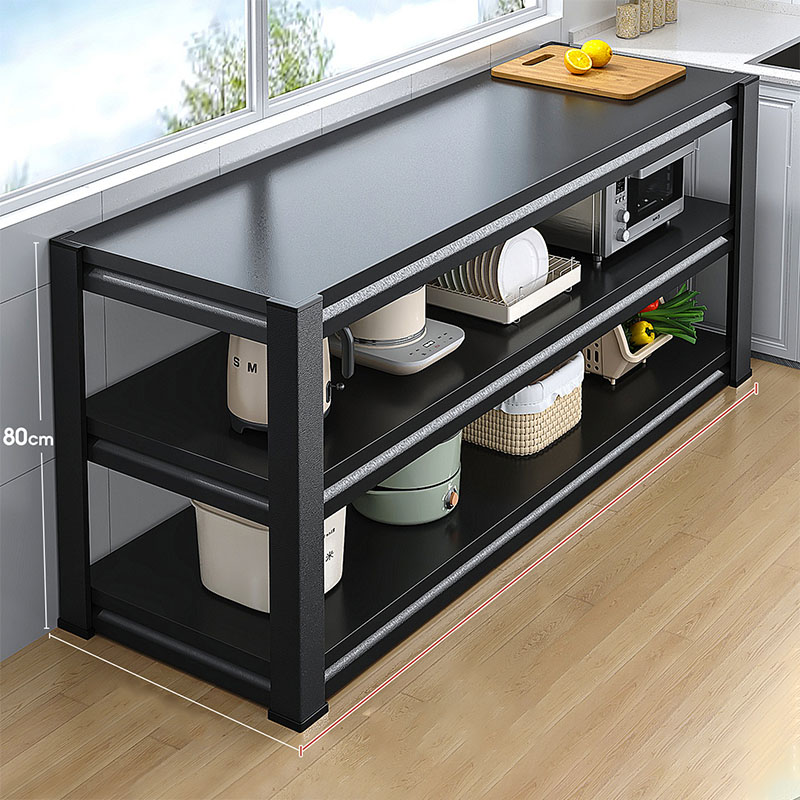
Multi-tier trolley dollies stack multiple shelf levels onto a single wheeled base, multiplying the cargo volume per trip. Common in retail stockrooms, hospital supply chains, and food service operations, these are the workhorses of any environment where lots of smaller items need to move together. The floor multi-tier mobile trolley shelf represents this format — a wheeled shelf system that combines the cargo density of a storage rack with the mobility of a dolly platform.
Foldable dollies collapse flat for storage or transport in a vehicle. They trade some structural rigidity for convenience, making them a practical choice for small businesses, event companies, and residential movers who need the capability occasionally but can't dedicate permanent floor space to equipment.
Specialty dollies include stair-climbing designs with tri-wheel assemblies, drum dollies shaped to cradle cylindrical containers, and appliance dollies with integrated straps and back support. Each is engineered for a specific load geometry rather than general use.
Where Dolly Carts Are Used: Industry by Industry
The versatility of the dolly cart format is what makes it so durable as a tool category. Few pieces of equipment appear in as many unrelated industries without significant modification.
Warehousing and logistics represent the highest-volume use case. Moving crates between receiving docks and storage locations, repositioning pallet-loaded goods, and transporting components between assembly stations all fall to dolly carts. In high-cycle environments, the total weight moved per cart per day can reach several tons, which is why steel construction and precision caster bearings are not optional features in these settings.
Retail operations use dolly carts to move stock from back-of-house storage to the sales floor. The low platform height is particularly useful here — it allows boxes to be slid directly from a pallet or shelf surface without a lift.
Construction and building trades rely on dolly carts for site logistics: moving bags of material, tile, stone, and equipment across job sites. Pneumatic-tire models are preferred for outdoor surfaces where small solid casters bog down in gravel or dirt.
Moving and relocation services use furniture dollies as a core piece of equipment on every truck. A four-person crew moving a three-bedroom house may roll hundreds of trips on dolly carts over the course of a job, and the quality of the casters determines how much effort each of those trips requires.
Healthcare facilities depend on dolly carts for moving medical equipment, supply carts, and clean linen between floors and departments. In this context, maneuverability in tight corridors and the ability to clean and disinfect surfaces are the critical specs.
Film and television production uses specialized camera dollies for smooth tracking shots, as well as standard platform dollies to move set pieces, lighting rigs, and props between locations on tight turnaround schedules.
Key Specs to Check Before You Buy
Dolly cart specifications are not interchangeable. A cart that's perfect for a retail stockroom is likely the wrong tool for a construction yard, and vice versa. These are the numbers and categories that actually determine whether a cart fits your application.
Load capacity is the most important spec and the most commonly misread one. The rated capacity must account for the total weight: the cargo itself plus any containers, pallets, or racks placed on the cart. For industrial applications, it's also worth checking whether the rating applies to static loads, dynamic loads at walking speed, or both — these numbers differ, and dynamic ratings are always lower.
Platform dimensions determine what you can physically fit on the cart. Measure your most common cargo footprint and add clearance on all sides. A cart that's too small forces awkward balancing; one that's too large reduces maneuverability in confined spaces.
Caster type has a larger effect on usability than most buyers anticipate. Swivel casters on all four corners allow omnidirectional movement, which is useful in tight spaces but can make the cart wander on inclines. A combination of two fixed and two swivel casters gives more directional stability. Caster diameter determines how well the cart rolls over surface irregularities — larger diameter wheels handle gaps and thresholds more easily.
Frame material affects both weight capacity and service life. Carbon steel frames with powder coating handle heavy loads and resist denting but are susceptible to rust in wet environments without proper surface treatment. Stainless steel costs more but performs better in food service or outdoor use. Aluminum is lighter but has lower maximum capacities.
| Application | Recommended Capacity | Caster Type | Preferred Material |
|---|---|---|---|
| Residential moving | 500–800 lbs | 4 swivel | Steel or aluminum |
| Retail stockroom | 500–1,000 lbs | 2 fixed + 2 swivel | Steel, powder-coated |
| Warehouse / logistics | 1,000–3,200 lbs | 2 fixed + 2 swivel | Heavy-gauge carbon steel |
| Construction site | 800–1,500 lbs | Pneumatic (outdoor) | Steel, galvanized or coated |
| Food service / healthcare | 300–800 lbs | 4 swivel with brakes | Stainless steel |
Foldability matters when storage space is limited. Foldable designs sacrifice some rigidity but offer a significant practical advantage for operations where equipment is used intermittently and must be stored between uses.
How to Load and Move a Dolly Cart Safely
A dolly cart reduces physical strain — but only if it's used correctly. Incorrect loading or pushing technique can negate the ergonomic benefit and create new injury risks.
Center the load over the platform. Weight concentrated at one end of the cart raises the opposite wheels off the ground and reduces steering control. Heavy items go on first and toward the center; lighter items can be stacked on top. Keep the center of gravity as low as possible.
Push, don't pull. Pushing a loaded dolly allows you to use your body weight as forward momentum and keeps the cart in front of you where you can see it. Pulling a dolly cart often results in the wheels catching your heels and forces your spine into a flexed position under load. According to OSHA's materials handling safety guidelines, the pushing force needed to move a loaded cart should not exceed 50 pounds — if it does, the load is too heavy for manual transport and powered equipment should be used instead.
Maintain a clear sightline. Never stack cargo higher than eye level. If you can't see over the load, you can't see pedestrians, doorways, or surface hazards ahead. Either reduce the stack height or have a second person walk in front to guide.
Secure unstable loads. Boxes, cylinders, and any cargo that could shift or roll during transit should be strapped or banded to the platform before moving. A load that shifts mid-transit on a dolly cart can tip without warning because there's no handle mechanism to counterbalance the movement.
Check casters before each use. A seized or cracked caster turns a controllable cart into an unpredictable one. Spin each wheel before loading and look for flat spots, cracks in the wheel body, or binding in the swivel mechanism. Five seconds of inspection prevents accidents.
Choosing the Right Dolly Cart for Your Operation
The right dolly cart is the one that matches your actual operating conditions — not the heaviest-rated model in the catalog or the cheapest option available. Three questions narrow the field quickly.
First: how often will it be used? Daily high-cycle use in a warehouse requires a fully welded steel frame, precision-rated casters with sealed bearings, and a deck surface that won't degrade under repeated loading. Occasional residential use can be served by lighter materials with standard casters.
Second: what surface will it operate on? Smooth concrete floors are forgiving — almost any caster type performs well. Rough outdoor surfaces, gravel, or floor transitions require larger-diameter wheels, ideally pneumatic for very rough terrain. Carpeted floors increase rolling resistance significantly and require higher-quality swivel bearings to stay maneuverable.
Third: what is the cargo geometry? Flat, stackable items work well on a standard platform dolly. Long materials like pipe, lumber, or fence sections need a cart with side containment. Multiple small items moved together call for a multi-tier format. Matching the cargo geometry to the cart design is what separates an efficient operation from a frustrating one.
For operations that need organized multi-level storage alongside mobility, the multi-tier storage organiser trolley combines wheeled mobility with the vertical storage density of a shelving unit — a practical solution when floor space is limited and cargo variety is high.
Whatever the application, the principle is the same: a dolly cart that fits the job reduces effort, protects cargo, and keeps operators safe across thousands of load cycles. Getting that match right at the selection stage pays dividends every working day.


