

 English
 Español
Moving heavy or awkward loads by hand is one of those tasks that looks manageable until it isn't. A hand truck changes that calculation entirely — one person can shift hundreds of pounds with controlled, low-effort movement. Compact and folding versions take that utility further by adding portability and space efficiency that a fixed-frame hand truck can't offer. Understanding the difference between these tools, and what makes a compact hand truck worth choosing, is the starting point for picking the right one.
Content
What Is a Hand Truck?
A hand truck is a two-wheeled manual material handling tool designed to move heavy or bulky loads without lifting them directly. It works on a simple mechanical principle: the load is leaned against the frame, the nose plate slides under it, and when the operator tilts the handle back, the weight transfers over the axle and wheels. From that point, the operator pushes or pulls rather than carries — dramatically reducing the physical effort required.
The standard hand truck has four main components. The frame provides structural rigidity and determines the tool's load capacity; it is typically made from steel or aluminum tubing. The nose plate (also called the toe plate or footplate) is the flat horizontal platform at the base that slides under the load. The handle extends from the top of the frame and gives the operator control and leverage. The wheels sit on an axle at the base and bear the full load weight during movement — wheel diameter, material, and width directly affect how the truck performs on different surfaces.
Most standard hand trucks are rated between 150 and 600 pounds for home and commercial use, with heavy-duty industrial models exceeding that significantly. The combination of load capacity, frame material, and wheel type determines whether a hand truck is suited to light occasional use or daily heavy-duty operation.
Hand Truck vs Dolly: What's the Difference?
These two terms are frequently confused, but they refer to different tools suited to different tasks. A hand truck is a two-wheeled upright device with a handle — the load leans against the frame and rests on the nose plate while being tilted and rolled. It excels at moving stacked boxes, upright appliances, and loads that can be tilted onto two wheels.
A dolly (also called a platform cart or flat dolly) is a four-wheeled flat platform with no handle. The load sits flat on the platform and is pushed by hand from the side or rear. Dollies are better for wide, heavy furniture, large appliances, or loads that can't safely be tilted — anything that needs to stay level during transport. Some modern hand trucks convert between upright two-wheel mode and flat four-wheel cart mode, combining both functions in a single tool. These convertible models are more versatile but typically heavier and bulkier than either a dedicated hand truck or a dedicated dolly.
What Is a Compact Hand Truck?
A compact hand truck is a folding or collapsible version of a standard hand truck, engineered to reduce its stored footprint while retaining functional load capacity. When collapsed, a compact hand truck folds flat or into a significantly smaller profile — thin enough to slide into a closet, store under a bed, fit in a car trunk, or hang on a wall hook. When deployed, it functions as a full upright hand truck capable of handling the same types of loads as a fixed-frame model within its rated capacity.
The defining characteristic is the folding mechanism. Depending on design, the nose plate folds up flush with the frame, the handle collapses or telescopes inward, or both elements fold simultaneously into a flat package. The best folding designs allow one-handed or one-motion deployment — the truck unfolds into operational position and locks securely without requiring tools or multiple steps.
Compact hand trucks are generally rated between 100 and 300 pounds, placing them in the light-to-mid-duty range. They are not designed to replace heavy industrial hand trucks for daily warehouse work, but for the majority of home, office, delivery, and event applications, their capacity is more than adequate.
Key Advantages of Compact Folding Hand Trucks
Space efficiency. A standard fixed-frame hand truck occupies a fixed footprint whether it's in use or stored in the corner of a room. A compact hand truck folds to a fraction of that size — often under 55mm (about 2 inches) thick when flat. For apartments, small offices, delivery vans, and retail environments where storage space is a real constraint, this difference is significant.
Portability. A folded compact hand truck can be carried like a briefcase, loaded into a vehicle alongside cargo, or checked as luggage when travelling. This makes them indispensable for delivery drivers, trade show exhibitors, field service technicians, and anyone who needs moving assistance at multiple locations rather than just one fixed site.
Fast deployment. Modern folding mechanisms allow a compact hand truck to go from flat to operational in seconds. One-click or single-motion unfolding systems eliminate the fumbling that older multi-step folding designs required, making the truck practical even in time-pressured situations.
Versatility. Compact hand trucks handle a wide range of everyday loads — boxes, groceries, luggage, small appliances, display materials, equipment cases — making them a single tool that covers multiple tasks without occupying permanent storage space.
Types of Compact Hand Trucks
Standard folding hand trucks are the most common type — a two-wheel upright design where the nose plate folds up and the handle may telescope or fold inward. These cover the majority of light and mid-duty moving tasks and represent the best balance of simplicity, weight, and capacity for most users.
One-click folding hand trucks add a quick-release mechanism that allows the truck to collapse or deploy with a single motion. One-click folding hand carts for fast setup and compact storage are particularly practical in commercial contexts where the truck is repeatedly loaded, moved, unloaded, and stored in quick succession — delivery rounds, event setup, retail restocking.
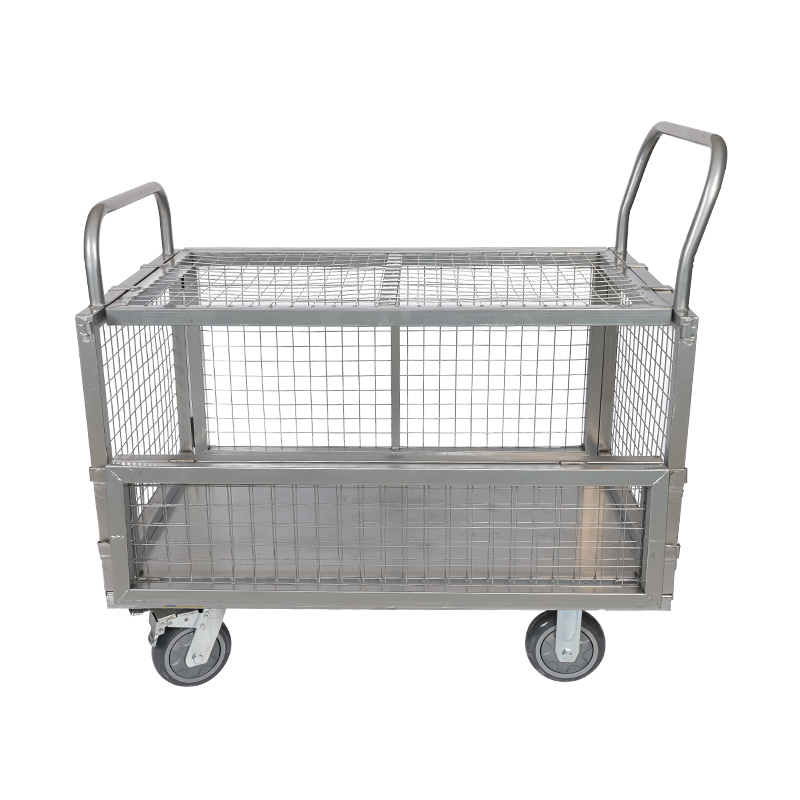
Multi-layer folding carts expand the compact hand truck concept with stackable shelves or tiers that allow multiple items to be transported at once without stacking them on top of each other. Multi-layer folding carts for retail and display use are common in market stall setups, trade shows, and retail environments where organized multi-item transport and compact fold-down storage are both required.
Convertible compact hand trucks add a four-wheel cart mode, allowing the operator to switch between upright two-wheel mode and flat platform mode depending on the load. These are heavier and more complex but cover a wider range of situations with one tool.
What to Look for When Choosing a Compact Hand Truck
Load capacity. Identify the heaviest load you will realistically move, then choose a truck rated at least 20–30% above that figure. This buffer protects the frame and axle from stress over time and accounts for the fact that real-world rated capacities on budget models are sometimes optimistic. For regular mid-duty use, a 150–200 kg rating provides reliable headroom.
Frame material. Aluminum frames are lighter and naturally corrosion-resistant, making them well-suited for portable use and environments with moisture exposure. Steel frames are heavier but offer superior strength under repeated heavy loads. For a compact hand truck that will be carried frequently, aluminum is usually the right choice; for one that stays in a warehouse and handles consistently heavy loads, steel is more durable long-term.
Wheel diameter and type. Larger wheels roll more easily over surface irregularities — thresholds, cracks, uneven pavement — but add size when folded. Hard rubber or solid rubber wheels work well on smooth indoor floors. Pneumatic (air-filled) wheels handle outdoor terrain and rough surfaces better but require occasional maintenance. For primarily indoor use, solid wheels on a compact truck keep things simple and maintenance-free.
Folded dimensions. Check the actual folded thickness and footprint, not just the marketing claim of "folds flat." A truck that folds to 55mm versus one that folds to 120mm makes a meaningful difference when storing in a vehicle or tight space. Verify these dimensions against your actual storage constraints before purchasing.
Handle height and adjustability. A fixed handle set at the wrong height forces the operator to hunch or over-reach during use, which causes fatigue and reduces control. Telescoping handles that adjust to different heights accommodate multiple users and improve ergonomics across different load heights. Explore the full range of metal foldable trolleys to compare handle configurations, frame dimensions, and folded profiles across different capacity categories.
Common Uses for Compact Hand Trucks
At home, compact hand trucks handle the tasks that come up occasionally but are genuinely difficult without assistance — moving furniture during rearrangements, shifting appliances for cleaning or repair, transporting heavy grocery loads from car to kitchen, or moving luggage through airports and hotels. The foldable design means the truck can be stored in a closet or car trunk between uses rather than taking up permanent floor space.
In office and retail environments, compact hand trucks move supplies, equipment, and stock efficiently without the space commitment of a fixed-frame tool. They're particularly practical in environments where moving equipment appears at irregular intervals — restocking, deliveries, event setup — rather than continuously.
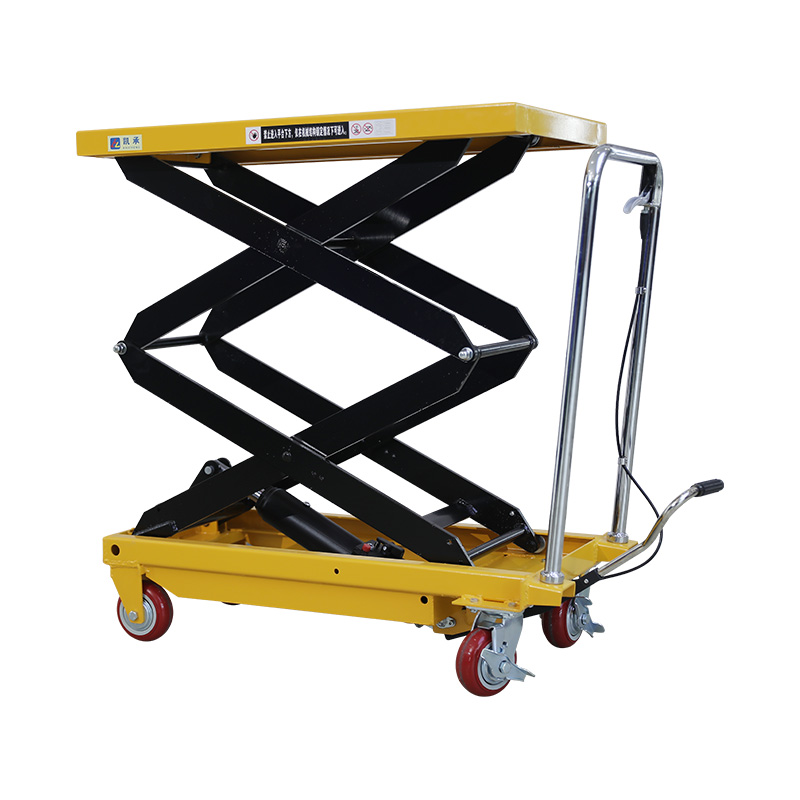
For logistics and warehouse operations that need a practical transport solution within a constrained footprint, warehouse logistics trucks for heavy-duty transport bring the structural strength needed for repeated commercial loads while retaining the space efficiency that tight operations require. The right compact hand truck for any of these contexts is the one whose capacity, folded size, and surface compatibility all match the specific demands of the job.


