
 English
 Español
Content
- 1 Rising Demand for Efficient Heavy Load Mobility
- 2 What Defines a Metal Electric Trolley?
- 3 Why Metal Construction Matters for Heavy Loads
- 4 Productivity Gains Through Electric Assistance
- 5 Safety Improvements in Modern Workplaces
- 6 Adaptability Across Industries
- 7 Comparing Manual Carts and Metal Electric Trolleys
- 8 Cost Considerations and Return on Investment
- 9 Challenges and Practical Limitations
- 10 Are Metal Electric Trolleys the Future of Heavy Load Mobility?
Rising Demand for Efficient Heavy Load Mobility
Industries that rely on frequent movement of heavy goods are under growing pressure to improve efficiency, safety, and labor productivity. Warehouses, factories, hospitals, and logistics centers are all facing higher throughput demands while trying to reduce worker fatigue and operational risks. In this context, the metal electric trolley has emerged as a practical alternative to traditional manual carts and basic powered transport tools.
Unlike lightweight plastic carts or purely manual trolleys, metal electric trolleys are designed specifically for heavy loads. Their robust frames, combined with electric drive systems, allow operators to move large volumes or high-weight items with minimal physical effort, addressing both productivity and workplace safety concerns.
What Defines a Metal Electric Trolley?
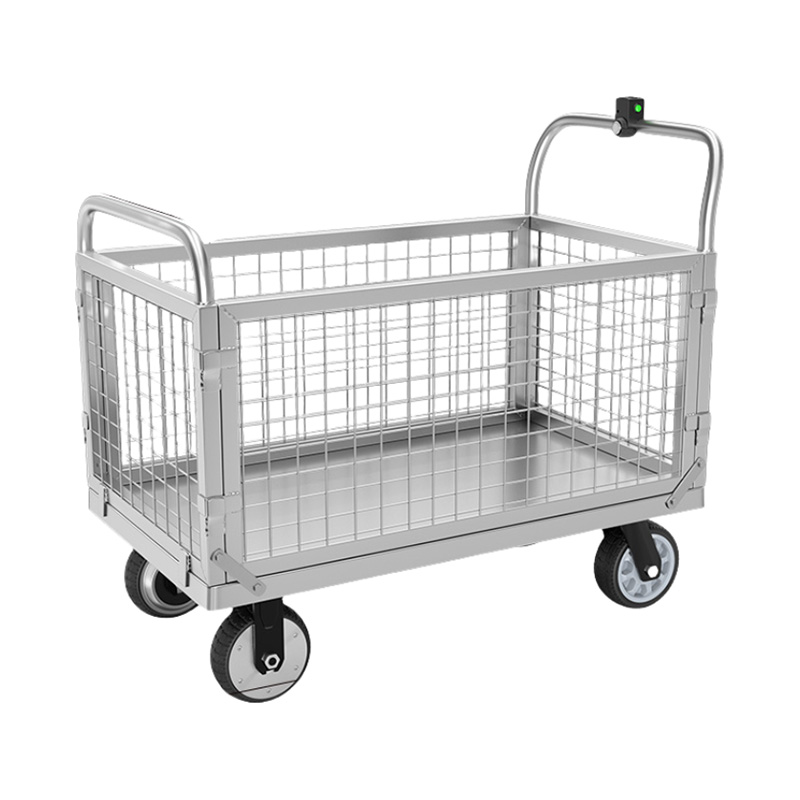
A metal electric trolley is a load-carrying platform or cart constructed primarily from steel or aluminum alloys and powered by an electric motor. The metal structure provides high load-bearing capacity and long-term durability, while the electric system delivers assisted or fully motorized movement.
These trolleys are commonly equipped with rechargeable batteries, speed controllers, braking systems, and reinforced wheels. Together, these components allow smooth transport of heavy goods across flat surfaces, ramps, and controlled inclines.
Core Structural and Functional Elements
- Rigid metal frames designed for high load capacity
- Electric motors providing consistent traction
- Battery systems supporting extended operating cycles
Why Metal Construction Matters for Heavy Loads
Material choice plays a critical role in heavy load mobility. Metal frames offer superior strength, impact resistance, and stability compared to plastic or composite alternatives. This is especially important in industrial environments where trolleys may encounter uneven floors, sharp impacts, or continuous daily use.
Metal electric trolleys maintain structural integrity under repeated stress, reducing deformation and failure risks. Their durability translates into longer service life and lower replacement frequency, which is a key consideration for cost-conscious operations.
Productivity Gains Through Electric Assistance
Electric propulsion fundamentally changes how heavy loads are handled. Instead of relying on manual pushing or pulling, operators guide the trolley while the motor delivers the required force. This significantly reduces physical strain and allows a single worker to move loads that previously required multiple people.
Consistent motor output also ensures predictable movement speed, improving workflow planning and reducing delays. In high-volume environments, even small efficiency gains per trip can lead to substantial productivity improvements over time.
Operational Benefits of Electric Drive
- Reduced worker fatigue and injury risk
- Faster and more consistent load movement
- Improved handling on slopes and long distances
Safety Improvements in Modern Workplaces
Workplace safety regulations increasingly emphasize reducing manual handling risks. Heavy load transport is a major source of musculoskeletal injuries, making powered mobility solutions highly attractive. Metal electric trolleys directly address these concerns by minimizing the physical effort required from operators.
Many designs also incorporate controlled acceleration, automatic braking, and anti-slip wheels. These features help prevent sudden movements, runaway loads, and loss of control, particularly in crowded or confined environments.
Adaptability Across Industries
One reason metal electric trolleys are gaining attention is their adaptability. They are used in manufacturing plants to move raw materials, in warehouses for order fulfillment, in hospitals for equipment transport, and in airports for baggage handling. Their modular design allows customization for specific tasks.
Load platforms, side rails, and attachments can be adjusted to suit different cargo types. This flexibility makes metal electric trolleys a versatile investment rather than a single-purpose tool.
Comparing Manual Carts and Metal Electric Trolleys
| Feature | Manual Trolley | Metal Electric Trolley |
| Load Capacity | Limited | High |
| Physical Effort | High | Low |
| Long-Term Durability | Moderate | Strong |
Cost Considerations and Return on Investment
While metal electric trolleys require higher upfront investment than manual carts, their long-term value often justifies the cost. Reduced labor requirements, fewer workplace injuries, and improved efficiency contribute to measurable savings over time.
Lower maintenance frequency due to metal durability and standardized electric components further enhances return on investment. For operations handling heavy loads daily, the payback period can be relatively short.
Challenges and Practical Limitations
Despite their advantages, metal electric trolleys are not without limitations. Battery charging requirements, initial purchase costs, and space constraints can affect adoption. Facilities must plan charging schedules and storage areas to ensure uninterrupted operation.
Proper training is also essential. Operators need to understand safe handling practices and basic maintenance to fully realize the benefits of electric mobility.
Are Metal Electric Trolleys the Future of Heavy Load Mobility?
Metal electric trolleys address many of the challenges associated with heavy load transport by combining strength, efficiency, and safety. Their ability to reduce physical strain while improving productivity positions them as a strong contender for future material handling solutions.
While they may not replace all forms of industrial transport, metal electric trolleys are increasingly becoming a standard choice for environments where heavy loads, frequent movement, and worker safety intersect. As technology advances and costs stabilize, their role in heavy load mobility is likely to expand further.