

 English
 Español
Four 4-inch casters on a 600 kg platform trolley look like a simple match until one wheel takes most of the load in a turn. The practical rule is to size each caster for at least 1.5 times its calculated share and to treat 4-inch casters as a floor, load and duty-cycle decision rather than a catalogue default. A well-matched four-caster set suits many warehouse carts in the 400-800 kg range, but only when wheel material, bearing, mounting plate and brake layout are specified together.
Content
What "caster wheels 4" usually means
Buyers use the phrase in two ways. One is a 4-inch caster wheel, the common middle size for platform trolleys, cage carts and warehouse trucks. The other is a set of four caster wheels, often bought as a replacement pack for a cart whose original wheels have flattened or seized. Both readings lead to the same purchasing question: what must each wheel carry, and what floor will it roll on?
Four inches is popular because it clears most floor joints and drain covers while keeping the deck height low enough to load by hand. Smaller 3-inch casters turn more easily in tight aisles but bridge gaps poorly. Larger 5-inch and 6-inch casters roll over rough ground with less effort, yet they raise the platform and often cost more. The table below gives indicative ranges; the final figure must come from the caster manufacturer's load chart.
| Caster diameter | Typical use | Indicative load per wheel | Trade-off |
|---|---|---|---|
| 3 inch | Light carts, retail, tight aisles | 75-150 kg | Low deck height; poor gap bridging |
| 4 inch | General warehouse, workshop, cage carts | 100-300 kg | Best balance of height and rolling effort |
| 5 inch | Heavier loads, rough concrete, mixed floors | 200-400 kg | Higher deck; more push clearance |
| 6 inch | Outdoor yards, dock areas, uneven ground | 300-600 kg | Best obstacle clearance; heaviest and tallest |
Load math for a four-caster set
Divide the total load by four only as a starting point. In real use, a trolley rarely sits on a perfectly flat floor with an evenly distributed load. When a cart turns, brakes or crosses a threshold, two casters can carry most of the weight. Forklift loading, off-centre stacks and sloped ramps make the split worse.
Use this sequence:
- Weigh the trolley plus the heaviest load, not the average load.
- Apply a 60/40 load split for turns and uneven floors.
- Add an impact factor of 1.5-2 for pallet drops, dock plates and rough concrete.
- Compare the result with the caster's dynamic load rating, not its static rating.
- Check the mounting plate, bolts and welds against the same load.
For a 600 kg loaded trolley, a simple four-way division gives 150 kg per wheel. A 60/40 split raises the highest wheel to 240 kg, and a 1.5 impact factor takes it to 360 kg. That is why a 4-inch caster rated at 300 kg may be unsuitable even though the arithmetic fits at 150 kg. For uneven yards and loading docks, a 2x safety margin is a more realistic target. The same logic applies when replacing a four-pack on an existing cart: match the original mounting pattern, but do not downrate the wheel just because the old one failed at an unknown load.
What to specify on a 4-inch caster
Diameter is only one line on the datasheet. For industrial trolleys, the following details matter as much:
Wheel material and tread
Polyurethane rolls easily on smooth concrete and resists oils, but soft grades can flat-spot under a parked load. Rubber and TPR run quieter and grip better on painted floors, with lower capacity. Nylon is durable and low-effort but noisy and can mark soft flooring. Cast iron suits extreme loads and rough surfaces, at the cost of floor damage and weight. A 4-inch caster may be rated from 100 kg to over 400 kg depending on these choices.
Bearing and swivel
A roller bearing is adequate for general warehouse use. Precision ball bearings reduce push effort on long runs and heavier loads. The swivel race should be sealed or shielded in dusty workshops, and the swivel radius must be large enough for the wheel to rotate without the load tipping.
Mounting plate and fasteners
Plate thickness, bolt-hole spacing and bolt grade decide whether the caster stays attached. A 4-inch caster on a heavy trolley should use a plate that matches the frame without bending, with bolts long enough to engage the nut fully. Welded caster mounts need clean welds and no gap that lets the plate rock.
Brake and direction
At least one brake caster is advisable for loading and unloading. Total-lock brakes stop both swivel and wheel rotation; wheel-only brakes still allow the cart to pivot. For narrow aisles, four swivel casters improve manoeuvrability; for long runs, two fixed and two swivel casters track better.
| Tread | Floor match | 4-inch load tendency | Watch point |
|---|---|---|---|
| Polyurethane | Smooth concrete, epoxy, tile | Medium to high | Soft grades can flat-spot |
| Rubber or TPR | Painted floors, quiet areas | Low to medium | Higher rolling resistance |
| Nylon | Smooth industrial floors | Medium to high | Noisy; can mark soft floors |
| Cast iron | Rough concrete, high heat | High | Damages delicate floors |
Floor, environment and noise
Concrete joints, epoxy coatings, expansion gaps and dock levellers are the usual causes of caster failure. A 4-inch wheel bridges a 10 mm joint more easily than a 3-inch wheel, but repeated impact still fatigues the fork and bearing. In cold stores, standard polyurethane can stiffen; in washdown areas, zinc-plated or stainless hardware is needed. Outdoor use calls for larger diameters and treads that shed grit. If the trolley moves between smooth internal floors and rough external yards, a 5-inch or 6-inch caster is often the more economical choice despite the higher unit price.
Matching the caster to the trolley
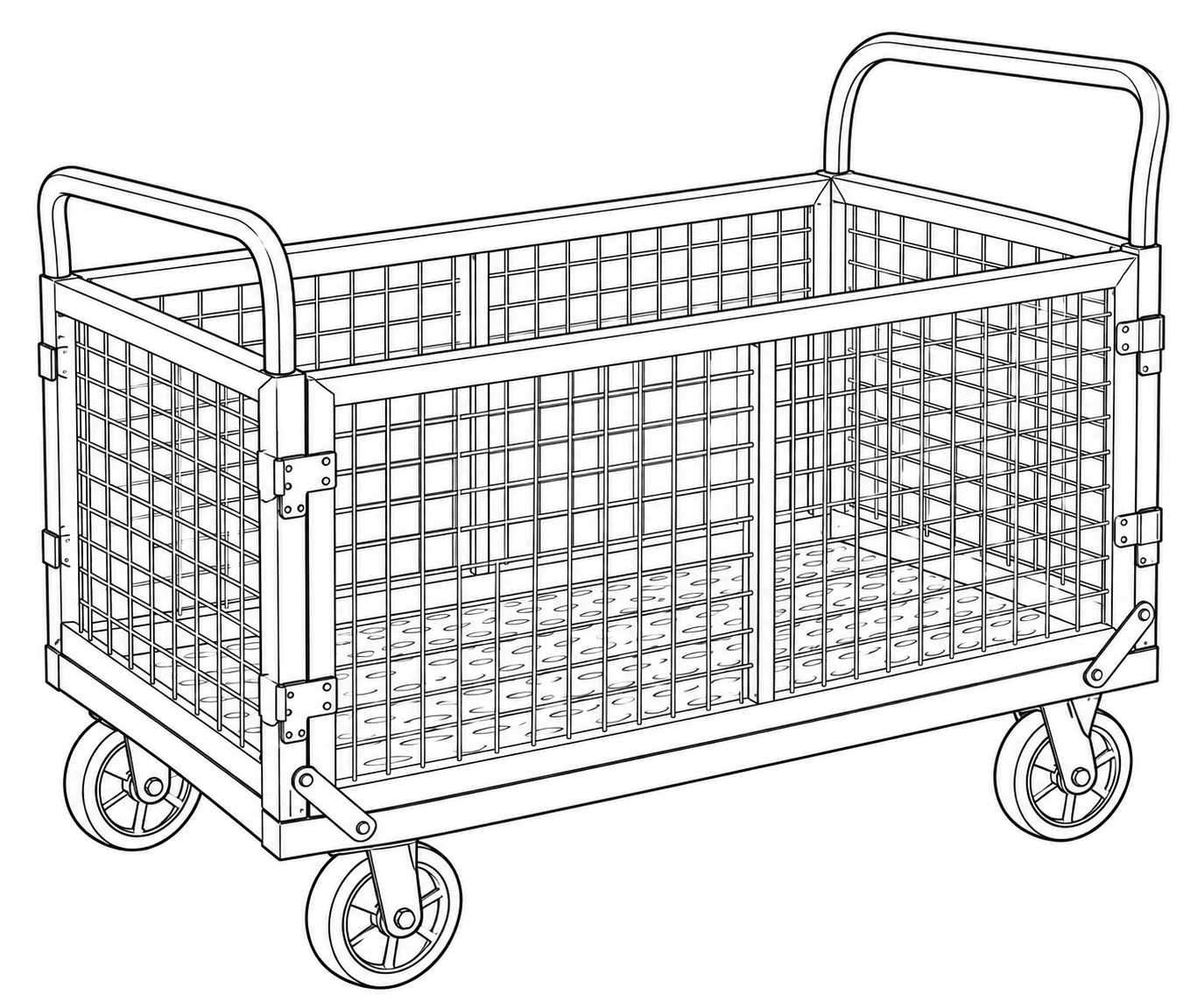
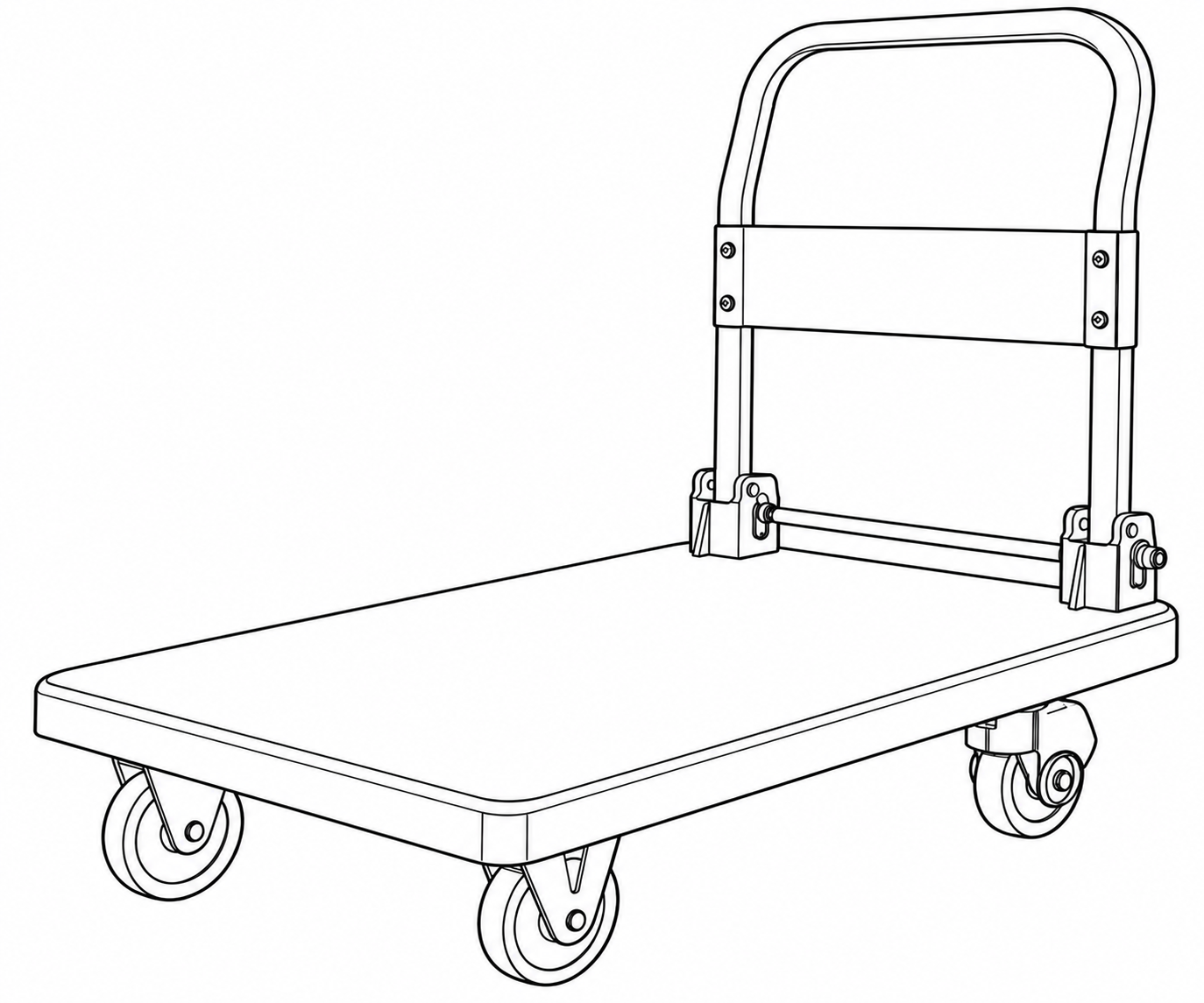
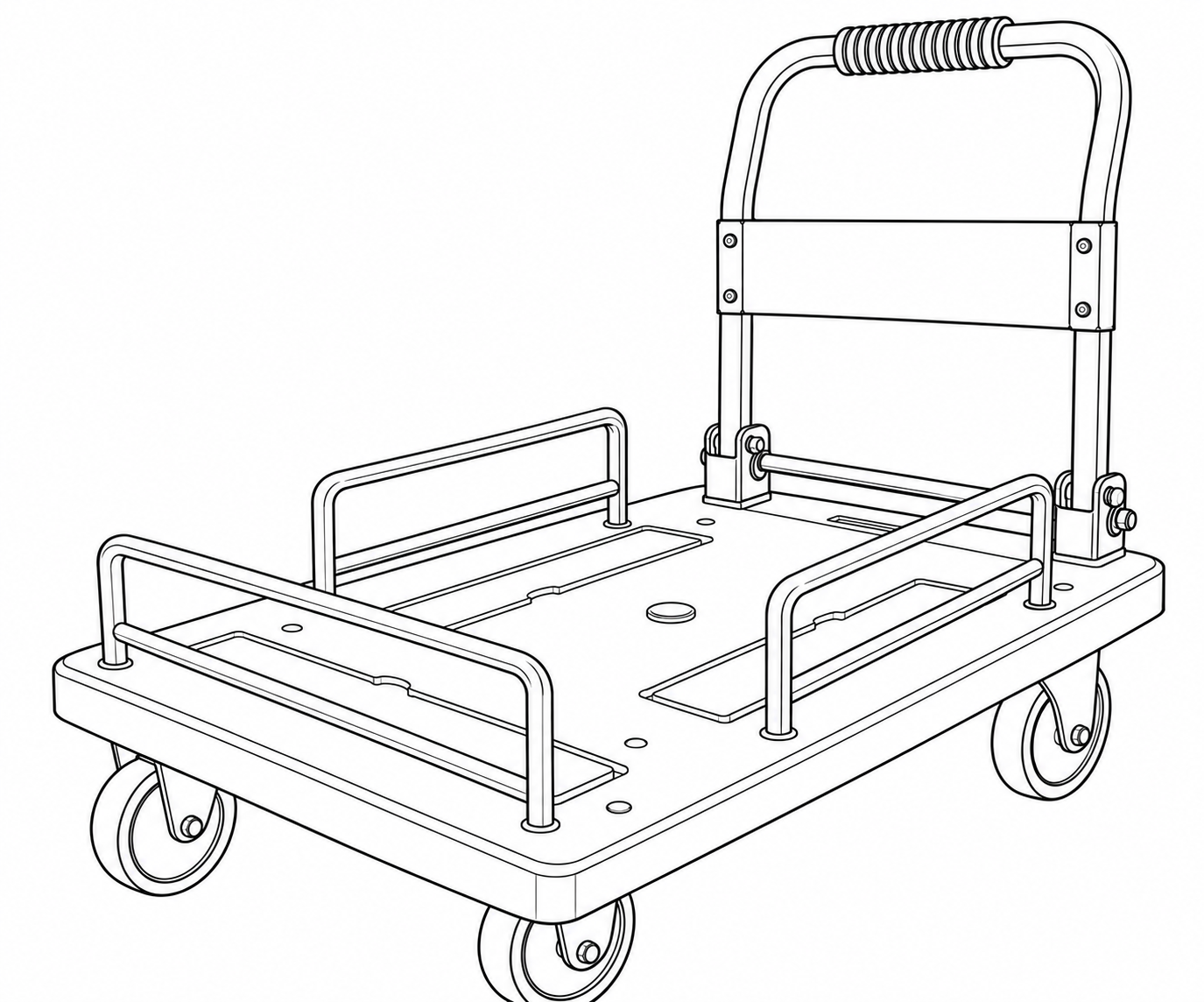
Castors are a system component. A 4-inch caster with a 300 kg rating will not turn a light-duty cart into a 1.2 tonne truck if the frame, deck and welds were designed for 400 kg. Check the trolley's rated capacity, the caster mounting centres and the deck height before ordering replacements. Bintai's platform trolleys show how the specification is put together in practice:
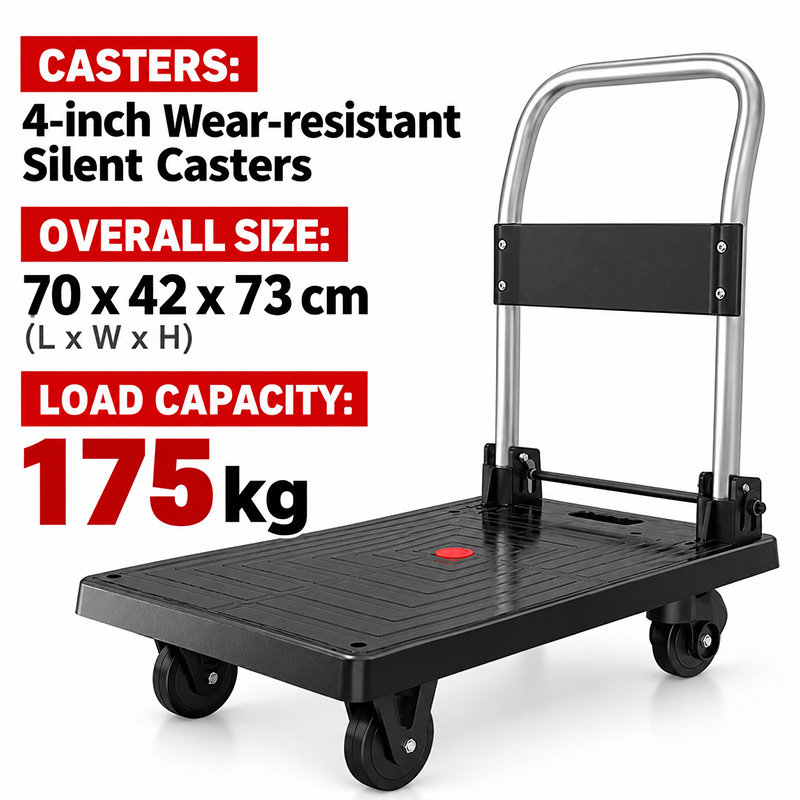 Platform Trolley with 4-Inch Silent CastersA 175 kg platform trolley with a 70 × 42 cm deck and wear-resistant silent casters for warehouse and workshop handling.View Product →
The platform trolley with 4-inch wear-resistant silent casters uses the size most buyers ask for in warehouse and workshop use, with silent running and a stable deck.
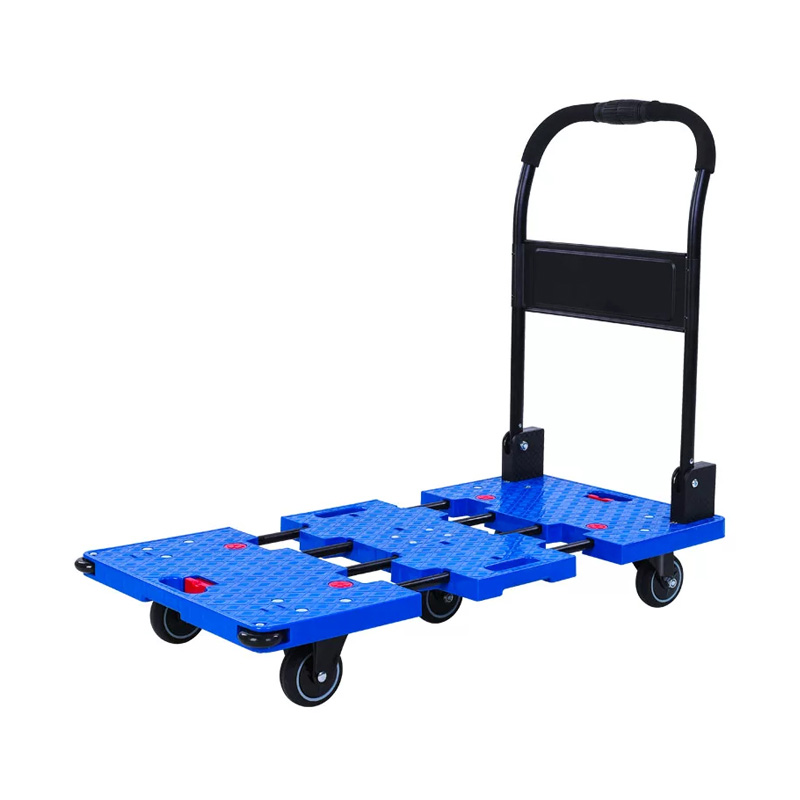 Heavy-Duty Telescopic Six-Wheel Platform Trolley with Brake CastersA six-wheel extendable flatbed trolley with brake casters, offered in blue, purple, green, or custom colors for heavier or longer loads.View Product →
For heavier or longer loads, the heavy-duty telescopic six-wheel platform trolley with brake casters shows why wheel count and brake choice change the load map.
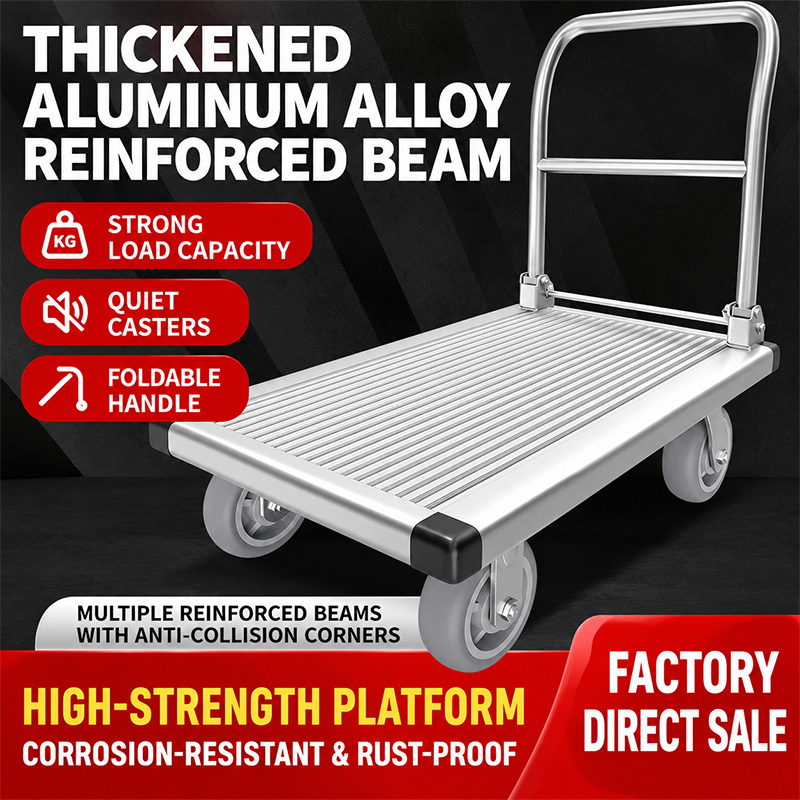 Aluminum Alloy Anti-Corrosion Platform Trolley with CastersA 200–800 kg aluminum alloy platform trolley with multiple deck and wheel options, aimed at wet or coastal anti-rust material handling.View Product →
In wet or coastal environments, the aluminum alloy anti-corrosion and anti-rust platform trolley with casters addresses the frame and caster hardware together rather than treating rust as a wheel-only problem.
A procurement checklist for four-caster orders
- Confirm the real loaded weight and the heaviest single-wheel load.
- Match the existing bolt pattern and plate size if replacing.
- Select tread for the actual floor, not the showroom floor.
- Specify brake type and position.
- Check temperature, washdown and chemical exposure.
- Ask for the dynamic load rating and bearing type in writing.
- Order one spare caster for critical carts.
- Test a sample on the route before committing to a full order.
Working with a manufacturer rather than a parts counter
Bintai Machinery (Jiangsu) Co., Ltd. manufactures metal trolleys and platform trucks in Suqian, Jiangsu, and exports to European markets. Its manufacturing background gives buyers a factory to audit rather than a trading desk, which matters when a caster specification has to be matched to a frame, deck and brake system.
A useful cross-check is the site's guide to wheel load capacity and durability, which explains why terrain and duty cycle change the rating. The final decision should still come down to a simple test: load the trolley as it will be used, roll it over the worst joint on the route, and confirm that no wheel is carrying more than its rated share. If that test passes, a four-caster set will usually last far longer than a set chosen by diameter alone.


