

 English
 Español
A service technician pushes a loaded utility cart across a gravel strip between the warehouse and the maintenance shop. The hard casters sink, the load rocks sideways, and the operator has to stop and reposition the box twice before reaching the door. The cart is not weak; it is simply the wrong tool for the surface.
An all terrain dolly earns its name from three specifications: wheel size and tread, frame construction, and a load rating that allows for dynamic shock. When these work together, the dolly rolls smoothly over gravel, cracked pavement, packed earth, and small curbs while keeping the load stable. When they do not, the operator wrestles the handle at every bump, the load shifts, and the frame eventually bends. The term also appears in video production for compact camera dollies, but the equipment covered here is the material-handling dolly used to move loads across outdoor work areas.
Content
- 1 What makes a dolly suitable for all terrain use
- 2 Wheel size and tread dominate rough-ground performance
- 3 Frame design and steel quality decide how long the dolly lasts
- 4 Matching the dolly to the job site
- 5 When the load needs lifting
- 6 A short checklist before you buy
- 7 Routine care keeps the dolly rolling
What makes a dolly suitable for all terrain use
A standard utility dolly uses four- to five-inch hard casters and is designed for smooth concrete floors and warehouse aisles. Put the same dolly on a construction site or a gravel service road and it digs into the surface, follows every crack, and transfers every shock directly to the operator's hands. The terrain defeats the cart because a small hard wheel cannot roll over obstacles larger than its own radius.
An all terrain dolly changes three things. First, wheels grow to eight inches or more with a wide, softer tread, so the unit stays on top of loose material instead of cutting through it. Second, the frame uses a welded steel structure or a reinforced folding mechanism, which prevents the flexing that loosens fasteners and cracks welds. Third, the load rating leaves enough margin for the dynamic loads created when the dolly drops off a curb or crosses a deep rut.
If you are still deciding between a hand truck and a dolly, the practical difference comes down to load shape and maneuverability. A dolly or hand truck decision guide explains when each tool makes sense in daily operation.
Wheel size and tread dominate rough-ground performance
Wheel diameter controls how easily the dolly climbs over obstacles. A larger wheel contacts a smaller arc of an obstacle and requires less horizontal force to roll over it. Tire tread and compound control grip and cushioning. A hard tread lasts longer on concrete but slides on wet grass; a soft tread grips loose ground but wears faster on abrasive pavement.
The table below shows the wheel types commonly fitted to utility dollies and what each does well.
| Wheel type | Typical diameter | Best surfaces | Main limitation |
|---|---|---|---|
| Hard rubber caster | 4–5 in | Smooth concrete, sealed warehouse floors | Sinks into gravel; transmits vibration |
| Semi-pneumatic solid rubber | 8–10 in | Asphalt, packed dirt, mixed indoor/outdoor routes | Moderate cushioning on sharp edges |
| Pneumatic tire | 10–13 in | Grass, sand, loose gravel, uneven ground | Risk of punctures; requires pressure checks |
| Flat-free urethane tire | 10–12 in | Debris-strewn lots, rough pavement, light gravel | Stiffer ride than pneumatic; higher first cost |
For most facility and industrial work, an eight- to ten-inch semi-pneumatic wheel is the practical middle ground. It rolls well on concrete and compacted outdoor surfaces, tolerates curbs, and needs no inflation maintenance. For soft ground, a pneumatic tire is the better choice, but check it regularly and avoid heavy overloads. In every case, look for sealed bearings. Sand and fine dust destroy open bearings quickly, and replacing them on a working dolly costs more than the small premium paid at purchase time.
Frame design and steel quality decide how long the dolly lasts
The frame is the part that takes the abuse the wheels cannot absorb. A dolly aimed at light household use and a dolly intended for commercial work may look similar in a photo, but the difference appears in steel gauge, weld quality, and hinge design. A welded steel frame with cross bracing distributes dynamic loads across the structure, while a lightweight stamped frame concentrates stress around bolt holes and bends at the worst possible moment.
Folding frames introduce another consideration: the folding mechanism is the most stressed part of the cart because it holds the deck edge in tension while the dolly rocks over uneven ground. One-click locking mechanisms built from thick steel plates with a positive lock are far more reliable than thin stamped latches. If the dolly spends most of its time in a van or a storage rack, folding capability saves valuable space; if it stays at a loading dock, a fixed frame is simpler and stiffer.
Load ratings deserve extra attention on rough terrain. A rating printed on a cart is usually a static capacity, meaning the cart supports that weight while standing still. When the dolly rolls over bumps, the effective force on the frame jumps with each impact. A 200 kg rated cart can overload its own structure with a 150 kg load on a badly broken surface, so keep the working load at roughly 70 to 80 percent of the rated capacity on uneven routes.
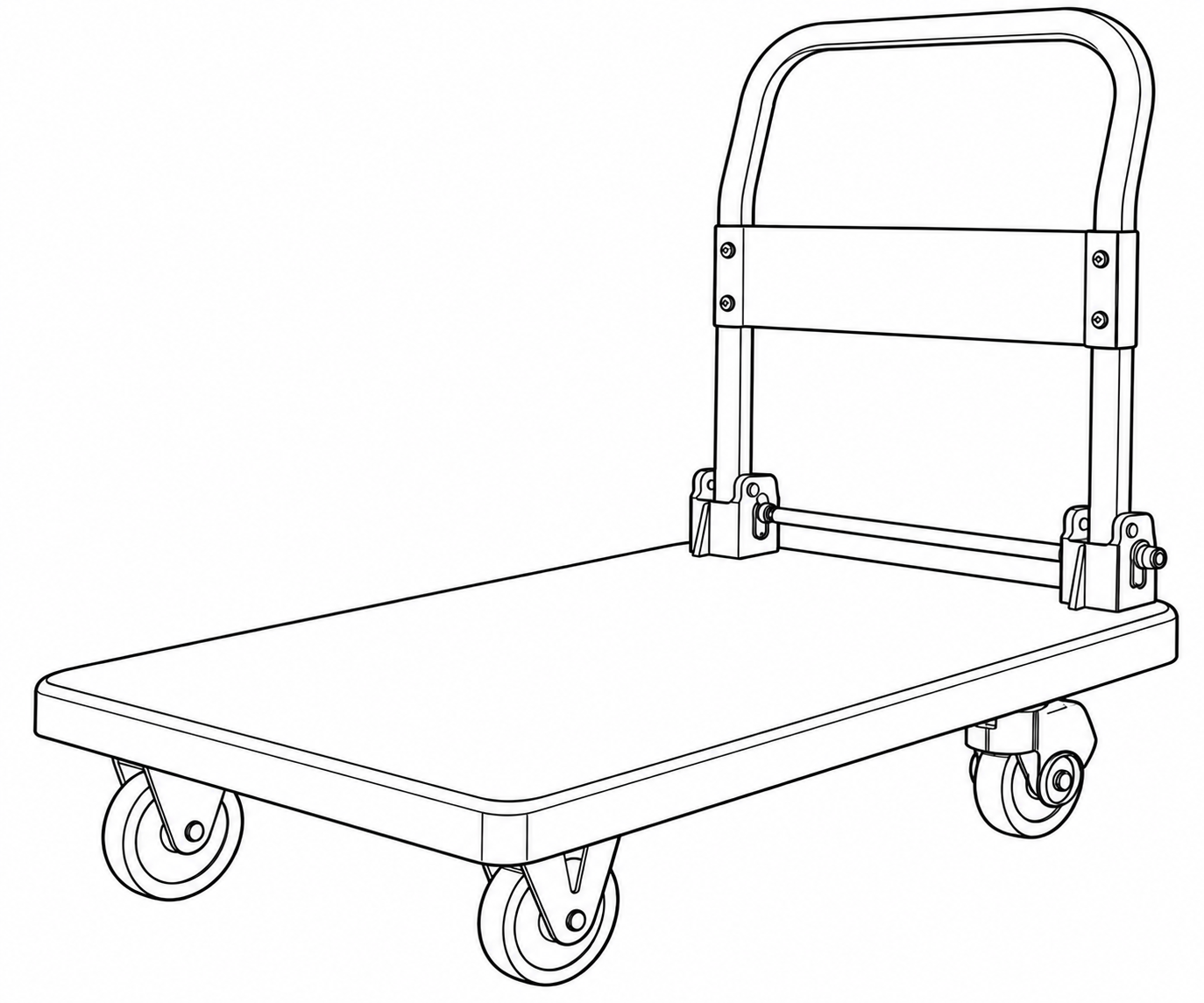
For a folding flatbed model that handles mixed outdoor work, the one-click folding trolley in this product range is a practical reference point. Its welded steel platform and rigid folding joint keep the deck level while the large wheels roll across loading yards and access roads.
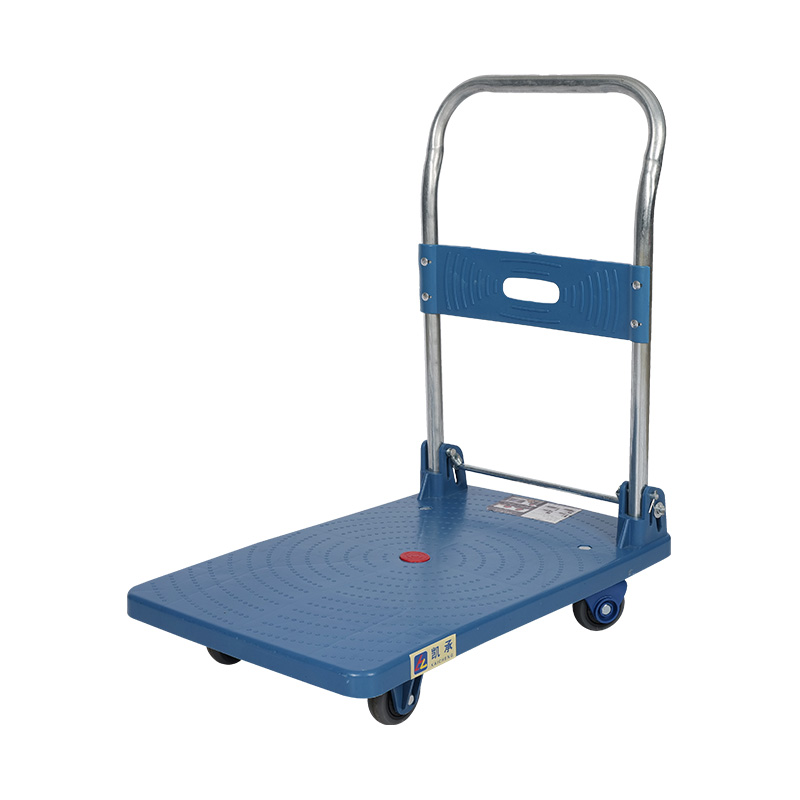 BT-Flatbed Trolley with Welded Steel Deck and Large WheelsThis flatbed trolley offers a solid, level deck and large swivel casters, making it a strong choice for moving bulky loads across gravel yards and access roads with less effort.View Product →
Matching the dolly to the job site
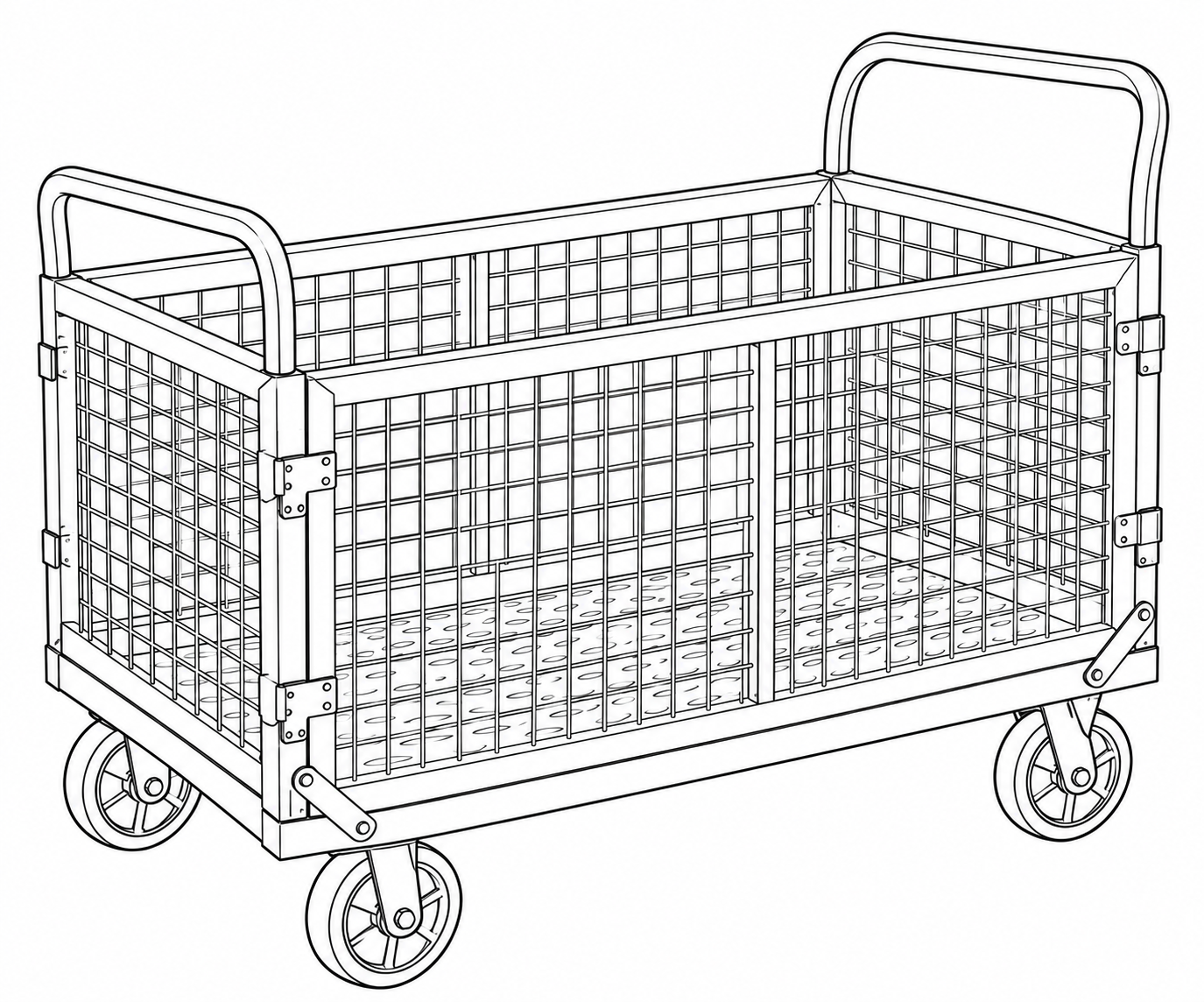
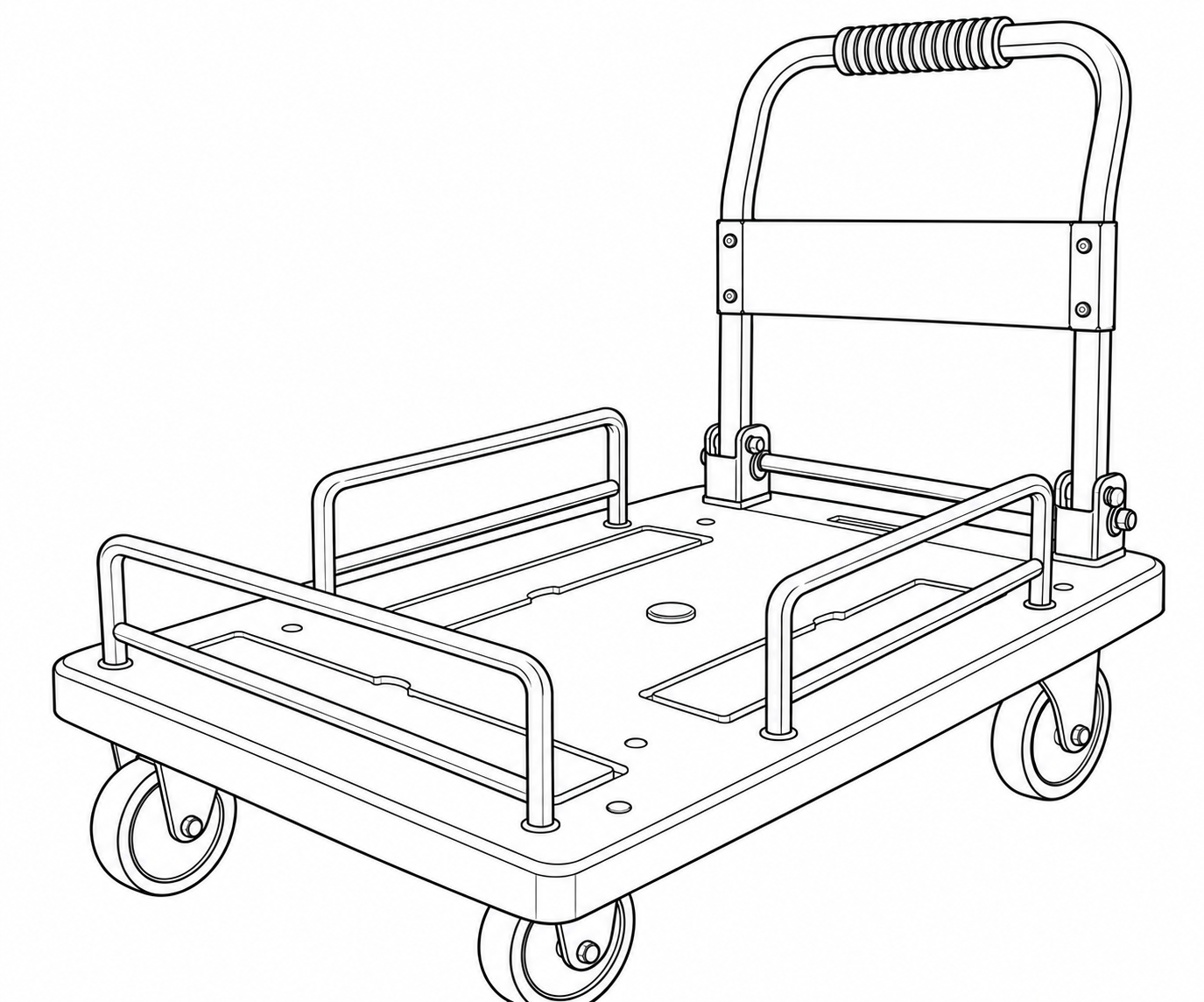
Different outdoor jobs favor different platform designs. A single long trip across a gravel yard calls for a low, flat platform with large wheels. Moving many smaller loads, such as boxes, tool bags, or stock in a fenced storage area, benefits from a dolly with rails that keep items from sliding off. A fence-style flatbed truck adds perimeter rails over a larger deck, which keeps the load contained during long runs across potholes and curbs. For warehouse yards and market setups where loads accumulate quickly, this design reduces the number of trips and the risk of items falling mid-route.
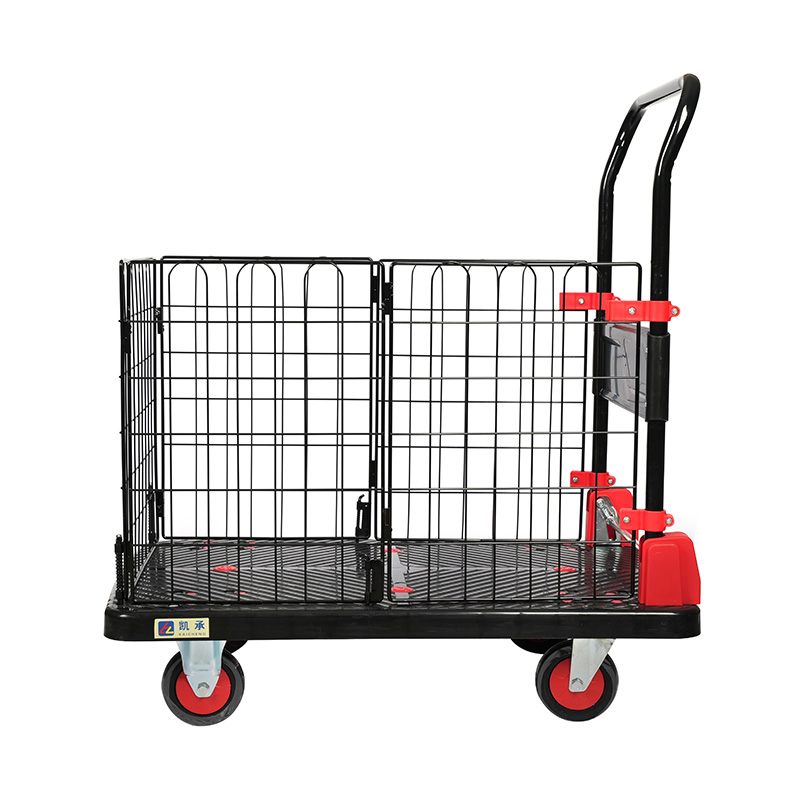 Fence Flatbed Truck with Perimeter Rails and Reinforced DeckFor transporting tall or loose loads over rough terrain, this truck keeps items contained with rails and a non-slip bed, reducing trips and preventing falls along the route.View Product →
When the load needs lifting
Not every all terrain moving task is about rolling a load from one point to another. Dense items like tool chests, spare motors, and palletized parts still have to be lifted onto the platform. A dolly with a hydraulic lifting frame solves this at the source: the operator pumps the handle, the platform rises to the load level, and the load slides on without manual lifting. Hydraulic models also work as mobile work tables for servicing outdoor equipment. If the crew regularly handles items that weigh more than 50 kg, the lifting mechanism matters more than wheel choice alone.
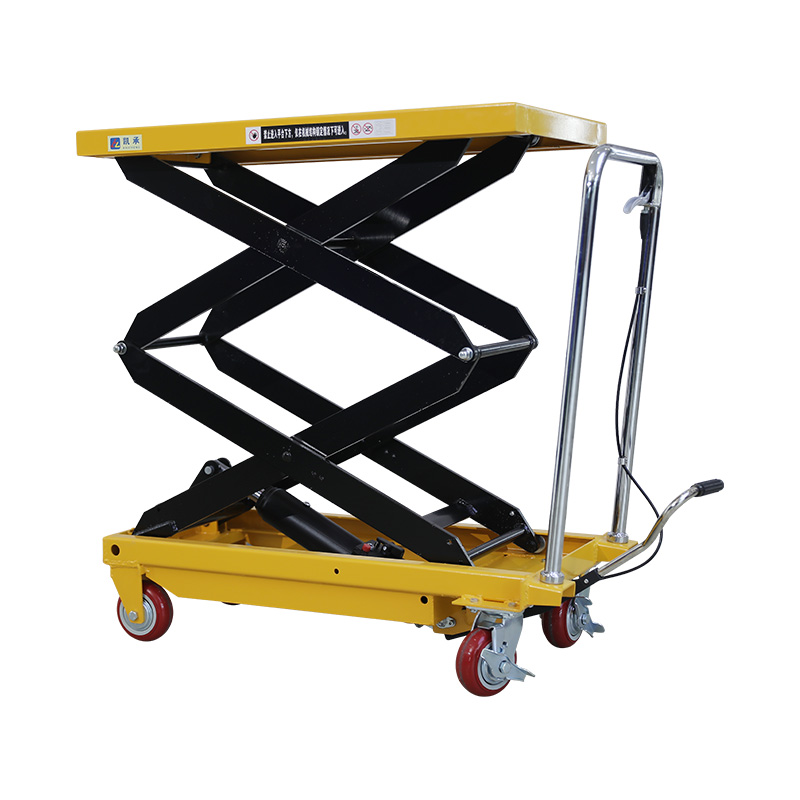 BT-Storage Hydraulic Tool Cart with Lifting MechanismThis hydraulic tool cart helps lift dense items like tool chests and motors onto the platform without manual effort, doubling as a mobile work station for service tasks.View Product →
A short checklist before you buy
Run through the following points before ordering an all terrain dolly:
- Wheel diameter: at least 8 inches for unpaved surfaces; 10 to 13 inches if grass or sand is common.
- Tire type: semi-pneumatic for mixed duty, pneumatic for soft ground, flat-free urethane where punctures are a daily risk.
- Bearings: sealed or shielded units that keep out sand and fine dust.
- Frame: welded steel with cross bracing, or a reinforced folding mechanism with a positive lock.
- Load rating: compare the rated static capacity with your heaviest real load, and keep working loads at 70 to 80 percent of the rating.
- Platform height: a lower deck makes loading easier and keeps the center of gravity stable on uneven ground.
- Spare parts: ask whether replacement wheels, bearings, and hinge pins are available from the manufacturer.
Routine care keeps the dolly rolling
Do not expect the dolly to stay serviceable without basic care. After working on unpaved ground, knock the loose dirt off the wheels, check the axles for wrapped debris, and wipe the frame if it has touched wet soil. For pneumatic tires, set the pressure in the morning before the first trip; for solid tires, look for cuts that could trap stones. Apply a light oil to the folding joints and caster bearings according to the manufacturer schedule. If the dolly must stay outdoors, choose a galvanized or powder-coated steel frame. Remember that the working environment, from wet grass to salty coastal air, has a direct effect on how long the steel frame and wheel hardware will last.
An all terrain dolly is a focused piece of equipment: large-diameter treads, a rigid welded frame, and a load rating with room for rough ground. Start with the surface you cross most often, compare the wheels on that surface, and choose a platform that leaves a safety margin for the bumps you cannot see.


