

 English
 Español
Content
- 1 Which Type of Dog Wagon Is Right for You?
- 2 What Is a Doggy Wagon and Who Needs One?
- 3 Portal Wagons Explained: What Makes Them Different
- 4 Collapsible Wagons: Why the Folding Design Matters
- 5 Key Features to Evaluate Before Buying
- 6 Recommended Wagons by Use Case
- 7 Utility Wagons Adapted for Pets vs. Purpose-Built Dog Wagons
- 8 Tips for Getting Your Dog Comfortable with a Wagon
Which Type of Dog Wagon Is Right for You?
A collapsible doggy wagon is the most practical all-around choice for most pet owners — it folds flat for storage, handles a variety of terrain, and works equally well for dogs, gear, or both. If you need extra convenience and versatility, a portal wagon (one with side or mesh openings that allow pets to hop in and out easily) takes that a step further. The right pick depends on your dog's size and mobility, how far you travel, and whether storage space is a concern.
These wagons have surged in popularity over the last several years — not just as pet accessories, but as multi-use outdoor utility carts. Models like the Radio Flyer Wagon for Pets and the Gorilla Carts collapsible series have mainstream retail presence, while specialized pet brands like PetStroller and Ibiyaya have developed wagons built specifically around canine ergonomics and comfort.
What Is a Doggy Wagon and Who Needs One?
A doggy wagon is a four-wheeled pull cart designed to carry one or more dogs comfortably, typically featuring a padded or soft-sided interior, a safety leash tether, and weather-resistant mesh panels for ventilation. Unlike a pet stroller, which is pushed from behind, a wagon is pulled by a handle — making it feel more natural for outdoor use and easier to navigate on trails, grass, and uneven pavement.
They're particularly popular among owners of:
- Senior or arthritic dogs that can no longer walk long distances but still enjoy outdoor outings.
- Post-surgery or recovering pets that need to limit weight-bearing activity.
- Small breed owners attending outdoor events, markets, or festivals where small dogs risk being stepped on.
- Multi-dog households where one dog can walk while the other rides, or where two small dogs share the cart.
- Owners who also need a utility cart for camping gear, picnic supplies, or beach equipment — collapsible wagons serve double duty effectively.
Portal Wagons Explained: What Makes Them Different
A portal wagon refers to a wagon with one or more entry portals — typically a zippered mesh door or a fold-down side panel — that allows pets to enter and exit without being lifted in over a high sidewall. This design is especially valuable for older dogs or those with hip dysplasia, who find it painful or impossible to be lifted or to jump into a standard wagon bed.
The Ibiyaya Speedy Large Collapsible Pet Wagon is one of the most recognized portal-style wagons, featuring a zippered front mesh door alongside a collapsible frame. The side-entry design has become increasingly common as manufacturers respond to feedback from senior dog owners who found traditional wagon designs inaccessible for their pets.
Portal Wagon vs. Standard Doggy Wagon
| Feature | Standard Doggy Wagon | Portal Wagon |
|---|---|---|
| Entry Method | Lifted in from top | Walk-in via side/front door |
| Best For | Small dogs, agile pets | Senior, injured, or large dogs |
| Containment Security | Open top or cover | Zippered enclosure |
| Typical Weight Capacity | 30–60 lbs | 60–150 lbs |
| Price Range | $50–$180 | $120–$350 |
| Collapses for Storage | Varies by model | Usually yes |
Collapsible Wagons: Why the Folding Design Matters
A collapsible wagon folds down — typically to a flat profile of 4–7 inches — for transport and storage. This single feature is the biggest practical differentiator for most buyers: a non-collapsible wagon takes up significant trunk or garage space, while a folding model can slide under a bed, stand in a closet, or lay flat in a car trunk alongside other gear.
Most collapsible dog wagons use one of two folding mechanisms:
Accordion-Fold Frame
The most common design — the frame collapses inward on itself like a folding chair. Setup and breakdown typically takes under 30 seconds once you're familiar with the mechanism. The fabric bed and side panels fold with the frame. Popular in brands like Mac Sports, Rio, and PORTAL.
Removable Fabric with Rigid Frame
Some models keep a rigid steel or aluminum frame but use snap-in or clip-on fabric panels that can be removed to reduce bulk. Less convenient than a true fold-flat design but often more durable for heavy loads or rough terrain.
When evaluating any collapsible wagon for pet use, check the folded dimensions against your trunk or storage space before purchasing. A wagon advertised as "compact" may still fold to 28" x 18" x 7" — large enough to crowd a small car's cargo area.
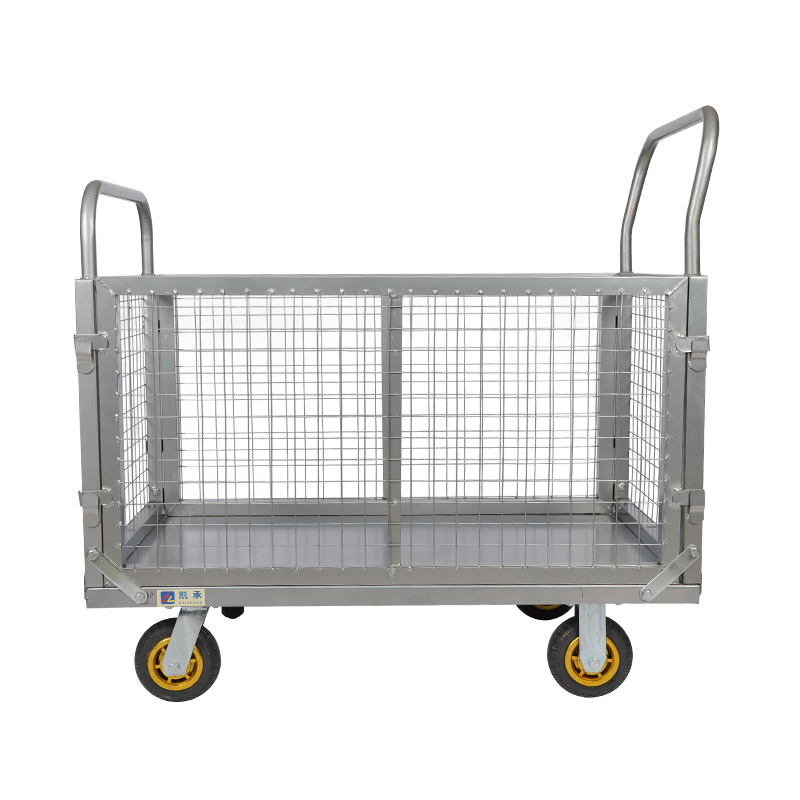
Key Features to Evaluate Before Buying
Not all pet wagons are built equally. These are the specifications that most directly affect real-world usability:
Weight Capacity
Budget wagons typically max out at 30–40 lbs. Mid-range models handle 60–80 lbs, while heavy-duty pet wagons (like the Gorilla Carts GOR4PS) can carry up to 150 lbs. Always add a buffer — a wagon rated for exactly your dog's weight will feel unstable and wear out faster under full load.
Wheel Type and Terrain
Plastic wheels work on smooth pavement but struggle on gravel, grass, or sand. Air-filled rubber tires (pneumatic) roll over rough terrain far more smoothly and absorb vibration, making the ride more comfortable for your dog. EVA foam-filled tires are a middle ground — they won't go flat but are firmer than pneumatic. For beach or trail use, prioritize larger wheels (8"+ diameter) and rubber tires.
Interior Comfort and Liner
A removable, washable liner or padded mat is a practical necessity for pet use — dogs shed, drool, and occasionally have accidents. Many wagons designed primarily as utility carts have bare fabric beds that absorb odor quickly. Look for wagons that include a padded insert or confirm that aftermarket inserts from brands like K9 Sport Sack are compatible.
Safety Tether or Leash Attachment
Any wagon used for pets should include an interior anchor point for a safety leash — a short clip that attaches to your dog's harness and prevents them from jumping out unexpectedly. This is standard on pet-specific wagons but often absent on utility wagons marketed secondarily as pet carriers.
Handle Design
A telescoping or height-adjustable handle prevents back strain on longer walks. Some models include a 360-degree swivel at the handle joint, which makes maneuvering in tight spaces — like crowded outdoor markets — significantly easier.
Recommended Wagons by Use Case
Rather than ranking models that may go in and out of stock, here's how to match wagon type to your specific situation:
- For small dogs at events and markets: A lightweight collapsible wagon with mesh sides and a canopy, weight capacity of 30–40 lbs. Prioritize compact fold size and ease of setup.
- For senior or mobility-impaired dogs: A portal wagon with a walk-in door, padded floor, and capacity of at least 60 lbs. Pneumatic tires are a bonus for smoother rides.
- For trail and outdoor use: A heavy-duty collapsible wagon with air-filled rubber tires, a high weight capacity (80–150 lbs), and a sturdy steel or aluminum frame. Many buyers in this category use a utility wagon like the Mac Sports Heavy Duty Collapsible and add their own pet liner.
- For multi-dog households or large breeds: Focus on interior dimensions (look for at least 32" x 18" bed size) and weight capacity over 80 lbs. Portal entry becomes more important as dog size increases.
- For beach and sand: Look for wide-base balloon tires or oversized wheels specifically rated for soft terrain. Standard narrow plastic wheels sink in sand and become impossible to pull.
Utility Wagons Adapted for Pets vs. Purpose-Built Dog Wagons
One of the most practical decisions pet owners face is whether to buy a purpose-built dog wagon or adapt a general-purpose collapsible utility wagon. Both approaches have real merit:
Purpose-built dog wagons come with pet-specific features already integrated — safety tethers, removable liners, zippered canopies, and mesh ventilation panels. They tend to look more polished at public events. The tradeoff is that they're often limited to pet use and cost more for equivalent build quality.
Utility wagons adapted for pets — such as the Mac Sports Collapsible Folding Wagon or the PORTAL Collapsible Outdoor Utility Wagon — offer superior weight capacity, heavier-duty frames, and lower cost per pound of capacity. A $80–$120 utility wagon with a $30 aftermarket pet mat and a carabiner clip for a leash attachment can outperform a $200 purpose-built pet wagon in durability and terrain capability. The main gaps are aesthetics and the absence of a built-in canopy or full mesh enclosure.
For owners who need the wagon only for pet transport and want a finished, ready-to-use solution, purpose-built is easier. For owners who also want to use the wagon for camping, hauling, or beach trips, a high-quality utility wagon with pet accessories added is often the better value by a significant margin.
Tips for Getting Your Dog Comfortable with a Wagon
Many dogs are initially hesitant about wagons, especially if they've never ridden in one. A gradual introduction prevents the wagon from becoming a source of anxiety:
- Set the wagon up indoors or in a familiar space and let your dog sniff and investigate it with no pressure to get in.
- Place your dog's favorite blanket or a worn item of your clothing inside the wagon to create positive associations.
- Use treats to encourage your dog to place their front paws inside, then fully enter, without forcing the process.
- Once your dog is comfortable sitting in the stationary wagon, begin pulling it short distances while offering praise and rewards.
- Gradually extend duration and distance as your dog's confidence grows.
Most dogs adapt within two to five short sessions spread over a few days. Dogs that have had prior positive experiences with car rides or crates often take to wagons faster, as the enclosed, moving sensation is familiar.


